Wednesday, July 1, 2026
  • Login
The Southern African Times
  • Home
  • Southern Africa
  • Business
    • African Start ups
    • African Continental Free Trade Area
  • Technology
    • Lifestyle
      • Health
      • Culture
      • Food and Drink
      • Entertainment
  • Opinion
  • Sports
  • SAT Jobs
    • Events
  • About Us
    • Advertise with Us
    • Contact Us
No Result
View All Result
  • Home
  • Southern Africa
  • Business
    • African Start ups
    • African Continental Free Trade Area
  • Technology
    • Lifestyle
      • Health
      • Culture
      • Food and Drink
      • Entertainment
  • Opinion
  • Sports
  • SAT Jobs
    • Events
  • About Us
    • Advertise with Us
    • Contact Us
No Result
View All Result
The Southern African Times
No Result
View All Result
Home Opinion

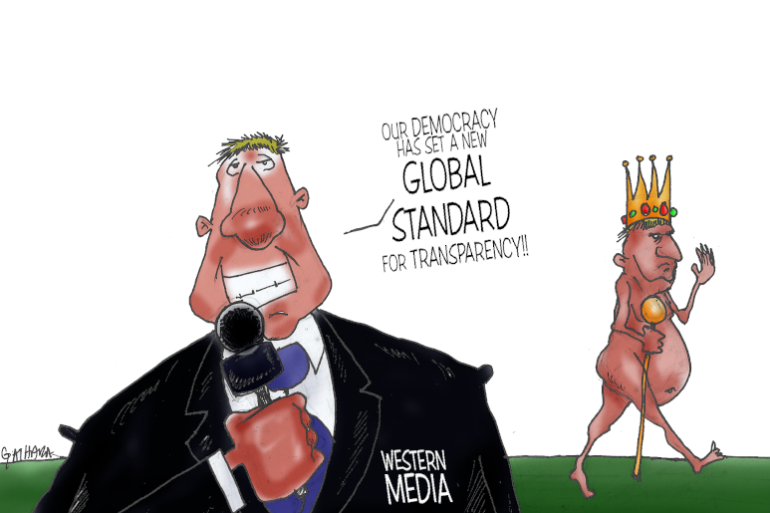
It is now Africa’s turn to send ‘democracy experts’ to the West

As Africans we should realise that it is our duty to stand with the people of Britain and the US, and to support their aspirations for democracy.

by SAT Reporter
July 15, 2022
in Opinion
0
It is now Africa’s turn to send ‘democracy experts’ to the West

Democracy can be a confusing thing. On the Mid-Northern British archipelago, a small group of reclusive, flavour-starved and disease-ridden islands off the coast of sub-Scandinavian Europe, the authoritarian-leaning Prime Minister, Boris Johnson, is clinging to power despite “resigning”. After a revolt by ruling party legislators, led by ethnic minority Members of Parliament, Johnson has formed a transitional administration which includes many of the same people who are trying to topple him. While hanging on to office, Johnson has promised not to do much work, not to introduce any new policies, and seems set to actually spend much of his time planning his wedding.

This is not what most of us imagine rule of the people, by the people and for the people, is meant to look like. A country with an imaginary constitution and no mechanism to remove a sitting ruler would, if located in less inhospitable parts of the globe, probably attract other appellations from the international press. When it is up to a central committee of the ruling Conservative Party to decide on rules for appointing the next leader through a vote by party members, it starts to sound like the system practised by countries like China, that most would agree, are not exactly democratic.

Add to that Johnson’s three-year reign of error that has left nearly 300,000 people dead, his ineptitude that has tanked its economy, his populist antics, the corruption and criminality that flourished under his rule, as well as his concerted push to undermine political freedoms such as the freedom to protest, and it starts to resemble another group of Central American and Caribbean countries that are usually identified by yellow fruit.


ADVERTISEMENT

The way language is deployed by the world’s media to segment the world has always been fascinating to me. In her 2011 book, Professional Communication: Legal and Ethical Issues, former lawyer and journalist, Professor Rhonda Breit, notes that journalists “engage in boundary work and community construction” that distinguishes between the society they are accountable to, and “the other”. Language is one of the tools that journalists use to make this distinction. There are phrases and descriptions, usually benign and familiar, that are reserved for the societies they consider themselves a part of, while others, usually derogatory and alienating, are appointed for those they consider to be different.

Whether it is describing disasters, natural or man-made, or political events, the framing chosen many times reflects these biases and prejudices. If the events in the tribally divided United Kingdom were happening in Africa, for example, one would expect to be regaled with tales of tribal tensions, predictions of violence and descriptions of the natural resources that make these countries worthy of attention.

Yet such discrimination does a profound disservice to the societies the journalists believe they are serving, leaving them believing that they are somehow intrinsically different from the rest of the world, immune to the issues that afflict it. When those problems intrude into the fantasy, they are treated as anomalies, not symptoms of systemic failures. Thus, the experience of Donald Trump does not inspire talk of reform in the similarly disease-ravaged, gun-ridden US, a top banana exporter. Neither does that of Boris Johnson likely to inspire the same for the UK.

In fact, the air of superiority can even lead journalists down ridiculous paths such as when US Fox News host, Emily Compagno, makes up “alternative facts” about pregnant Kenyan women not being allowed to leave home or vote, in order to prop up her position that US women are not oppressed.

Yet, the two countries have been eagerly dispensing advice on democratic reform to so-called “third world” nations for decades, many of which have strengthened their institutions as a result. Meanwhile, back at home, their own systems and guard rails, which have never been particularly strong at protecting minority rights, have been allowed to decay and atrophy. So convinced are they of their superiority that the idea of needing to reform centuries-old practices and codes built for a different age, and which embed the beliefs and prejudices of previous generations, does not appear to cross their minds.

Today, it is perhaps the turn of countries like Kenya, and continental organisations like the African Union, to repay the favour and send democracy experts to the US and UK. We should be looking to support grassroots organisations working towards constitutional and electoral reform, as well as help conduct civic education for populations that seem to too easily fall prey to the charms of demagoguery. Most importantly, we should focus on media development and education. As Africans, we should realise that it is our duty to stand with the people of America and Britain, and to support their aspirations for democracy, and accountable and transparent government.


Patrick Gathara Communications consultant, writer, and award-winning political cartoonist based in Nairobi. The views expressed in this article are the author’s own and do not necessarily reflect The Southern African Times. 
Previous Post

South Africa wants to create 2 million jobs before 2024 elections

Next Post

Ivory Coast president meets with ex-leaders

SAT Reporter

Related Posts

LONG READ | The Oldest Alibi: South Africa’s Xenophobia and the Economic Ruin It Presages
Opinion

LONG READ | The Oldest Alibi: South Africa’s Xenophobia and the Economic Ruin It Presages

by Times Reporter
June 30, 2026
President Cyril Ramaphosa’s Opinion: How South Africa’s Natural Splendour Can Drive Inclusive Growth
Opinion

Op-Ed by President Ramaphosa | Protest Is Both a Right and a Responsibility

by Times Reporter
June 29, 2026
The Insurance Hack More Drivers Should Know
Opinion

The Insurance Hack More Drivers Should Know

by Times Reporter
June 22, 2026
Southern African Times Announces Brendan Amadi as Recipient of the 2026 Editorial Recognition of the Year Award
The Editorial Board

Southern African Times Announces Brendan Amadi as Recipient of the 2026 Editorial Recognition of the Year Award

by The Editorial Board
June 19, 2026
LONG READ | No Longer the World’s Dustbin: China’s Waste Ban and Africa’s Circular Economy Moment
Opinion

LONG READ | No Longer the World’s Dustbin: China’s Waste Ban and Africa’s Circular Economy Moment

by Times Reporter
June 12, 2026
Next Post
Ivory Coast president meets with ex-leaders

Ivory Coast president meets with ex-leaders

Browse by Category

  • Africa AI
  • African Continental Free Trade Area
  • African Debt
  • African Start ups
  • Agriculture
  • AI Africa
  • Algeria
  • All News
  • Analysis
  • Angola
  • Arts / Culture
  • Asia
  • Botswana
  • BOTSWANA
  • BREAKING NEWS
  • BRICS
  • Burkina Faso
  • Burundi
  • Business
  • Business
  • Business Wire
  • Cameroon
  • Central Africa
  • Chad
  • China
  • Climate Change
  • Climate Changev
  • Community
  • Congo Republic
  • Conservation
  • Côte d’Ivoire
  • COVID 19
  • CRYPTOCURRENCY
  • Culture
  • Democratic Republic of Congo
  • Diplomacy
  • Eastern Africa
  • Economic Development
  • Economy
  • Education
  • Egypt
  • Elections 2024
  • Energy
  • Entertainment
  • Environment
  • Eritrea
  • Ethiopia
  • Europe
  • Fashion
  • Feature
  • Finance
  • Financial Inclusion
  • Food
  • Food and Drink
  • Foods
  • GABON
  • Ghana
  • Global
  • Global Africa
  • Guinea
  • Health
  • Humanitarian Aid
  • Immigration
  • in Southern Africa
  • International news
  • International Relations
  • Investment
  • Ivory Coast
  • Just In
  • Kenya
  • Lesotho
  • Libya
  • Life Style
  • Lifestyle
  • Literature
  • Malawi
  • Malawi
  • Mali
  • Markets
  • Mauritius
  • Middle East
  • Mining in Africa
  • Morocco
  • Mozambique
  • Namibia
  • Niger
  • niger
  • Nigeria
  • North Africa
  • North-Eastern Africa
  • Obituaries
  • Obituary
  • Opinion
  • PARTNER CONTENT
  • Politics
  • Property
  • Racism
  • Rwanda
  • Rwanda
  • SADC
  • SAT Interviews
  • SAT Investigation
  • SAT Jobs
  • Saudi Arabia
  • Senegal
  • Seychelles
  • Somaliland
  • South Africa
  • South Sudan
  • Sports
  • Startup Africa
  • STOCK EXCHANGE
  • Sudan
  • Sustainability
  • Sustainablity
  • Tanzania
  • Technology
  • Telecommunications
  • The Editorial Board
  • The Power Of She
  • Togo
  • Trade
  • Travel
  • Travel
  • Tunisia
  • Uganda
  • Uncategorized
  • Wealth
  • West Africa
  • World
  • World
  • ZAMBIA
  • Zambia
  • Zimbabwe
  • ZIMBABWE

Browse by Tags

#NewsUpdate #SouthAfrica #SouthernAfricanTimes #TheSouthernAfricanTimes AfCFTA africa African Continental Free Trade Area African development African Development Bank African economies African economy African Union Agriculture Angola Botswana China Climate change critical minerals Cyril Ramaphosa Economic Development economic growth energy transition governance industrialisation Inflation Infrastructure Infrastructure Development International relations Investment Kenya Mozambique Namibia news Nigeria Regional Integration renewable energy Rwanda SADC South Africa Southern Africa sustainable development Tanzania United States Zambia Zimbabwe
ADVERTISEMENT

WHO WE ARE

The Southern African Times is a regional bloc digital newspaper that covers Southern African and world news. The paper also gives a nuanced analysis on news and covers a wide range of reporting which include sports, entertainment, foreign affairs, arts and culture.

Welcome Back!

Login to your account below

Forgotten Password?

Retrieve your password

Please enter your username or email address to reset your password.

Log In
  • Home
  • Southern Africa
  • Business
    • African Start ups
    • African Continental Free Trade Area
  • Technology
    • Lifestyle
      • Health
      • Culture
      • Food and Drink
      • Entertainment
  • Opinion
  • Sports
  • SAT Jobs
    • Events
  • About Us
    • Advertise with Us
    • Contact Us
Not enough quota to unlock this post
Unlock left : 0
Are you sure want to cancel subscription?