Friday, May 1, 2026
  • Login
The Southern African Times
  • Home
  • Southern Africa
  • Business
    • African Start ups
    • African Continental Free Trade Area
  • Technology
    • Lifestyle
      • Health
      • Culture
      • Food and Drink
      • Entertainment
  • Opinion
  • Sports
  • SAT Jobs
    • Events
  • About Us
    • Advertise with Us
    • Contact Us
No Result
View All Result
  • Home
  • Southern Africa
  • Business
    • African Start ups
    • African Continental Free Trade Area
  • Technology
    • Lifestyle
      • Health
      • Culture
      • Food and Drink
      • Entertainment
  • Opinion
  • Sports
  • SAT Jobs
    • Events
  • About Us
    • Advertise with Us
    • Contact Us
No Result
View All Result
The Southern African Times
No Result
View All Result
Home Opinion

How united is the G7 on global challenges?

by SAT Reporter
June 27, 2022
in Opinion
0
How united is the G7 on global challenges?

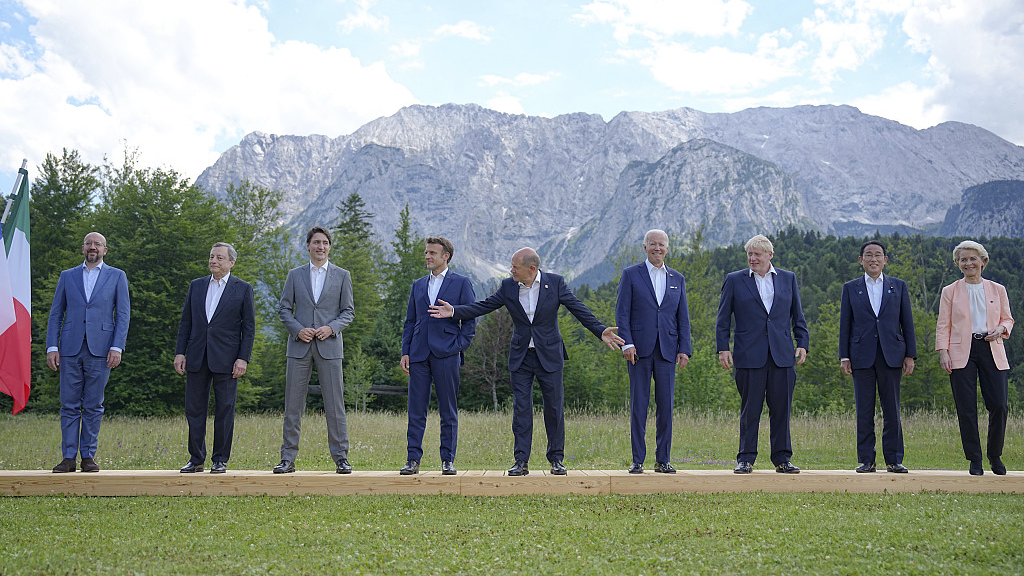
On June 26, Germany hosted a three-day summit of the Group of Seven (G7) wealthy economies, in hopes that rising prices, food security and conflict-driven energy challenges land at the core of the agenda. However, differing motivations for addressing these challenges, coupled with Washington’s preference for anti-China allegations, challenge the G7’s ability to deliver new results and overcome the perils of its Cold War mentality.

The first impediment to focusing on global challenges at the summit is the Joe Biden administration’s desire to target China. Groundless allegations of “coercive economic practices” stem from a sense of ideological containment that has constrained the G7’s appeal as a cooperative player in the past, and weakened its resolve to take-on energy and economic challenges comprehensively. Similar political campaigning for unilateral sanctions against Moscow has now come to bite growth prospects of several economies within the G7, raising questions about its appetite to overcome ideological prejudice, and stem a conflict that is big on economic repercussions.

Washington’s push to situate anti-China rhetoric within the G7 agenda, including so-called intellectual property theft allegations, is also a compromising look for a group that wants to come good on global economic stability. “They [leaders of the G7] will strengthen our cooperation on economic issues, cyberspace and quantum, and in particular, the challenges posed by China,” said a U.S. official recently.


ADVERTISEMENT

On the one hand, this line of argument illustrates the discord between Germany and the United Kingdom on specific price control and food security measures, and Washington’s divergent, Cold War view of China containment. Rendering these splits as credible will be an uphill task for the G7, particularly with Indonesia, India, South Africa, Senegal and Argentina in attendance. Climate change, energy and food security are likely to have far more traction with these economies, testing the G7’s ability to rise above ideological calculations of the past.

The other challenge is whether any consensus led by a select grouping of “like-minded” countries would strike a chord with the Global South. History warrants pessimism. Consider past G7 failures in tackling global vaccine access, delivering aggressive climate action, and advancing diplomacy on the Ukraine-Russia conflict: all offer little in support of the group’s crisis leadership at the current summit. An underwhelming record of translating global pledges into action also casts doubt over the G7’s ability to credibly engage with several economies from the Global South. Downgraded growth prospects of major economies, and a looming threat of a recession, collectively limit G7’s latitude to generously fund core energy and food security interventions, despite the confidence.

On ideological grounds, the group’s sense of unity on pressing, non-traditional security threats also demands skepticism. Look no further than recent insights from the Munich Security Index special survey on G7: It confirms that the “determination and unity” mustered by like-minded democracies in wake of the Ukraine-Russia conflict does “not yet extend to the many other global challenges on the G7 agenda.” Speculation that the 48th Summit can offer important public diplomacy legwork ahead of the North Atlantic Treaty Organization (NATO)’s Madrid Summit also misses the point: The latter’s increased focus on beefing-up military defenses contrasts with the G7’s focus on controlling inflation and energy supply risks. The possibility of some aspects of these summits being viewed in conjunction gives outsized importance to what the West sees as security challenges, as opposed to the world at large.

For these reasons, the current summit is likely to be another exercise in demonstrating so-called unity that is largely confined to the club. G7 continues to attract space for Cold War ideologies, when in the words of German Chancellor Olaf Scholz, it is clear that the grouping “won’t move mountains.”

Written By Hannan Hussain who is a foreign affairs commentator and author. He is a Fulbright recipient at the University of Maryland and a former assistant researcher at the Islamabad Policy Research Institute. The article reflects the author’s opinions and not necessarily the views of The Southern African Times.



Previous Post

G7’s $600bn global infrastructure initiative targets Africa

Next Post

Opinion: While Africa does have many entrepreneurs, are they the right kind?

SAT Reporter

Related Posts

South Africa Cannot Turn on Africa and Expect to Stand Tall
Opinion

South Africa Cannot Turn on Africa and Expect to Stand Tall

by SAT Reporter
April 27, 2026
Feeding the Future: Why AI and Agriculture Must Work Together
Opinion

Feeding the Future: Why AI and Agriculture Must Work Together

by Sonny Iroche
April 19, 2026
Julius Malema Sentenced to Five Years in Firearm discharge case
Opinion

Malema’s Sentence: A Test of South Africa’s Rule of Law in a Polarized Age

by Kundai Vambe
April 18, 2026
Zambia’s Copper and the Social Cost of Extraction Deals
The Editorial Board

Zambia’s Copper and the Social Cost of Extraction Deals

by Nothando Ndlovu
April 17, 2026
Op-Ed by Yemi Osinbajo, Former Vice President of Nigeria: Africa Is Losing the Iran War
Opinion

Op-Ed by Yemi Osinbajo, Former Vice President of Nigeria: Africa Is Losing the Iran War

by SAT Reporter
April 13, 2026
Next Post
Opinion: While Africa does have many entrepreneurs, are they the right kind?

Opinion: While Africa does have many entrepreneurs, are they the right kind?

Browse by Category

  • Africa AI
  • African Continental Free Trade Area
  • African Debt
  • African Start ups
  • Agriculture
  • AI Africa
  • Algeria
  • All News
  • Analysis
  • Angola
  • Arts / Culture
  • Asia
  • Botswana
  • BOTSWANA
  • BREAKING NEWS
  • BRICS
  • Burkina Faso
  • Burundi
  • Business
  • Business
  • Business Wire
  • Cameroon
  • Central Africa
  • Chad
  • China
  • Climate Change
  • Climate Changev
  • Community
  • Congo Republic
  • Conservation
  • Côte d’Ivoire
  • COVID 19
  • CRYPTOCURRENCY
  • Culture
  • Democratic Republic of Congo
  • Diplomacy
  • Eastern Africa
  • Economic Development
  • Economy
  • Education
  • Egypt
  • Elections 2024
  • Energy
  • Entertainment
  • Environment
  • Eritrea
  • Ethiopia
  • Europe
  • Fashion
  • Feature
  • Finance
  • Financial Inclusion
  • Food
  • Food and Drink
  • Foods
  • GABON
  • Ghana
  • Global
  • Global Africa
  • Guinea
  • Health
  • Immigration
  • in Southern Africa
  • International news
  • International Relations
  • Investment
  • Ivory Coast
  • Just In
  • Kenya
  • Lesotho
  • Libya
  • Life Style
  • Lifestyle
  • Literature
  • Malawi
  • Malawi
  • Mali
  • Markets
  • Mauritius
  • Middle East
  • Mining in Africa
  • Morocco
  • Mozambique
  • Namibia
  • Niger
  • niger
  • Nigeria
  • North Africa
  • North-Eastern Africa
  • Obituaries
  • Obituary
  • Opinion
  • PARTNER CONTENT
  • Politics
  • Property
  • Racism
  • Rwanda
  • Rwanda
  • SADC
  • SAT Interviews
  • SAT Investigation
  • SAT Jobs
  • Saudi Arabia
  • Senegal
  • Seychelles
  • Somaliland
  • South Africa
  • South Sudan
  • Sports
  • Startup Africa
  • STOCK EXCHANGE
  • Sudan
  • Sustainability
  • Sustainablity
  • Tanzania
  • Technology
  • Telecommunications
  • The Editorial Board
  • The Power Of She
  • Togo
  • Trade
  • Travel
  • Travel
  • Tunisia
  • Uganda
  • Uncategorized
  • Wealth
  • West Africa
  • World
  • World
  • ZAMBIA
  • Zambia
  • Zimbabwe
  • ZIMBABWE

Browse by Tags

#NewsUpdate #SouthAfrica #SouthernAfricanTimes #TheSouthernAfricanTimes AfCFTA africa African Continental Free Trade Area African development African Development Bank African economies African economy African Union Agriculture Angola Botswana Business China Climate change Cyril Ramaphosa Economic Development economic growth energy transition fiscal policy industrialisation Inflation Infrastructure Infrastructure Development International relations Investment Kenya Mozambique Namibia news Nigeria Regional Integration renewable energy Rwanda SADC South Africa Southern Africa sustainable development Tanzania United States Zambia Zimbabwe
ADVERTISEMENT

WHO WE ARE

The Southern African Times is a regional bloc digital newspaper that covers Southern African and world news. The paper also gives a nuanced analysis on news and covers a wide range of reporting which include sports, entertainment, foreign affairs, arts and culture.

Welcome Back!

Login to your account below

Forgotten Password?

Retrieve your password

Please enter your username or email address to reset your password.

Log In

  • Home
  • Southern Africa
  • Business
    • African Start ups
    • African Continental Free Trade Area
  • Technology
    • Lifestyle
      • Health
      • Culture
      • Food and Drink
      • Entertainment
  • Opinion
  • Sports
  • SAT Jobs
    • Events
  • About Us
    • Advertise with Us
    • Contact Us
Are you sure want to unlock this post?
Unlock left : 0
Are you sure want to cancel subscription?