Friday, May 1, 2026
  • Login
The Southern African Times
  • Home
  • Southern Africa
  • Business
    • African Start ups
    • African Continental Free Trade Area
  • Technology
    • Lifestyle
      • Health
      • Culture
      • Food and Drink
      • Entertainment
  • Opinion
  • Sports
  • SAT Jobs
    • Events
  • About Us
    • Advertise with Us
    • Contact Us
No Result
View All Result
  • Home
  • Southern Africa
  • Business
    • African Start ups
    • African Continental Free Trade Area
  • Technology
    • Lifestyle
      • Health
      • Culture
      • Food and Drink
      • Entertainment
  • Opinion
  • Sports
  • SAT Jobs
    • Events
  • About Us
    • Advertise with Us
    • Contact Us
No Result
View All Result
The Southern African Times
No Result
View All Result
Home Analysis

News Analysis: Why does Egypt resort to borrowing from IMF?

by SAT Reporter
April 12, 2022
in Analysis, Just In
0
News Analysis: Why does Egypt resort to borrowing from IMF?

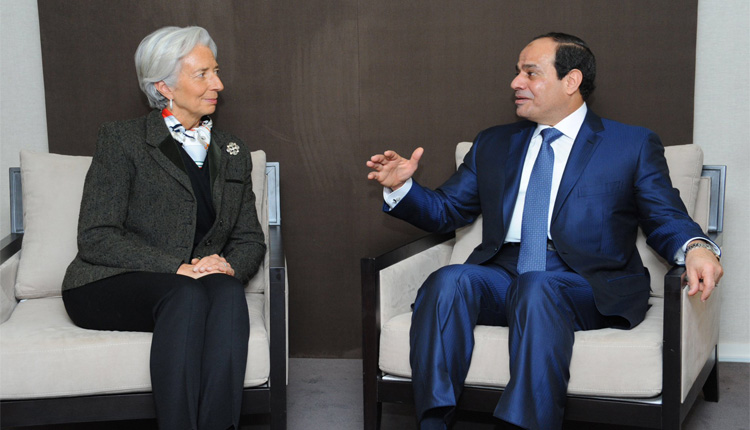
Egypt has a high tendency to borrow from the International Monetary Fund (IMF), especially amid capital outflow driven by crises like the COVID-19 pandemic and the Russia-Ukraine conflict, according to economic

Egypt is now experiencing the outflow of hot money worth billions of U.S. dollars, a decrease of foreign reserves in its central bank, currency devaluation, and rising commodities prices.

Before the Russia-Ukraine conflict, Egypt was consulting with the IMF on a non-loan arrangement or a “technical support program” to support its pursuit of economic targets without external financing, said Egyptian Prime Minister Mostafa Madbouly at a recent press conference.


ADVERTISEMENT

But considering the likely expanding conflict, Egypt is negotiating a “program of support and technical advice that may include additional financing to offset the economic shock caused by the conflict,” Madbouly said.

Waleed Gaballah, a professor of financial and economic jurisdictions at Cairo University, said “the government’s cooperation with the IMF is an advantage because it is a world institution that enjoys the world confidence.”

“Via external financing, Egypt can preserve its economic capabilities,” he added.

He reiterated that liaising with IMF means a trusted certificate in the Egyptian economic reform that started in 2016 and required taking strict austerity measures, such as lifting nearly all fuel subsidies, implementing a value-added tax, and raising the prices of electricity and transport.

On March 23, Egypt made a new request for IMF’s support to implement their economic program, the fourth time it resorted to the lender after receiving a total of 20.2 billion dollars from the institution since 2016, with an extended fund facility over three years to stabilize the economy, standby agreement, and rapid financing instrument, according to Egypt’s State Information Service.

Fakhry Ibrahim, chairman of the Planning and Budget Committee of the parliament, said “the IMF will open a new window for Egypt to face the world inflation and keep its foreign reserves.”

Securing a 12-billion-dollar loan in 2016 was associated with economic reform program, which was “normal,” but requesting other financing packages to bridge the funding gap was an “exceptional” measure to shield the repercussions of the COVID-19 pandemic and the Russia-Ukraine crisis, added Ibrahim, also a former assistant for the IMF executive manager.

Meanwhile, Gaballah believes that “external loans or deposits constitute a burden on the government because debts services ail the economy.”

Egypt’s external debts hit 137.4 billion dollars in September 2021, while the government’s debt climbed to 91.4 percent of the Gross Domestic Product (GDP) in 2021, up from 89.8 percent in 2020, according to the Central Bank of Egypt (CBE).

Egypt’s government aims to decrease the public debt to GDP ratio to 84 percent in the fiscal year 2022-2023 and 79 percent in 2023-2024 by adopting a medium-term debt management strategy, but the spillovers of the Russia-Ukraine conflict will hinder those goals, said Diaa al-Fiqqy, an economic expert.

The fiscal year in Egypt starts in July.

In March, the CBE devalued the currency and hiked interest rates, and the government announced new fiscal stimulus measures as “mature policy moves that are expected to make the talks with the IMF go smoother,” al-Fiqqy said.

“Though the government will likely face greater scrutiny from the IMF this time,” Gaballah expects the IMF’s requirements for a new loan would not be “tough,” adding that Egypt has managed to control inflation and unemployment rates based on the IMF’s previous programs conditions.

But the currency devaluation, the attempt to decrease inflation, and prices hike will make the people bear more loads, he said, adding that the fallout of the Russia-Ukraine conflict, together with the protracted supply chain issue, could take Egypt’s inflation to an “unprecedented level.”

Previous Post

Ramaphosa compares anti-migrant attacks to apartheid

Next Post

African tourism ministers highlight green tourism, connectivity for tourism development

SAT Reporter

Related Posts

Approaching Equity Investing During High Geopolitical and Stagflation Risks
Analysis

Approaching Equity Investing During High Geopolitical and Stagflation Risks

by SAT Reporter
April 27, 2026
Zimbabwe’s Fuel Boom Masks a Laundering Economy
Analysis

Zimbabwe’s Fuel Boom Masks a Laundering Economy

by SAT Reporter
April 22, 2026
LONG READ: Why Sanctions Will Not Solve the Rwanda–DRC Conflict
Analysis

LONG READ: Why Sanctions Will Not Solve the Rwanda–DRC Conflict

by The Editorial Board
April 12, 2026
Kagame’s Wake Up Call: The End of Leadership Without Consequence?
Analysis

Kagame’s Wake Up Call: The End of Leadership Without Consequence?

by Farai Muvuti
April 4, 2026
UPDATED: Leveraging AfCFTA for Continental Trade Integration: Lessons from KEDA Ceramics
Analysis

UPDATED: Leveraging AfCFTA for Continental Trade Integration: Lessons from KEDA Ceramics

by Development Reimagined
March 12, 2026
Next Post
African tourism ministers highlight green tourism, connectivity for tourism development

African tourism ministers highlight green tourism, connectivity for tourism development

Browse by Category

  • Africa AI
  • African Continental Free Trade Area
  • African Debt
  • African Start ups
  • Agriculture
  • AI Africa
  • Algeria
  • All News
  • Analysis
  • Angola
  • Arts / Culture
  • Asia
  • Botswana
  • BOTSWANA
  • BREAKING NEWS
  • BRICS
  • Burkina Faso
  • Burundi
  • Business
  • Business
  • Business Wire
  • Cameroon
  • Central Africa
  • Chad
  • China
  • Climate Change
  • Climate Changev
  • Community
  • Congo Republic
  • Conservation
  • Côte d’Ivoire
  • COVID 19
  • CRYPTOCURRENCY
  • Culture
  • Democratic Republic of Congo
  • Diplomacy
  • Eastern Africa
  • Economic Development
  • Economy
  • Education
  • Egypt
  • Elections 2024
  • Energy
  • Entertainment
  • Environment
  • Eritrea
  • Ethiopia
  • Europe
  • Fashion
  • Feature
  • Finance
  • Financial Inclusion
  • Food
  • Food and Drink
  • Foods
  • GABON
  • Ghana
  • Global
  • Global Africa
  • Guinea
  • Health
  • Immigration
  • in Southern Africa
  • International news
  • International Relations
  • Investment
  • Ivory Coast
  • Just In
  • Kenya
  • Lesotho
  • Libya
  • Life Style
  • Lifestyle
  • Literature
  • Malawi
  • Malawi
  • Mali
  • Markets
  • Mauritius
  • Middle East
  • Mining in Africa
  • Morocco
  • Mozambique
  • Namibia
  • Niger
  • niger
  • Nigeria
  • North Africa
  • North-Eastern Africa
  • Obituaries
  • Obituary
  • Opinion
  • PARTNER CONTENT
  • Politics
  • Property
  • Racism
  • Rwanda
  • Rwanda
  • SADC
  • SAT Interviews
  • SAT Investigation
  • SAT Jobs
  • Saudi Arabia
  • Senegal
  • Seychelles
  • Somaliland
  • South Africa
  • South Sudan
  • Sports
  • Startup Africa
  • STOCK EXCHANGE
  • Sudan
  • Sustainability
  • Sustainablity
  • Tanzania
  • Technology
  • Telecommunications
  • The Editorial Board
  • The Power Of She
  • Togo
  • Trade
  • Travel
  • Travel
  • Tunisia
  • Uganda
  • Uncategorized
  • Wealth
  • West Africa
  • World
  • World
  • ZAMBIA
  • Zambia
  • ZIMBABWE
  • Zimbabwe

Browse by Tags

#NewsUpdate #SouthAfrica #SouthernAfricanTimes #TheSouthernAfricanTimes AfCFTA africa African Continental Free Trade Area African development African Development Bank African economies African economy African Union Agriculture Angola Botswana Business China Climate change Cyril Ramaphosa Economic Development economic growth energy transition fiscal policy industrialisation Inflation Infrastructure Infrastructure Development International relations Investment Kenya Mozambique Namibia news Nigeria Regional Integration renewable energy Rwanda SADC South Africa Southern Africa sustainable development Tanzania United States Zambia Zimbabwe
ADVERTISEMENT

WHO WE ARE

The Southern African Times is a regional bloc digital newspaper that covers Southern African and world news. The paper also gives a nuanced analysis on news and covers a wide range of reporting which include sports, entertainment, foreign affairs, arts and culture.

Welcome Back!

Login to your account below

Forgotten Password?

Retrieve your password

Please enter your username or email address to reset your password.

Log In

  • Home
  • Southern Africa
  • Business
    • African Start ups
    • African Continental Free Trade Area
  • Technology
    • Lifestyle
      • Health
      • Culture
      • Food and Drink
      • Entertainment
  • Opinion
  • Sports
  • SAT Jobs
    • Events
  • About Us
    • Advertise with Us
    • Contact Us
Are you sure want to unlock this post?
Unlock left : 0
Are you sure want to cancel subscription?