Wednesday, July 1, 2026
  • Login
The Southern African Times
  • Home
  • Southern Africa
  • Business
    • African Start ups
    • African Continental Free Trade Area
  • Technology
    • Lifestyle
      • Health
      • Culture
      • Food and Drink
      • Entertainment
  • Opinion
  • Sports
  • SAT Jobs
    • Events
  • About Us
    • Advertise with Us
    • Contact Us
No Result
View All Result
  • Home
  • Southern Africa
  • Business
    • African Start ups
    • African Continental Free Trade Area
  • Technology
    • Lifestyle
      • Health
      • Culture
      • Food and Drink
      • Entertainment
  • Opinion
  • Sports
  • SAT Jobs
    • Events
  • About Us
    • Advertise with Us
    • Contact Us
No Result
View All Result
The Southern African Times
No Result
View All Result
Home Just In

What role should the private sector play in education?

by SAT Reporter
January 10, 2022
in Just In
0
What role should the private sector play in education?

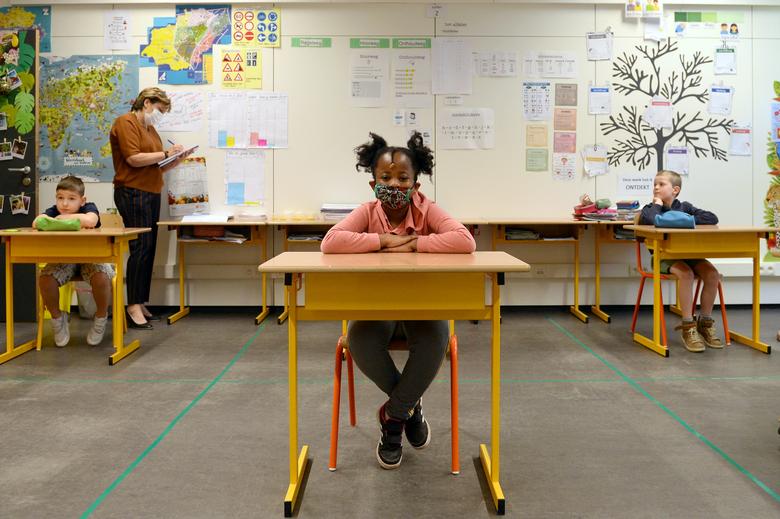
(The Southern African Times) – Rarely does a topic on education elicit such passionate debate as the one about private and public schools. Some 350 million students across the world are educated in non-state schools, ranging from faith-based institutions and schools run by NGOs to for-profit schools. Non-state actors also run school buses, supply uniforms, produce textbooks and manage school canteens. Technology companies have made advances into education as well, especially during the COVID-19 pandemic – from online testing to virtual classrooms.

There are many reasons why the private sector is playing such a significant role in education. One of the attractions is that there is a potential market for them. Globally 1.6 billion children and young people head to class each day around the world and $5 trillion is spent on education every year.

So what are the consequences of the presence of the private sector in education?

ADVERTISEMENT

There is no denying that many non-state actors are delivering where there is need: in conflict situations, in crises, in many countries where the public education system is dysfunctional. But there is also no denying that while governments are bound by their public commitments to education equity, the private sector is not.

To investigate the role and impact of non-state actors in education worldwide, UNESCO put together the 2021/2 Global Education Monitoring Report. Entitled “Who Chooses? Who Loses?”, it explores how the right of all children to have 12 years of free education, to which all counties committed in 2015 in the Education 2030 Framework for Action, can be compromised by a stronger role of private actors.

In the report, we cite many examples of strong collaborative partnerships between private and public actors, designing skills systems tuned to the labour market, for instance. But there are also many occasions in which the governance and oversight of the multitude of actors in education have gotten out of control and have led to the fragmentation of education systems.

The big challenge now is to make sure that the presence of the private sector in education is not making it harder for school children who, due to poverty, are falling behind in their education. Despite some well-meaning regulations, it can be hard to guarantee that private schools will support governments’ agendas to help such children.

Our report shows that in about 40 countries, the children of the richest households were 10 times more likely than the poorest to attend private primary school. Recognising the potential dangers for equity, over a quarter of countries have banned for-profit provision in primary and secondary education.

Such measures, however, are rarely imposed in early childhood education, a period that is critical to the development of a child and their potential later on in life. At this level, private providers are even more present than in primary and secondary education. In many countries, this renders kindergartens unaffordable for the poorest families – precisely those who need such services the most, as they are more likely to have no other options for childcare. For example, in the United States, where poverty disproportionately affects Black people and where there is a significant lack of state-funded early education institutions, Black families with two young children have to spend 56 percent of their income on average on pre-kindergarten and kindergarten education.

Our report calls on governments to make sure that, whoever is involved in education and whatever they are doing, they are respecting and abiding by the values of equity and allow every child to fulfil their potential. There are a few solutions we recommend.

First, governments should follow their public commitments and invest in free, good quality, state education. They should make sure that the poorest families, which do not have the funds to pay for better education elsewhere, can always access a good quality school where they are. But one in three countries is still spending on education below the two internationally agreed benchmarks: at least 4 percent of GDP or at least 15 percent of total public spending.

As a result, costs for public schools are often offloaded to parents. In Uganda, for example, families regularly pay informal fees to go to school even though this is against the law. Eliminating such costs has been proven to have substantial benefits. A scholarship programme in the Gambia that covered informal fees for uniforms and books increased the enrolment of girls by 13 percent.

Second, governments should ensure that regulations covering state and non-state schools are equitable and enforced. Our report compiled and assessed regulations in over 200 education systems. It found that while an array of rules exists on paper, they are not properly enforced. This is most obvious in countries such as Nigeria where the proliferation of unregistered low-fee schools of low quality is jeopardising the education of many children.

Regulations that actually promote equitable education are not common. About 55 percent of countries try to prevent selective student admission procedures in non-state schools, but only 7 percent of countries have quotas to support access to schools for disadvantaged students.

Our report calls on all governments to take a serious look at schools, teachers and students together as they are part of the same education system. Governments cannot turn a blind eye to privilege or to disadvantage – as they have so often done during the pandemic. Regulations should work for everyone and should promote equity and quality for all, not fancy ideas for some.

Previous Post

South Africa’s Ramaphosa says ANC needs renewal to regain support

Next Post

Which country never leaves?

SAT Reporter

Related Posts

BREAKING NEWS| South Africa’s Reserve Bank Slashes Interest Rates by 25 Basis Points, Repo Now at 7%
Just In

BREAKING NEWS| South Africa’s Reserve Bank Slashes Interest Rates by 25 Basis Points, Repo Now at 7%

by Times Reporter
July 31, 2025
South Africa Struggles to Keep G20 Poverty Talks on Track Amid Aid Cuts and No-Shows
Just In

South Africa Struggles to Keep G20 Poverty Talks on Track Amid Aid Cuts and No-Shows

by SAT Reporter
February 26, 2025
Former Zimbabwean Vice-President Phelekezela Mphoko Passes Away
Just In

Former Zimbabwean Vice-President Phelekezela Mphoko Passes Away

by Leo Muzivoreva
December 6, 2024
President Ramaphosa to Announce New Cabinet on Sunday Evening
Just In

President Ramaphosa to Announce New Cabinet on Sunday Evening

by SAT Reporter
June 30, 2024
Madagascar’s Ruling Party Loses Parliamentary Majority
Just In

Madagascar’s Ruling Party Loses Parliamentary Majority

by SAT Reporter
June 12, 2024
Next Post
Which country never leaves?

Which country never leaves?

Browse by Category

  • Africa AI
  • African Continental Free Trade Area
  • African Debt
  • African Start ups
  • Agriculture
  • AI Africa
  • Algeria
  • All News
  • Analysis
  • Angola
  • Arts / Culture
  • Asia
  • Botswana
  • BOTSWANA
  • BREAKING NEWS
  • BRICS
  • Burkina Faso
  • Burundi
  • Business
  • Business
  • Business Wire
  • Cameroon
  • Central Africa
  • Chad
  • China
  • Climate Change
  • Climate Changev
  • Community
  • Congo Republic
  • Conservation
  • Côte d’Ivoire
  • COVID 19
  • CRYPTOCURRENCY
  • Culture
  • Democratic Republic of Congo
  • Diplomacy
  • Eastern Africa
  • Economic Development
  • Economy
  • Education
  • Egypt
  • Elections 2024
  • Energy
  • Entertainment
  • Environment
  • Eritrea
  • Ethiopia
  • Europe
  • Fashion
  • Feature
  • Finance
  • Financial Inclusion
  • Food
  • Food and Drink
  • Foods
  • GABON
  • Ghana
  • Global
  • Global Africa
  • Guinea
  • Health
  • Humanitarian Aid
  • Immigration
  • in Southern Africa
  • International news
  • International Relations
  • Investment
  • Ivory Coast
  • Just In
  • Kenya
  • Lesotho
  • Libya
  • Life Style
  • Lifestyle
  • Literature
  • Malawi
  • Malawi
  • Mali
  • Markets
  • Mauritius
  • Middle East
  • Mining in Africa
  • Morocco
  • Mozambique
  • Namibia
  • Niger
  • niger
  • Nigeria
  • North Africa
  • North-Eastern Africa
  • Obituaries
  • Obituary
  • Opinion
  • PARTNER CONTENT
  • Politics
  • Property
  • Racism
  • Rwanda
  • Rwanda
  • SADC
  • SAT Interviews
  • SAT Investigation
  • SAT Jobs
  • Saudi Arabia
  • Senegal
  • Seychelles
  • Somaliland
  • South Africa
  • South Sudan
  • Sports
  • Startup Africa
  • STOCK EXCHANGE
  • Sudan
  • Sustainability
  • Sustainablity
  • Tanzania
  • Technology
  • Telecommunications
  • The Editorial Board
  • The Power Of She
  • Togo
  • Trade
  • Travel
  • Travel
  • Tunisia
  • Uganda
  • Uncategorized
  • Wealth
  • West Africa
  • World
  • World
  • ZAMBIA
  • Zambia
  • Zimbabwe
  • ZIMBABWE

Browse by Tags

#NewsUpdate #SouthAfrica #SouthernAfricanTimes #TheSouthernAfricanTimes AfCFTA africa African Continental Free Trade Area African development African Development Bank African economies African economy African Union Agriculture Angola Botswana China Climate change critical minerals Cyril Ramaphosa Economic Development economic growth energy transition governance industrialisation Inflation Infrastructure Infrastructure Development International relations Investment Kenya Mozambique Namibia news Nigeria Regional Integration renewable energy Rwanda SADC South Africa Southern Africa sustainable development Tanzania United States Zambia Zimbabwe
ADVERTISEMENT

WHO WE ARE

The Southern African Times is a regional bloc digital newspaper that covers Southern African and world news. The paper also gives a nuanced analysis on news and covers a wide range of reporting which include sports, entertainment, foreign affairs, arts and culture.

Welcome Back!

Login to your account below

Forgotten Password?

Retrieve your password

Please enter your username or email address to reset your password.

Log In
  • Home
  • Southern Africa
  • Business
    • African Start ups
    • African Continental Free Trade Area
  • Technology
    • Lifestyle
      • Health
      • Culture
      • Food and Drink
      • Entertainment
  • Opinion
  • Sports
  • SAT Jobs
    • Events
  • About Us
    • Advertise with Us
    • Contact Us
Not enough quota to unlock this post
Unlock left : 0
Are you sure want to cancel subscription?