Thursday, July 2, 2026
  • Login
The Southern African Times
  • Home
  • Southern Africa
  • Business
    • African Start ups
    • African Continental Free Trade Area
  • Technology
    • Lifestyle
      • Health
      • Culture
      • Food and Drink
      • Entertainment
  • Opinion
  • Sports
  • SAT Jobs
    • Events
  • About Us
    • Advertise with Us
    • Contact Us
No Result
View All Result
  • Home
  • Southern Africa
  • Business
    • African Start ups
    • African Continental Free Trade Area
  • Technology
    • Lifestyle
      • Health
      • Culture
      • Food and Drink
      • Entertainment
  • Opinion
  • Sports
  • SAT Jobs
    • Events
  • About Us
    • Advertise with Us
    • Contact Us
No Result
View All Result
The Southern African Times
No Result
View All Result
Home Just In

Rwanda and the DRC get closer despite lingering tensions

by SAT Reporter
March 5, 2020
in Just In
0
Rwanda and the DRC get closer despite lingering tensions

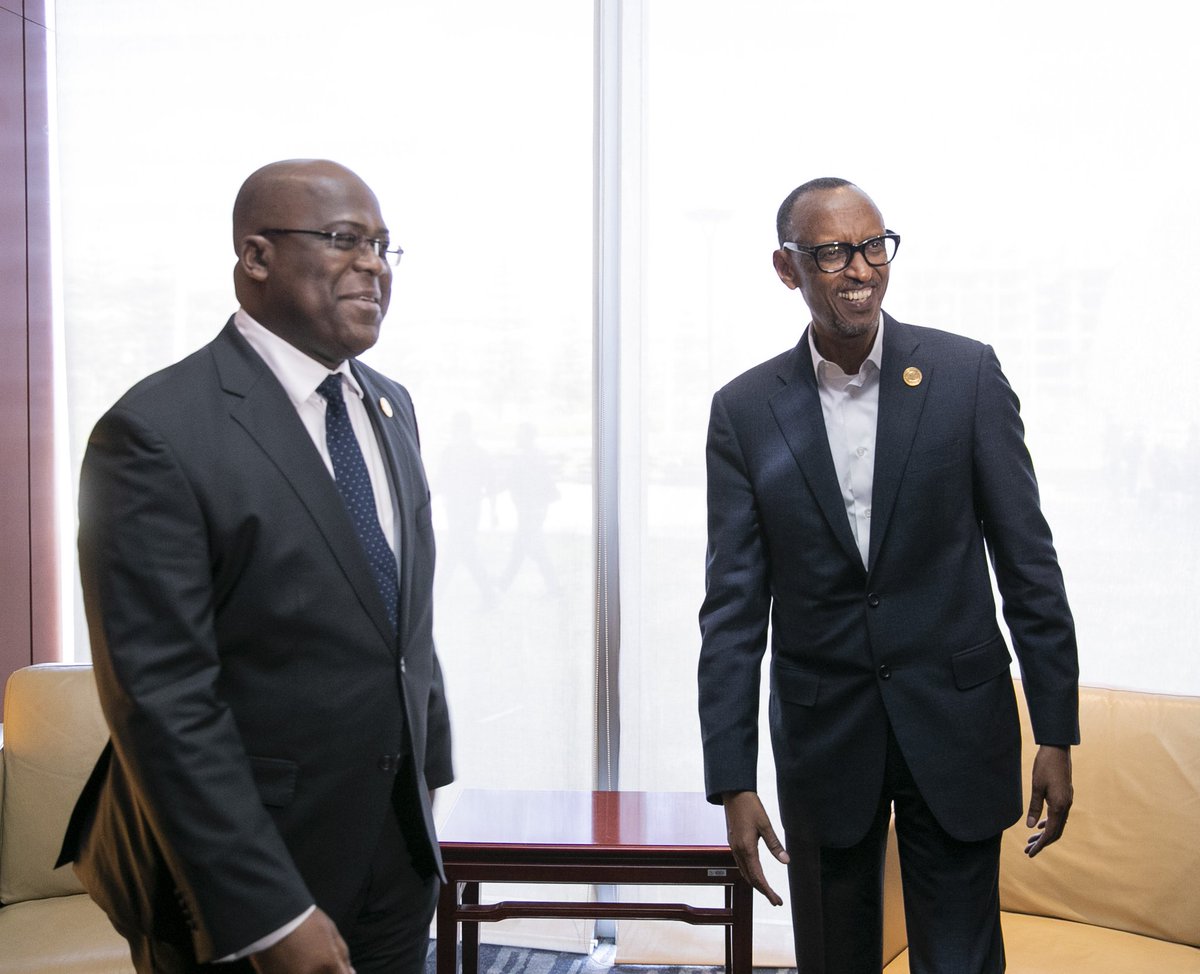
A photo, taken on 8 December 2019, was enough to unleash the critics. In the photo, taken during the Kusi Ideas Festival in Kigali, Félix Tshisekedi, all smiles, is hand-in-hand with his host of the day, his Rwandan counterpart, Paul Kagame. The reaction on social networks was instant and angry.

Seth Kikuni, the youngest of the candidates for the Congolese presidential election in December 2018, said he was “indignant, disgusted” and believed “that we must at least think about the families of victims who have fallen in the east of the country since 1996”.

The view was quickly shared by many others. Kasongo Mwena Yamba Y’amba, the spokesman for the Congolese presidency, was forced to intervene to contain the swelling controversy.


ADVERTISEMENT

The Kigali photo

The controversy died down, but “the picture of Kigali” remains symptomatic of a certain unease.

The unexpected diplomatic rapprochement, launched more than a year ago by Kigali and Kinshasa, seemed to provoke many tensions in the DR Congo, where no one has forgotten the tumultuous history linking the two countries for the last 25 years.

Not surprisingly, the term “balkanisation”, in vogue at the end of the 1990s and the beginning of the 2000s, when rebels supported by Uganda and Rwanda were working on Congolese territory, resurfaced in the comments of many political and religious actors.

Paul Kagame on tensions within the EAC

Behind this is the idea that neighbouring states are plotting, with the help of certain communities present on the national territory, to annex the eastern provinces, where insurgent armed groups are active.

In early January, Cardinal Fridolin Ambongo told the leaders of neighbouring countries “to stop dumping their populations in Congo”.

The issue had surfaced in December, when Adolphe Muzito, the coordinator of the opposition Lamuka platform, stated that “war in Rwanda is necessary to restore peace in the region”.

Despite the inflammable context, Kinshasa and Kigali stand by their actions. “The past is used for political ends, but the relationship between our two countries is as solid as it is dynamic,” said Nicolas Kazadi, ambassador-at-large and advisor to Tshisekedi.

t is a diversion of the opposition and members of the Church who are dissatisfied with the rapprochement and the military operations underway,” added Olivier Nduhungirehe, Secretary of State at the Rwandan Ministry of Foreign Affairs.

But according to a diplomatic source in Kinshasa, these tensions are mainly fuelled by “the persistent vagueness about the motivations and the scope of the reconciliation”.

The contestation of the AU

The Rwanda-Congolese rebuilding process has come a long way, but to understand its beginnings, we must go back to the evening of 18 January 18, 2019.

The sun was already hidden by the hills of Kigali when an official convoy, sirens screaming, rushed towards the ultra-secure Urugwiro complex that houses the presidency. Aboard the gleaming SUVs, was a Congolese delegation, including Kalev Mutond, then head of the DRC’s National Intelligence Agency (ANR).

The situation was tense. The day before, Paul Kagame, as chair of the AU for a few more days, had unexpectedly challenged the results of the Congolese presidential election, which gave Tshisekedi victory. He called for a suspension of the announcement of the results and ordered a mission to travel to Kinshasa — to be led by the Rwandan head of state.

Joseph Kabila, who viewed this as a “betrayal” orchestrated by Kigali, sent his emissaries to his neighbour’s house.

The rest is well known. Twenty-four hours later, the Congolese Constitutional Court validated the results of the vote — Félix Tshisekedi was elected — and the AU registered a diplomatic triumph.

However, Paul Kagame, persona non grata in DR Congo, took advantage of this visit to lay the foundations for a future rapprochement with the envoys from Kinshasa.

Only a few hours after this meeting, two leaders of the Democratic Forces for the Liberation of Rwanda (FDLR) were discreetly taken to Kigali, one month after their arrest in the DRC. A transfer that will make it possible to begin the resumption, then hardly imaginable, of relations between the two countries.

Three weeks after the AU coup, the two heads of state met for the first time at the summit of the pan-African organisation in Addis Ababa. Those in attendance, judged the tête-à-tête positive, with the Rwandans insisting on “the concordance of agendas in terms of economic cooperation and especially security”.

“Once the election was validated, Kigali quickly understood that the coming to power of Felix Tshisekedi offered a real diplomatic opportunity at a time when its relations with Uganda and Burundi were deteriorating considerably,” said a UN source in the region.

From then on, the two neighbours shifted up a gear.

Thanks to the facilitation of the Kenyan and Angolan chancelleries and with the help of Vital Kamerhe, his chief of staff, Tshisekedi, commented on the rapprochement during the Africa CEO Forum on 26 March 2019 in Kigali.

Two months later, in Kinshasa, at the funeral of Etienne Tshisekedi, Paul Kagame was in turn applauded by the crowd in the Martyrs’ stadium. The page of the January imbroglio seemed to have been definitively turned.

Previous Post

Children on precipice of existential threat from lack of climate action, UN reports

Next Post

South Africa confirms first case of coronavirus – health ministry

SAT Reporter

Related Posts

BREAKING NEWS| South Africa’s Reserve Bank Slashes Interest Rates by 25 Basis Points, Repo Now at 7%
Just In

BREAKING NEWS| South Africa’s Reserve Bank Slashes Interest Rates by 25 Basis Points, Repo Now at 7%

by Times Reporter
July 31, 2025
South Africa Struggles to Keep G20 Poverty Talks on Track Amid Aid Cuts and No-Shows
Just In

South Africa Struggles to Keep G20 Poverty Talks on Track Amid Aid Cuts and No-Shows

by SAT Reporter
February 26, 2025
Former Zimbabwean Vice-President Phelekezela Mphoko Passes Away
Just In

Former Zimbabwean Vice-President Phelekezela Mphoko Passes Away

by Leo Muzivoreva
December 6, 2024
President Ramaphosa to Announce New Cabinet on Sunday Evening
Just In

President Ramaphosa to Announce New Cabinet on Sunday Evening

by SAT Reporter
June 30, 2024
Madagascar’s Ruling Party Loses Parliamentary Majority
Just In

Madagascar’s Ruling Party Loses Parliamentary Majority

by SAT Reporter
June 12, 2024
Next Post
South Africa confirms first case of coronavirus – health ministry

South Africa confirms first case of coronavirus - health ministry

Browse by Category

  • Africa AI
  • African Continental Free Trade Area
  • African Debt
  • African Start ups
  • Agriculture
  • AI Africa
  • Algeria
  • All News
  • Analysis
  • Angola
  • Arts / Culture
  • Asia
  • Botswana
  • BOTSWANA
  • BREAKING NEWS
  • BRICS
  • Burkina Faso
  • Burundi
  • Business
  • Business
  • Business Wire
  • Cameroon
  • Central Africa
  • Chad
  • China
  • Climate Change
  • Climate Changev
  • Community
  • Congo Republic
  • Conservation
  • Côte d’Ivoire
  • COVID 19
  • CRYPTOCURRENCY
  • Culture
  • Democratic Republic of Congo
  • Diplomacy
  • Eastern Africa
  • Economic Development
  • Economy
  • Education
  • Egypt
  • Elections 2024
  • Energy
  • Entertainment
  • Environment
  • Eritrea
  • Ethiopia
  • Europe
  • Fashion
  • Feature
  • Finance
  • Financial Inclusion
  • Food
  • Food and Drink
  • Foods
  • GABON
  • Ghana
  • Global
  • Global Africa
  • Guinea
  • Health
  • Humanitarian Aid
  • Immigration
  • in Southern Africa
  • International news
  • International Relations
  • Investment
  • Ivory Coast
  • Just In
  • Kenya
  • Lesotho
  • Libya
  • Life Style
  • Lifestyle
  • Literature
  • Malawi
  • Malawi
  • Mali
  • Markets
  • Mauritius
  • Middle East
  • Mining in Africa
  • Morocco
  • Mozambique
  • Namibia
  • Niger
  • niger
  • Nigeria
  • North Africa
  • North-Eastern Africa
  • Obituaries
  • Obituary
  • Opinion
  • PARTNER CONTENT
  • Politics
  • Property
  • Racism
  • Rwanda
  • Rwanda
  • SADC
  • SAT Interviews
  • SAT Investigation
  • SAT Jobs
  • Saudi Arabia
  • Senegal
  • Seychelles
  • Somaliland
  • South Africa
  • South Sudan
  • Sports
  • Startup Africa
  • STOCK EXCHANGE
  • Sudan
  • Sustainability
  • Sustainablity
  • Tanzania
  • Technology
  • Telecommunications
  • The Editorial Board
  • The Power Of She
  • Togo
  • Trade
  • Travel
  • Travel
  • Tunisia
  • Uganda
  • Uncategorized
  • Wealth
  • West Africa
  • World
  • World
  • ZAMBIA
  • Zambia
  • ZIMBABWE
  • Zimbabwe

Browse by Tags

#NewsUpdate #SouthAfrica #SouthernAfricanTimes #TheSouthernAfricanTimes AfCFTA africa African Continental Free Trade Area African development African Development Bank African economies African economy African Union Agriculture Angola Botswana China Climate change critical minerals Cyril Ramaphosa Economic Development economic growth energy transition governance industrialisation Inflation Infrastructure Infrastructure Development International relations Investment Kenya Mozambique Namibia news Nigeria Regional Integration renewable energy Rwanda SADC South Africa Southern Africa sustainable development Tanzania United States Zambia Zimbabwe
ADVERTISEMENT

WHO WE ARE

The Southern African Times is a regional bloc digital newspaper that covers Southern African and world news. The paper also gives a nuanced analysis on news and covers a wide range of reporting which include sports, entertainment, foreign affairs, arts and culture.

Welcome Back!

Login to your account below

Forgotten Password?

Retrieve your password

Please enter your username or email address to reset your password.

Log In
  • Home
  • Southern Africa
  • Business
    • African Start ups
    • African Continental Free Trade Area
  • Technology
    • Lifestyle
      • Health
      • Culture
      • Food and Drink
      • Entertainment
  • Opinion
  • Sports
  • SAT Jobs
    • Events
  • About Us
    • Advertise with Us
    • Contact Us
Not enough quota to unlock this post
Unlock left : 0
Are you sure want to cancel subscription?