Monday, October 12, 2026
  • Login
The Southern African Times
  • Home
  • Southern Africa
  • Business
    • African Start ups
    • African Continental Free Trade Area
  • Technology
    • Lifestyle
      • Health
      • Culture
      • Food and Drink
      • Entertainment
  • Opinion
  • Sports
  • SAT Jobs
    • Events
  • About Us
    • Advertise with Us
    • Contact Us
No Result
View All Result
The Southern African Times
No Result
View All Result
Home Environment

Children on precipice of existential threat from lack of climate action, UN reports

by Farai Muvuti
March 5, 2020
in Environment
0
Children on precipice of existential threat from lack of climate action, UN reports

Climate change and ecological degradation are threatening the health and future of children in every country, and every country in the world is failing to shield children from these threats, according to the findings of a recent landmark report released by a Lancet Commission of over 40 child and adolescent health experts from around the world. The Commission was convened by the World Health Organization, the United Nations Children’s Fund and The Lancet.

Children in the biggest carbon-emitting nations are the healthiest, while those in countries with tiny environmental footprints suffer twofold from poor health and high risk of exposure to the harshest impacts of the climate crisis, finds the report.

The report highlights the Central African Republic, Chad, Somalia, Niger and Mali as facing the worst threats. Each of these countries is responsible for less than 0.01 per cent of global emissions. “More than 2 billion people live in countries where development is hampered by humanitarian crises, conflicts and natural disasters–problems increasingly linked with climate change,” said Senegal Minister of State Awa Coll-Seck, Co-Chair of the Commission.


ADVERTISEMENT

If global warming reaches 3.2°C by the end of the century, as the United Nations Environment Programme’s (UNEP) Emissions Gap Reportestimates, based on current climate action commitments, this will result in devastating health consequences for children at that time, in the form of extreme weather events, heatwaves, disease proliferation and food scarcity. These consequences are compounded by economic disadvantages, which make it harder for people to avoid, adapt and recover from the results of extreme weather events, such as crop failure.

The scale of the humanitarian tragedy of Hurricane Idai in Mozambique is a warning example of the vulnerabilities and risks to come.

The report also challenges any perception that the lowest emitting countries will be less motivated to support climate action and the global transition to renewable energy, showing as it does that the lowest emitting countries will disproportionately suffer.

Niklas Hagelberg, UNEP’s Climate Change Coordinator, gives four reasons why African countries are acting on the global climate emergency:

  1. The region increasingly recognizes that its growth trajectory must be achieved without increasing fossil fuel emissions that will compound climate change effects and increase humanitarian and economic climate risks.
  2. Regional policymakers are paying close attention to Article 7 of the Paris Agreement, which underscores how increased mitigation ambition is the best insurance against escalating adaptation costs.
  3. Africa has the best solar resources on the planet, and its agro-value chain is worth up to 65 per cent of all global arable land. The region has the potential to leverage these two major advantages–along with its greater freedom from existing carbon-dependent economic models compared to other regions–to drive globally competitive low emissions and clean energy–powered enterprises.
  4. Nearly 50 per cent of the current population in Africa are children. This means that while securing the future for Africa is interwoven with protecting the future of its children, this is also an emerging generation that will be at the forefront of a global clean energy transition.

As African policymakers prepare to gather in Kigali, Uganda, in April for Africa Climate Week, this will be an opportunity for the region not only to examine its national climate adaptation plans but also to emerge with accelerated ambition for the adaptation and resilience policies it can bring to those plans ahead of the Climate Summit in Glasgow. Calling for renewable development options is a demand Africa’s trading partners should heed.  

The report’s commissioners call on governments to take action to ensure children inherit a liveable planet. Ultimately, the largest emitters have the greatest opportunities to decarbonize our shared climate, both by reducing their own emissions and by enabling developing countries to embrace vast low-emissions development potential and leap beyond carbon-dependent development. This will be to the socioeconomic advantage of Africa and to the advantage of those who tread the world with the smallest and lightest feet. 

Previous Post

Azuri launches Brighter Lives initiative for women in rural Africa

Next Post

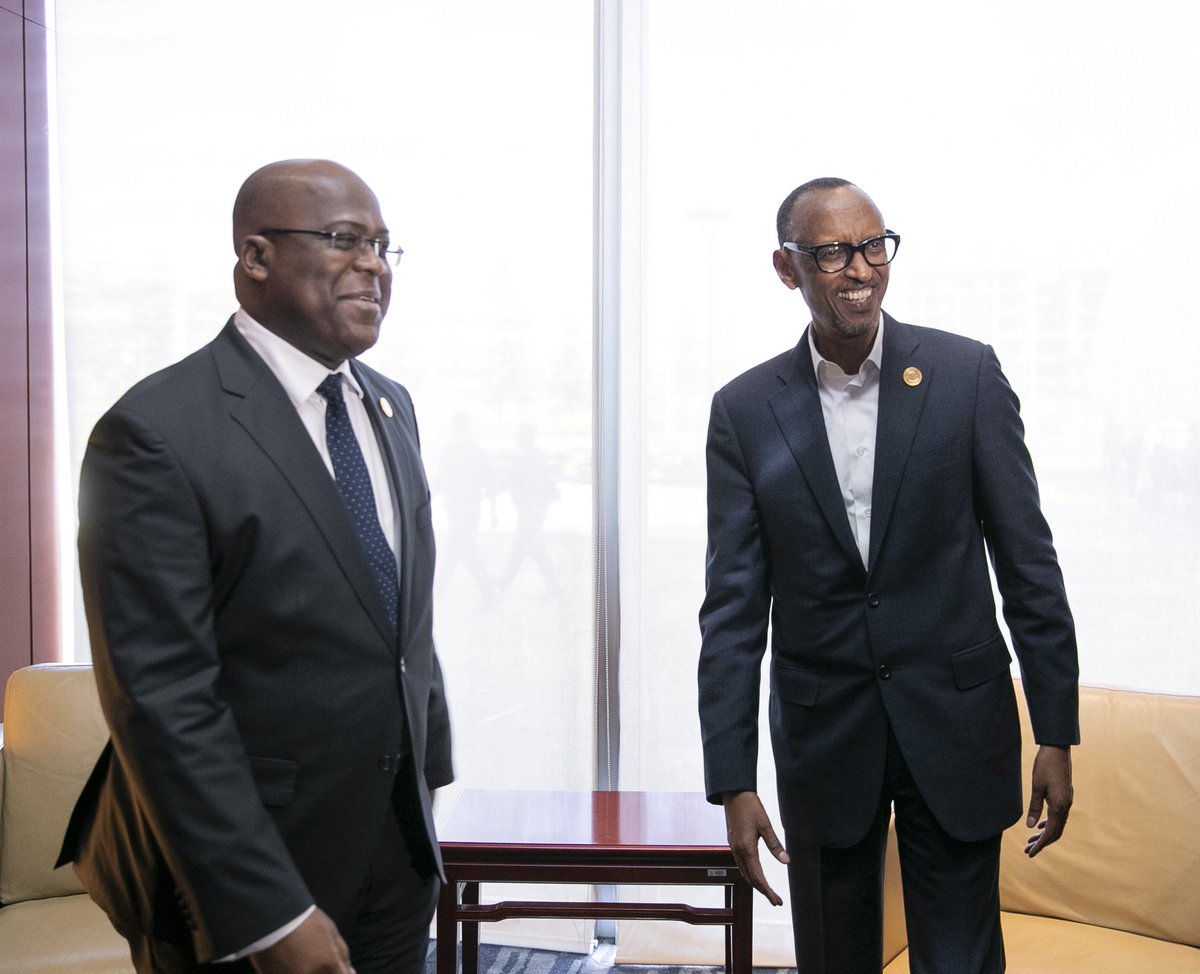
Rwanda and the DRC get closer despite lingering tensions

Farai Muvuti

Related Posts

More Than 400 Million Africans Still Without Basic Drinking Water, UN Warns
Environment

More Than 400 Million Africans Still Without Basic Drinking Water, UN Warns

by Farai Muvuti
July 30, 2026
Waste Colonialism and the Burden of Electronic Waste in Africa
Environment

Waste Colonialism and the Burden of Electronic Waste in Africa

by Farai Muvuti
April 10, 2026
South Africa Reports 16 Percent Decrease in Rhino Poaching in 2025
Environment

South Africa Reports 16 Percent Decrease in Rhino Poaching in 2025

by Farai Muvuti
February 11, 2026
One in Five Mammal Species Face Extinction in Southern Africa, Regional Report Warns
Environment

One in Five Mammal Species Face Extinction in Southern Africa, Regional Report Warns

by Farai Muvuti
January 22, 2026
Investing in Nature Could Unlock Trillions for the Global Economy, Says UN Report
Environment

Investing in Nature Could Unlock Trillions for the Global Economy, Says UN Report

by Farai Muvuti
December 10, 2025
Next Post
Rwanda and the DRC get closer despite lingering tensions

Rwanda and the DRC get closer despite lingering tensions

Browse by Category

  • Africa AI
  • African Continental Free Trade Area
  • African Debt
  • African Start ups
  • Agriculture
  • AI Africa
  • Algeria
  • All News
  • Analysis
  • Angola
  • Arts / Culture
  • Asia
  • BOTSWANA
  • Botswana
  • BREAKING NEWS
  • BRICS
  • Burkina Faso
  • Burundi
  • Business
  • Business
  • Business Wire
  • Cameroon
  • Central Africa
  • Chad
  • China
  • Climate Change
  • Climate Changev
  • Community
  • Congo Republic
  • Conservation
  • CĂ´te d’Ivoire
  • COVID 19
  • CRYPTOCURRENCY
  • Culture
  • Democratic Republic of Congo
  • Diplomacy
  • Eastern Africa
  • Economic Development
  • Economy
  • Education
  • Egypt
  • Elections 2024
  • Energy
  • Entertainment
  • Environment
  • Eritrea
  • Ethiopia
  • Europe
  • Fashion
  • Feature
  • Finance
  • Financial Inclusion
  • Food
  • Food and Drink
  • Foods
  • GABON
  • Ghana
  • Global
  • Global Africa
  • Guinea
  • Health
  • Humanitarian Aid
  • Immigration
  • in Southern Africa
  • International news
  • International Relations
  • Investment
  • Ivory Coast
  • Just In
  • Kenya
  • Lesotho
  • Libya
  • Life Style
  • Lifestyle
  • Literature
  • Malawi
  • Malawi
  • Mali
  • Markets
  • Mauritius
  • Middle East
  • Mining in Africa
  • Morocco
  • Mozambique
  • Namibia
  • Niger
  • niger
  • Nigeria
  • North Africa
  • North-Eastern Africa
  • Obituaries
  • Obituary
  • Opinion
  • PARTNER CONTENT
  • Politics
  • Property
  • Racism
  • Rwanda
  • Rwanda
  • SADC
  • SAT Interviews
  • SAT Investigation
  • SAT Jobs
  • Saudi Arabia
  • Senegal
  • Seychelles
  • Somaliland
  • South Africa
  • South Sudan
  • Sports
  • Startup Africa
  • STOCK EXCHANGE
  • Sudan
  • Sustainability
  • Sustainablity
  • Tanzania
  • Technology
  • Telecommunications
  • The Editorial Board
  • The Power Of She
  • Togo
  • Trade
  • Travel
  • Travel
  • Tunisia
  • Uganda
  • Uncategorized
  • Wealth
  • West Africa
  • World
  • World
  • Zambia
  • ZAMBIA
  • Zimbabwe
  • ZIMBABWE

Browse by Tags

#NewsUpdate #SouthAfrica #SouthernAfricanTimes #TheSouthernAfricanTimes AfCFTA africa African Continental Free Trade Area African development African economies African economy African Union Agriculture Angola Botswana China Climate change critical minerals Cyril Ramaphosa Economic Development economic growth energy transition industrialisation Inflation Infrastructure Infrastructure Development International relations Investment Kenya Mining Mozambique Namibia news Nigeria Regional Integration renewable energy Rwanda SADC South Africa Southern Africa Southern African Times sustainable development Tanzania west africa Zambia Zimbabwe
ADVERTISEMENT

WHO WE ARE

The Southern African Times is a regional bloc digital newspaper that covers Southern African and world news. The paper also gives a nuanced analysis on news and covers a wide range of reporting which include sports, entertainment, foreign affairs, arts and culture.

Welcome Back!

Login to your account below

Forgotten Password?

Retrieve your password

Please enter your username or email address to reset your password.

Log In
  • Home
  • Southern Africa
  • Business
    • African Start ups
    • African Continental Free Trade Area
  • Technology
    • Lifestyle
      • Health
      • Culture
      • Food and Drink
      • Entertainment
  • Opinion
  • Sports
  • SAT Jobs
    • Events
  • About Us
    • Advertise with Us
    • Contact Us