With COP26 ongoing, much of the global climate discussion focuses on efforts to reduce and curb greenhouse gas emissions by turning to cleaner and more efficient energy. And rightly so – we have an opportunity to dramatically mitigate the damage that will be inflicted on our planet in the years to come.
But as we continue to witness the devastating effects of climate change play out across the world, we need to pay closer attention to the solutions that will help us adapt to changes that are already taking place – and consider how to ensure that people everywhere have access to them. The global climate crisis already impacts many people who depend on agriculture to survive.
As the world gathers for COP26, this demands urgent action.



In almost all emissions scenarios, the Intergovernmental Panel on Climate Change (IPCC) expects global warming to hit 1.5C in the early 2030s, and we can be certain that the impact of this change will not be felt fairly across the world. One of the most concerning outcomes of rising temperatures is the very high risk of undernutrition in communities that are dependent upon dryland agriculture.
Drylands are home to more than 2.5 billion people and cover 40 percent of the world’s land surface.
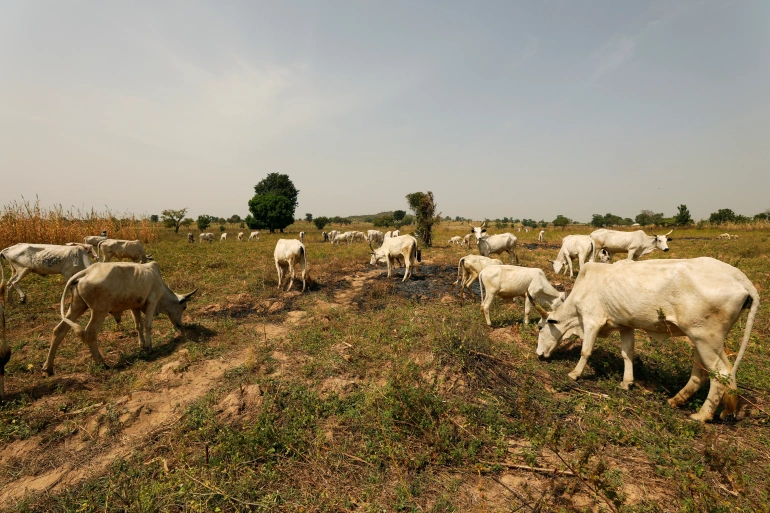
In many dryland countries, such as Botswana or Burkina Faso, populations face a large number of environmental challenges, from water scarcity and droughts to temperature extremes and floods. They are particularly vulnerable to climate change and suffer some of the largest concentrations of food insecurity and poverty in the world.
One of the most vulnerable dryland regions is Sub-Saharan Africa, home to some of the world’s fastest-growing populations, many of which have been grappling with food crises for years. Now agricultural communities in the region will feel the effects of climate change more severely than developed countries even though they have done very little to cause the problem. Some experts predict that we will see a nearly five percent decrease in agricultural production for every degree of global warming.
To avert even more serious hunger crises in the region, we need to build stronger food systems for smallholder farmers. They are the anchor for food systems that feed billions. But often they face barriers to entering or engaging effectively in markets for their agricultural production, which limits their ability to realise a profit from agriculture. Many are constrained by inadequate systems and policies that make it difficult for them to be profitable or to grow enough nutritious food. And now hundreds of millions who depend on agriculture to survive are losing their crops and livestock to a surge of climate extremes.
Investment in agricultural research and development will help provide the tools needed to adapt to changing weather patterns and build resilient food systems that can produce more and better nutrition for communities as well as greater economic stability.
While the world is developing cutting-edge technologies, tools, and best practices for climate-smart agriculture, these assets are not consistently developed or shared broadly with small-scale producers in the Global South. In fact, despite significant progress in agricultural development in recent decades, a majority of farmers on the African continent remain smallholders with limited access to critical resources, systems, services, and technologies.
Addressing the negative impact of climate change on developing countries should start with driving innovation through significant investments in agriculture research. Importantly, we must find ways to connect global innovation to local knowledge. Productivity and prosperity will be achieved through climate-smart agricultural innovation that is adapted and applied to local contexts while contributing to a growing body of evidence for transformation at scale.

And as we invest in innovation, we need to guarantee that the solutions produced are inclusive. This means ensuring small-scale producers in Sub-Saharan Africa and other regions in the Global South have access to the tools that enable agricultural productivity under changing weather conditions as well as access to thriving markets. It also means a special focus on women and young people to ensure that they are empowered to contribute to the challenge as well.
Ultimately, supporting smallholder farmers will not only build more resilient food systems. It will also strengthen economies in the countries that are being left behind. Smallholder farmers provide most of the employment in fast growing regions like Sub-Saharan Africa. And agriculture is effective in reducing poverty and improving food security for 65 percent of the world’s poor, who work mainly in farming.
Empowering smallholder farmers and tackling all aspects of climate change including adaptation and resilience is of growing importance to all global partners present at COP26 today and an increasing interest for both the Qatar Fund for Development and the Gates Foundation. It will help boost the economies of the region and improve the ability to which people are able to respond and adapt to climate change. If we do not invest in inclusive adaptation solutions, we risk missing the full picture on climate, but also losing the global fight against hunger and poverty.
Joe Cerrell is the Managing Director for Europe, the Middle East, and East Asia (EMEEA) at the Bill and Melinda Gates Foundation. Prior to his time at the foundation, he served in a variety of senior roles in government and strategy consulting practices, including positions in the Clinton White House under former Vice President Al Gore and at APCO Worldwide.
Khalifa Al-Kuwari is the Director General of the Qatar Fund for Development Before joining the fund, he was Qatar Investment Authority’s Executive Director of Joint Venture and International Business, where he managed the investment joint ventures and government-to-government relations.