Monday, July 6, 2026
  • Login
The Southern African Times
  • Home
  • Southern Africa
  • Business
    • African Start ups
    • African Continental Free Trade Area
  • Technology
    • Lifestyle
      • Health
      • Culture
      • Food and Drink
      • Entertainment
  • Opinion
  • Sports
  • SAT Jobs
    • Events
  • About Us
    • Advertise with Us
    • Contact Us
No Result
View All Result
  • Home
  • Southern Africa
  • Business
    • African Start ups
    • African Continental Free Trade Area
  • Technology
    • Lifestyle
      • Health
      • Culture
      • Food and Drink
      • Entertainment
  • Opinion
  • Sports
  • SAT Jobs
    • Events
  • About Us
    • Advertise with Us
    • Contact Us
No Result
View All Result
The Southern African Times
No Result
View All Result
Home Opinion

Geostrategic dimensions of Sudan’s latest unrest

by SAT Reporter
October 27, 2021
in Opinion
0
Geostrategic dimensions of Sudan’s latest unrest

Sudan experienced its second unrest in two years on October 25 after the armed forces seized power and dissolved the joint civilian-military Sovereign Council that was supposed to transfer power to civilian control by sometime next month. The first unrest there in recent memory took place in 2019 after the military ousted former long-serving leader Omar al-Bashir, who himself came to power in a unrest in 1989, following large-scale protests against his rule that were driven by their participants’ desire for political and economic reform.

The latest unrest comes after similar protests driven by the same reasons. Several failed coup attempts have happened since then, with the most recent one occurring last month. It also occurred right after U.S. Special Envoy for the Horn of Africa Jeffrey Feltman left Khartoum, prompting speculation among some that America might have been behind this latest regime change, which resulted in Sudan’s suspension from the African Union. For what it’s worth, the U.S. has officially condemned the unrest and paused $700 million in emergency assistance to the country.

There are some key stakeholders in Sudanese stability, which is why the events that just transpired there might have some significant geostrategic dimensions. This country only recently emerged from Western isolation over the past few years after former President Omar al-Bashir joined the Saudi-led war in Yemen. The U.S. had designated Sudan as a “state sponsor of terrorism” in 1993 for supporting armed Palestinian groups and hosting Osama bin Laden. In response, Sudan moved closer to China, Russia and reportedly also Iran for some time.


ADVERTISEMENT

Joining the Saudi-led war in Yemen brought Sudan closer to the nearby U.S.-friendly Gulf Cooperation Council (GCC), which resulted in the country severing its ties with Iran in January 2016 in solidarity with Riyadh, and served as an icebreaker of sorts for unofficially initiating talks with the United States. Following Bashir’s ouster, Saudi Arabia and the UAE quickly moved in to provide Sudan’s new military authorities with much-needed aid. This could be interpreted as a reward for removing the man who backed their Muslim Brotherhood foes.

That doesn’t automatically mean that they were behind the 2019 unrest, but it nevertheless advanced their regional security interests in that respect. The GCC’s close Egyptian partner that neighbors Sudan and which is presently led by its former commander-in-chief who deposed the prior Muslim Brotherhood-allied government of the late Mohamed Morsi in 2013 must also have been pleased by that development for similar reasons. Quite naturally then, Sudan strengthened its relations with the GCC and Egypt after its 2019 unrest.
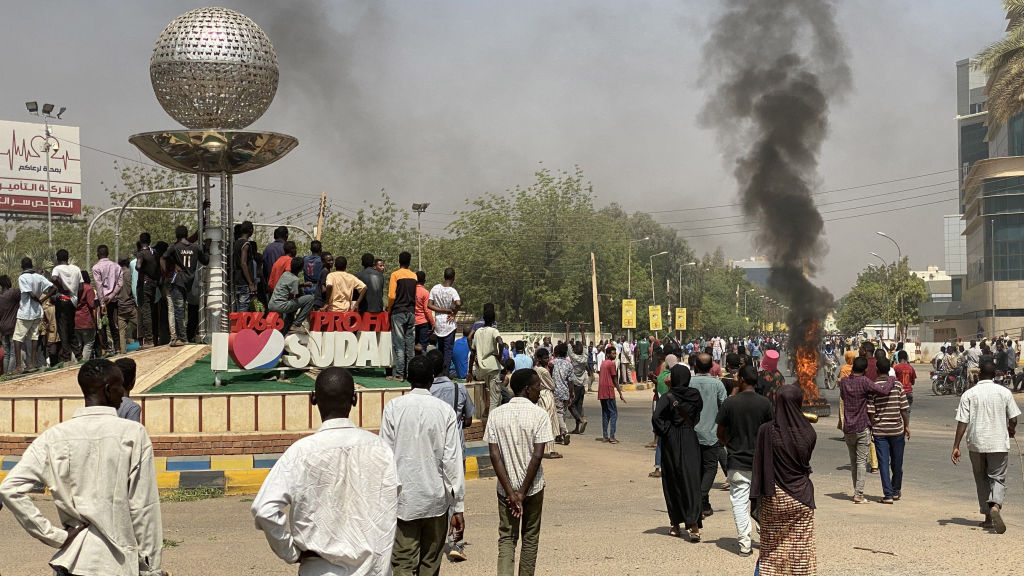
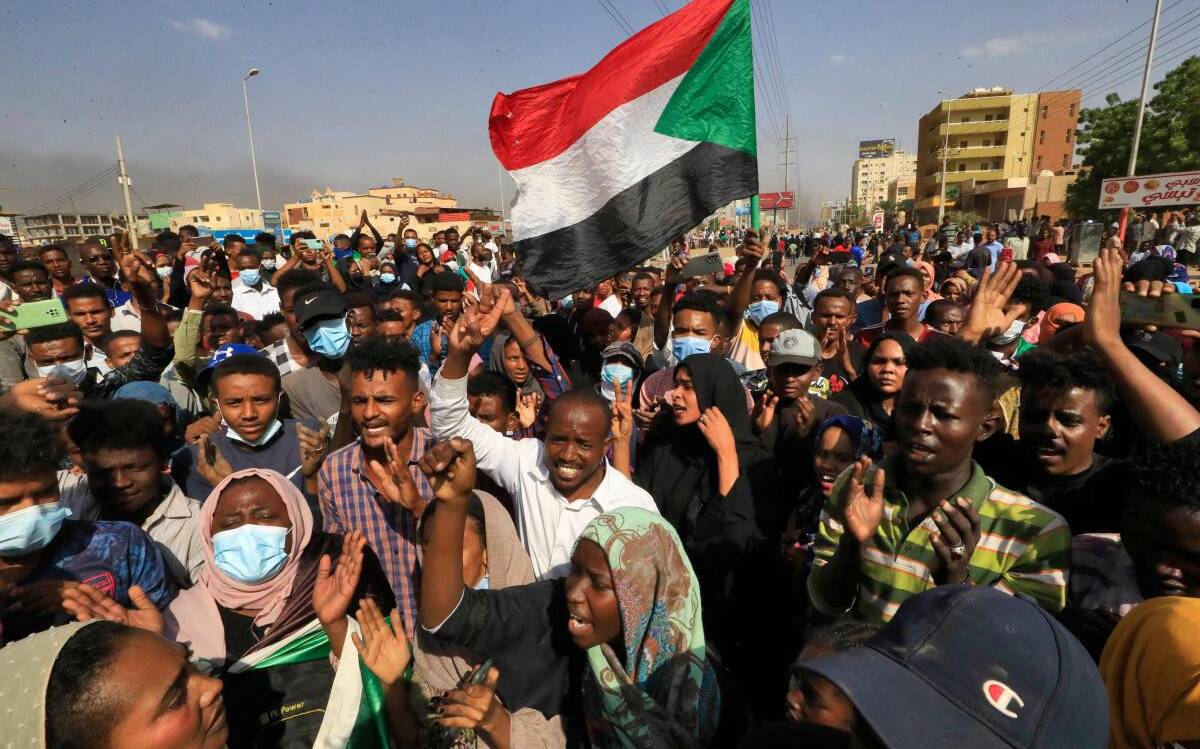
Sudanese people take to the streets during an unrest in Khartoum, Sudan, October 25, 2021. /Getty

It also reached a U.S.-mediated agreement to normalize relations with Israel last year, following in the footsteps of GCC members Bahrain and the UAE, which were preceded by Egypt several decades prior. America eventually removed Sudan from its list of “state sponsors of terrorism” last December in what was likely a quid pro quo for its military’s removal of Bashir and their agreement with Israel two months before. As it currently stands, there isn’t any reason to expect these policies to change after the latest unrest.

Ties with China are also expected to remain strong because their Belt & Road Initiative (BRI) cooperation is mutually beneficial. They weren’t adversely affected after the 2019 unrest and likely won’t be negatively impacted by the latest one. These economic relations can help Sudan balance between the West (U.S./Israel), Near East (GCC/Egypt), and East (China). What’s less certain, though, is how relations with neighboring Ethiopia and Sudan’s close Russian partner will evolve after the unrest.

Sudan shares Egypt’s concerns about the Grand Ethiopian Renaissance Dam (GERD). They fear that Ethiopia could use this megaproject to cut off the Nile River’s flow to their countries, a charge that Addis Ababa denies. Furthermore, a border dispute has recently been revived between Sudan and Ethiopia against the context of the latter’s ongoing anti-terrorist operations in its northern Tigray Region that abuts Sudan and which began in November 2020. The U.S. claims that Ethiopia is carrying out “ethnic cleansing” there, which it also denies.

A U.S.-based Horn of Africa analyst told the BBC on Monday that “the West could consider creating a humanitarian corridor into Tigray from Sudan or declare a no-fly zone.” Such a scenario, which Sudan’s new military authorities might countenance as a strategic compromise for lessening Western pressure against them after their latest unrest, would be regionally destabilizing. As for ties with Russia, these same authorities might bargain away its already uncertain Red Sea naval base in exchange for the same Western pressure relief.

With these geostrategic dimensions in mind, a broad forecast can be made about post-unrest Sudan. Its Western, Near East and Eastern foreign policy vectors probably won’t change, while its relations with Ethiopia and Russia might worsen as part of a Machiavellian compromise. The military authorities urgently need to stabilize the domestic situation, which might require a heavy-handed approach that isn’t aligned with Western values, but advancing U.S. interests vis-a-vis those two countries could deter its criticism and earn its tacit support.

Andrew Korybko is a Moscow-based American political analyst. 

Previous Post

Springboks win over New Zealand buoys Habana

Next Post

France Seizes British Trawler in Post-Brexit Row Over Fishing Rights

SAT Reporter

Related Posts

The Algorithm Didn’t Create Xenophobia. It Made It Impossible to Ignore
Opinion

The Algorithm Didn’t Create Xenophobia. It Made It Impossible to Ignore

by Kundai Vambe
July 4, 2026
LONG READ | The Oldest Alibi: South Africa’s Xenophobia and the Economic Ruin It Presages
Opinion

LONG READ | The Oldest Alibi: South Africa’s Xenophobia and the Economic Ruin It Presages

by Times Reporter
June 30, 2026
President Cyril Ramaphosa’s Opinion: How South Africa’s Natural Splendour Can Drive Inclusive Growth
Opinion

Op-Ed by President Ramaphosa | Protest Is Both a Right and a Responsibility

by Times Reporter
June 29, 2026
The Insurance Hack More Drivers Should Know
Opinion

The Insurance Hack More Drivers Should Know

by Times Reporter
June 22, 2026
Southern African Times Announces Brendan Amadi as Recipient of the 2026 Editorial Recognition of the Year Award
The Editorial Board

Southern African Times Announces Brendan Amadi as Recipient of the 2026 Editorial Recognition of the Year Award

by The Editorial Board
June 19, 2026
Next Post
France Seizes British Trawler in Post-Brexit Row Over Fishing Rights

France Seizes British Trawler in Post-Brexit Row Over Fishing Rights

Browse by Category

  • Africa AI
  • African Continental Free Trade Area
  • African Debt
  • African Start ups
  • Agriculture
  • AI Africa
  • Algeria
  • All News
  • Analysis
  • Angola
  • Arts / Culture
  • Asia
  • Botswana
  • BOTSWANA
  • BREAKING NEWS
  • BRICS
  • Burkina Faso
  • Burundi
  • Business
  • Business
  • Business Wire
  • Cameroon
  • Central Africa
  • Chad
  • China
  • Climate Change
  • Climate Changev
  • Community
  • Congo Republic
  • Conservation
  • Côte d’Ivoire
  • COVID 19
  • CRYPTOCURRENCY
  • Culture
  • Democratic Republic of Congo
  • Diplomacy
  • Eastern Africa
  • Economic Development
  • Economy
  • Education
  • Egypt
  • Elections 2024
  • Energy
  • Entertainment
  • Environment
  • Eritrea
  • Ethiopia
  • Europe
  • Fashion
  • Feature
  • Finance
  • Financial Inclusion
  • Food
  • Food and Drink
  • Foods
  • GABON
  • Ghana
  • Global
  • Global Africa
  • Guinea
  • Health
  • Humanitarian Aid
  • Immigration
  • in Southern Africa
  • International news
  • International Relations
  • Investment
  • Ivory Coast
  • Just In
  • Kenya
  • Lesotho
  • Libya
  • Life Style
  • Lifestyle
  • Literature
  • Malawi
  • Malawi
  • Mali
  • Markets
  • Mauritius
  • Middle East
  • Mining in Africa
  • Morocco
  • Mozambique
  • Namibia
  • niger
  • Niger
  • Nigeria
  • North Africa
  • North-Eastern Africa
  • Obituaries
  • Obituary
  • Opinion
  • PARTNER CONTENT
  • Politics
  • Property
  • Racism
  • Rwanda
  • Rwanda
  • SADC
  • SAT Interviews
  • SAT Investigation
  • SAT Jobs
  • Saudi Arabia
  • Senegal
  • Seychelles
  • Somaliland
  • South Africa
  • South Sudan
  • Sports
  • Startup Africa
  • STOCK EXCHANGE
  • Sudan
  • Sustainability
  • Sustainablity
  • Tanzania
  • Technology
  • Telecommunications
  • The Editorial Board
  • The Power Of She
  • Togo
  • Trade
  • Travel
  • Travel
  • Tunisia
  • Uganda
  • Uncategorized
  • Wealth
  • West Africa
  • World
  • World
  • ZAMBIA
  • Zambia
  • ZIMBABWE
  • Zimbabwe

Browse by Tags

#NewsUpdate #SouthAfrica #SouthernAfricanTimes #TheSouthernAfricanTimes AfCFTA africa African Continental Free Trade Area African development African Development Bank African economies African economy African Union Agriculture Angola Botswana China Climate change Cyril Ramaphosa Economic Development economic growth energy transition fiscal policy governance industrialisation Inflation Infrastructure Infrastructure Development International relations Investment Kenya Mozambique Namibia news Nigeria Regional Integration renewable energy Rwanda SADC South Africa Southern Africa sustainable development Tanzania United States Zambia Zimbabwe
ADVERTISEMENT

WHO WE ARE

The Southern African Times is a regional bloc digital newspaper that covers Southern African and world news. The paper also gives a nuanced analysis on news and covers a wide range of reporting which include sports, entertainment, foreign affairs, arts and culture.

Welcome Back!

Login to your account below

Forgotten Password?

Retrieve your password

Please enter your username or email address to reset your password.

Log In
  • Home
  • Southern Africa
  • Business
    • African Start ups
    • African Continental Free Trade Area
  • Technology
    • Lifestyle
      • Health
      • Culture
      • Food and Drink
      • Entertainment
  • Opinion
  • Sports
  • SAT Jobs
    • Events
  • About Us
    • Advertise with Us
    • Contact Us
Not enough quota to unlock this post
Unlock left : 0
Are you sure want to cancel subscription?