Thursday, June 4, 2026
  • Login
The Southern African Times
  • Home
  • Southern Africa
  • Business
    • African Start ups
    • African Continental Free Trade Area
  • Technology
    • Lifestyle
      • Health
      • Culture
      • Food and Drink
      • Entertainment
  • Opinion
  • Sports
  • SAT Jobs
    • Events
  • About Us
    • Advertise with Us
    • Contact Us
No Result
View All Result
  • Home
  • Southern Africa
  • Business
    • African Start ups
    • African Continental Free Trade Area
  • Technology
    • Lifestyle
      • Health
      • Culture
      • Food and Drink
      • Entertainment
  • Opinion
  • Sports
  • SAT Jobs
    • Events
  • About Us
    • Advertise with Us
    • Contact Us
No Result
View All Result
The Southern African Times
No Result
View All Result
Home Climate Change

What developing countries need to reach net zero

by SAT Reporter
October 12, 2021
in Climate Change, Opinion
0
What developing countries need to reach net zero

The recent report from the Intergovernmental Panel on Climate Change warns that the planet will warm by 1.5 degrees Celsius by 2040 unless urgent measures are taken to eliminate greenhouse-gas emissions. After the report’s release, UN Secretary-General António Guterres aptly called it “a code red for humanity.” Global warming is becoming an increasingly urgent problem, and all countries have a role to play in combating it. But as government officials from around the world prepare to set sustainability targets at the United Nations Climate Change Conference (COP26) in Glasgow next month, they cannot ignore developing countries’ economic distress.

The climate crisis is occurring at a time when governments and businesses in the developing world are wrestling with the impact of COVID-19. As the global economy begins to emerge from the pandemic, it is obvious that developing countries will recover at a slower rate. And the pace of vaccine delivery will complicate the economic situation further. For example, the poorest countries in Africa may not receive enough doses to vaccinate their entire populations before 2023 at the earliest.

So, while acknowledging that addressing climate change is a long-term imperative, the immediate priority for developing countries should be economic growth – revitalizing their economies, reducing poverty, and creating jobs. Building a greener future will yield rewards eventually, but hungry households need food and jobs today.


ADVERTISEMENT

In preparation for the COP26 summit, the G7 and G20 are expected to unveil ambitious plans, which most likely will include a demand for all countries to agree to a unified deadline to reach net-zero emissions by 2060. Large investors and NGOs are demanding that financial institutions immediately cease funding fossil-fuel and forestry projects and decarbonize their operations, and regulators are tightening environmental, social, and governance (ESG) standards (although there is little immediate prospect for harmonized rules). All of these initiatives are welcome, but they fail to consider the challenges facing the developing world.

Of course, developing countries must move toward a greener future and net-zero emissions. But the expected pace of change is unrealistic. Without a viable pathway to green energy and sustainable industries, developing countries could fall even further behind. A better approach would be for wealthier countries to ease the transition by providing emerging economies three resources: time to adapt, financial support, and policy assistance.

First, while the G20 should rally behind a unified set of global standards, it must provide poorer countries with the time they need to meet these standards by relying on staggered deadlines based on development and income levels. While we must not dilute or abandon these standards, we must recognize that the developing world is starting at a disadvantage and deserves time and resources to implement climate plans. 
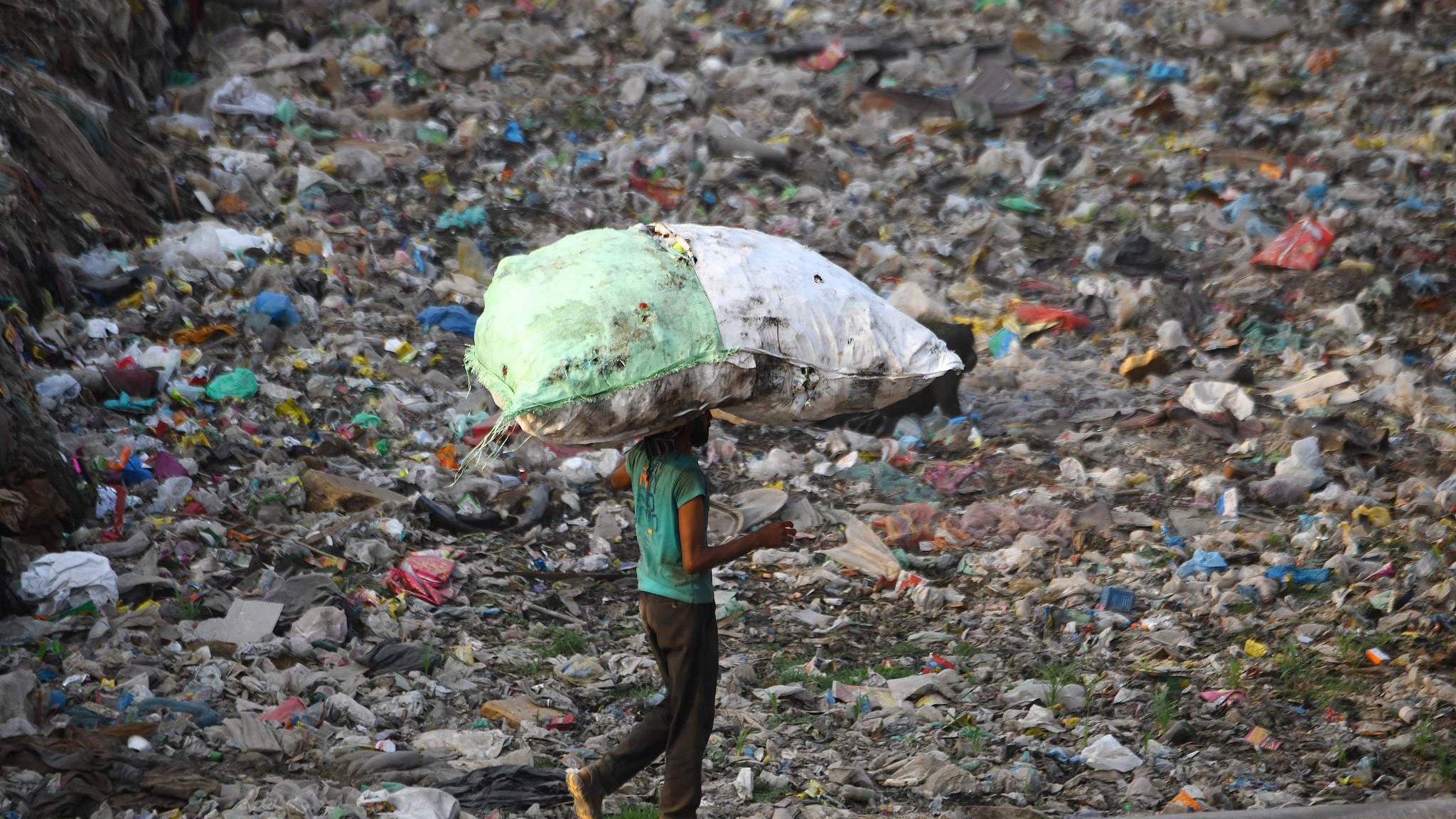
A man carries a bag containing recyclable plastic items in the Taimur Nagar slum area in New Delhi, India, May 30, 2018. /VCG

These plans even may require the continued transitional use of fossil fuels while policymakers prepare a pathway to renewable energy. Meanwhile, the United States, European countries and China, which continue to be the largest global emitters of greenhouse gases and have the capacity to begin moving toward a green future, should start doing so now.

Second, rich countries should fulfill their pledges of financial support for poorer countries’ efforts to mitigate and adapt to climate change. As part of the 2015 Paris climate agreement, the developed world agreed to provide $100 billion in annual assistance to developing countries until 2020. But an independent report issued last December estimated that only a fraction of that assistance materialized. 

As the developing world struggles to deal with the economic costs of the pandemic, this support is even more critical for pushing the climate agenda forward. To be credible, any new commitments from developed countries should include enforceability mechanisms, unlike past promises. Such commitments could be guaranteed by a multilateral institution such as the International Monetary Fund or the World Bank against developed countries’ allocations of special drawing rights, the IMF’s unit of account.

Finally, in addition to financial support, developing countries need policy advice and help with capacity building. Such guidance could include best practices for phasing out expensive fuel subsidies, gaining access to technology, and building the institutions and incentives to attract green capital. These resources will set developing countries on a sustainable path to a low-carbon future. At the same time, recipients need to be held accountable. Creating proper frameworks to assess and select projects, monitor their implementation, and measure progress against appropriate indicators is critical to ensuring that capital is invested effectively.

The transition to a green economy is vital to the future of developing countries. After all, these countries will be the ones most affected by climate change. But one-size-fits-all policies to reduce greenhouse-gas emissions will not work. Unless developed countries recognize the challenges confronting developing and emerging economies and take appropriate steps to help them achieve net-zero emissions, we will all be worse off.

V. Shankar is co-founder and CEO of Gateway Partners, a private equity firm that invests in emerging markets.


Previous Post

AfDB President Adesina Says Nigeria Needs $15bn Annual Investment to Bridge Infrastructure Gap

Next Post

How blockchain can boost trade in Africa

SAT Reporter

Related Posts

The Southern African Times Announces 2026 Editorial Recognition List (Shortlist Phase)
The Editorial Board

The Southern African Times Announces 2026 Editorial Recognition List (Shortlist Phase)

by The Editorial Board
June 2, 2026
Education and the Making of Responsible Citizens
Opinion

Education and the Making of Responsible Citizens

by Brendan Amadi
June 2, 2026
LONG READ | Zimbabwe Is Open for Business. But at What Price?
Opinion

LONG READ | Zimbabwe Is Open for Business. But at What Price?

by SAT Reporter
June 2, 2026
As Cuba Suffocates Under Siege, Why Is Africa Silent?
Opinion

As Cuba Suffocates Under Siege, Why Is Africa Silent?

by The Editorial Board
June 1, 2026
AI Needs Oversight, Not Faith: Lessons from South Africa’s Policy Reversal
Opinion

AI Needs Oversight, Not Faith: Lessons from South Africa’s Policy Reversal

by Sonny Iroche
May 27, 2026
Next Post
How blockchain can boost trade in Africa

How blockchain can boost trade in Africa

Browse by Category

  • Africa AI
  • African Continental Free Trade Area
  • African Debt
  • African Start ups
  • Agriculture
  • AI Africa
  • Algeria
  • All News
  • Analysis
  • Angola
  • Arts / Culture
  • Asia
  • BOTSWANA
  • Botswana
  • BREAKING NEWS
  • BRICS
  • Burkina Faso
  • Burundi
  • Business
  • Business
  • Business Wire
  • Cameroon
  • Central Africa
  • Chad
  • China
  • Climate Change
  • Climate Changev
  • Community
  • Congo Republic
  • Conservation
  • Côte d’Ivoire
  • COVID 19
  • CRYPTOCURRENCY
  • Culture
  • Democratic Republic of Congo
  • Diplomacy
  • Eastern Africa
  • Economic Development
  • Economy
  • Education
  • Egypt
  • Elections 2024
  • Energy
  • Entertainment
  • Environment
  • Eritrea
  • Ethiopia
  • Europe
  • Fashion
  • Feature
  • Finance
  • Financial Inclusion
  • Food
  • Food and Drink
  • Foods
  • GABON
  • Ghana
  • Global
  • Global Africa
  • Guinea
  • Health
  • Humanitarian Aid
  • Immigration
  • in Southern Africa
  • International news
  • International Relations
  • Investment
  • Ivory Coast
  • Just In
  • Kenya
  • Lesotho
  • Libya
  • Life Style
  • Lifestyle
  • Literature
  • Malawi
  • Malawi
  • Mali
  • Markets
  • Mauritius
  • Middle East
  • Mining in Africa
  • Morocco
  • Mozambique
  • Namibia
  • Niger
  • niger
  • Nigeria
  • North Africa
  • North-Eastern Africa
  • Obituaries
  • Obituary
  • Opinion
  • PARTNER CONTENT
  • Politics
  • Property
  • Racism
  • Rwanda
  • Rwanda
  • SADC
  • SAT Interviews
  • SAT Investigation
  • SAT Jobs
  • Saudi Arabia
  • Senegal
  • Seychelles
  • Somaliland
  • South Africa
  • South Sudan
  • Sports
  • Startup Africa
  • STOCK EXCHANGE
  • Sudan
  • Sustainability
  • Sustainablity
  • Tanzania
  • Technology
  • Telecommunications
  • The Editorial Board
  • The Power Of She
  • Togo
  • Trade
  • Travel
  • Travel
  • Tunisia
  • Uganda
  • Uncategorized
  • Wealth
  • West Africa
  • World
  • World
  • Zambia
  • ZAMBIA
  • ZIMBABWE
  • Zimbabwe

Browse by Tags

#NewsUpdate #SouthAfrica #SouthernAfricanTimes #TheSouthernAfricanTimes AfCFTA africa African Continental Free Trade Area African development African Development Bank African economies African economy African Union Agriculture Angola Botswana China Climate change Cyril Ramaphosa Economic Development economic growth energy transition Ghana governance industrialisation Inflation Infrastructure Infrastructure Development International relations Investment Kenya Mozambique Namibia news Nigeria Regional Integration renewable energy Rwanda SADC South Africa Southern Africa sustainable development Tanzania United States Zambia Zimbabwe
ADVERTISEMENT

WHO WE ARE

The Southern African Times is a regional bloc digital newspaper that covers Southern African and world news. The paper also gives a nuanced analysis on news and covers a wide range of reporting which include sports, entertainment, foreign affairs, arts and culture.

Welcome Back!

Login to your account below

Forgotten Password?

Retrieve your password

Please enter your username or email address to reset your password.

Log In
  • Home
  • Southern Africa
  • Business
    • African Start ups
    • African Continental Free Trade Area
  • Technology
    • Lifestyle
      • Health
      • Culture
      • Food and Drink
      • Entertainment
  • Opinion
  • Sports
  • SAT Jobs
    • Events
  • About Us
    • Advertise with Us
    • Contact Us
Not enough quota to unlock this post
Unlock left : 0
Are you sure want to cancel subscription?