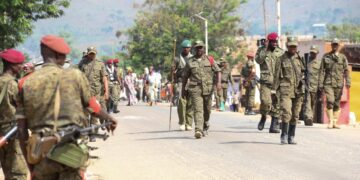
In August 1998, the Democratic Republic of Congo (DRC) became the epicentre of a multifaceted conflict, often referred to as “Africa’s World War,” due to the involvement of multiple African nations and the extensive human toll it exacted. The late President Laurent-Désiré Kabila’s government faced a formidable rebellion supported by Rwanda and Uganda. In response, the Southern African Development Community (SADC) deliberated on a collective intervention. While a joint force was proposed, only Angola, Namibia, and Zimbabwe committed troops on the ground, operating in unison to support Kabila’s regime (SADC 1998 Retrospect). This intervention, spanning from 1998 until Zimbabwe’s withdrawal in 2002, was marked by significant military engagements, strategic manoeuvres, and consequential international ramifications.
The decision by Zimbabwe to deploy troops to the DRC was precipitated by a rapidly deteriorating security situation. In early August 1998, Rwandan forces executed a bold operation by seizing the Kitona military base in the Bas-Congo region, located in the southwestern part of the DRC. This surprise assault involved Rwandan soldiers arriving unannounced on a Boeing 727, swiftly securing the airbase and establishing a foothold in the region. Recognising the imminent threat to Kinshasa, the DRC’s capital, President Kabila sought assistance from regional allies. On 4 August 1998, a military cooperation treaty was signed between Kabila and President Mugabe, formalising Zimbabwe’s commitment to support the DRC government. Subsequently, on 8 August, an elite contingent of Zimbabwean Special Air Service (SAS) personnel, led by Air Marshal Perrance Shiri, was deployed to N’Djili Airport near Kinshasa. This operation, codenamed “Operation Sovereign Legitimacy,” marked the commencement of Zimbabwe’s military intervention.
The Zimbabwe Defence Forces (ZDF), under the command of General Vitalis Zvinavashe (Vitalis Zvinavashe), quickly expanded their role in the conflict, deploying more troops and equipment. The early days of the intervention were characterised by high-intensity battles as Zimbabwean forces worked to prevent Kinshasa from falling into rebel hands. Rwandan-backed rebels had already advanced to the outskirts of the capital, prompting the deployment of Zimbabwean paratroopers and mechanised infantry to reinforce Kabila’s embattled forces. One of the most critical engagements occurred at N’Djili Airport, where Zimbabwean troops successfully repelled an offensive aimed at seizing control of this strategic location. With Kinshasa secured, Zimbabwean forces expanded their operations to counter Rwandan and Ugandan-backed advances in the eastern and southern regions of the DRC.
In the subsequent months, Zimbabwe’s military played a central role in recapturing rebel-held territory, engaging in several key battles that underscored its operational effectiveness. The battle for Mbuji-Mayi in 1999 was particularly significant. As a key diamond-mining city, control of Mbuji-Mayi was essential for both the Congolese government and the rebel factions seeking to finance their war effort. Zimbabwean forces, backed by Angolan and Namibian troops, launched a decisive counteroffensive, successfully driving out Rwandan and Ugandan forces. This victory not only secured vital mineral resources for Kabila’s government but also demonstrated Zimbabwe’s growing military footprint in the conflict.
However, Zimbabwe’s deepening involvement in the war also brought considerable financial strain. The operation was reportedly costing Zimbabwe millions of dollars per month, exacerbating an already fragile economy. Critics within Zimbabwe questioned the long-term sustainability of the intervention, particularly as the government struggled to finance essential domestic programmes. Despite these concerns, Mugabe remained resolute in his commitment to supporting Kabila, viewing the intervention as a means of asserting regional influence and safeguarding Zimbabwe’s economic interests in the DRC’s lucrative mining sector.
As the war progressed, Zimbabwean forces clashed repeatedly with Rwandan and Ugandan troops in some of the most intense battles of the conflict. One such confrontation occurred in Kisangani in 2000, where Zimbabwean and Rwandan troops fought for control of the city in what became known as the Second Battle of Kisangani. This battle, fought largely with heavy artillery and air support, resulted in significant casualties on both sides and further soured relations between Zimbabwe and Rwanda. The fighting in Kisangani underscored the growing divide among the foreign forces in the DRC, as Zimbabwe sought to assert its dominance against Rwanda, which was pursuing its own strategic interests in the mineral-rich eastern provinces.
One of the defining battles of Zimbabwe’s intervention came in December 2000, at Pweto, a town in southeastern DRC near the Zambian border. Zimbabwean forces, along with their Angolan and Congolese allies, launched a major offensive against Rwandan-backed rebels who had entrenched themselves in the area. The battle for Pweto was fierce, involving coordinated airstrikes, mechanised infantry advances, and close-quarters combat. Zimbabwean forces eventually emerged victorious, forcing Rwandan-backed troops into a disorderly retreat across Lake Mweru into Zambia. This was a decisive moment in the war, as it marked the beginning of a shift in momentum against the rebels and reinforced Zimbabwe’s military capability in the region.
Despite battlefield successes, Zimbabwe’s prolonged engagement in the DRC faced mounting political and economic challenges. The international community, particularly the United States and European Union, increasingly scrutinised Zimbabwe’s role in the conflict. In 2001, the US imposed targeted sanctions on key Zimbabwean military and government officials, citing concerns over human rights violations and allegations of economic exploitation of DRC resources (US Sanctions on Zimbabwe). These sanctions exacerbated Zimbabwe’s economic difficulties and contributed to growing domestic opposition to the war.
By 2002, diplomatic negotiations had intensified, with the Lusaka Ceasefire Agreement and subsequent peace talks pushing for the withdrawal of foreign troops from the DRC. Under increasing economic strain and political pressure, Zimbabwe announced the phased withdrawal of its forces, officially ending its military presence in the DRC in October 2002. The withdrawal marked the conclusion of a four-year intervention that had significantly shaped regional geopolitics and underscored Zimbabwe’s military capabilities.
Looking at the present-day situation in the DRC, where tensions between Rwanda and the Congolese government remain high, Zimbabwe’s intervention serves as a historical reference point. The resurgence of armed conflicts in eastern DRC, particularly involving Rwandan-backed militias like the M23, echoes the dynamics of the late 1990s. The lessons from Zimbabwe’s military engagement—both in terms of strategic battlefield successes and the economic and diplomatic repercussions—offer critical insights into the current regional crisis.
As discussions over renewed SADC involvement in the DRC gain momentum, the legacy of Zimbabwe’s past intervention remains relevant. Whether regional forces will once again deploy to stabilise the conflict remains to be seen, but the precedent set by Zimbabwe, Angola, and Namibia in 1998 continues to shape the strategic considerations of African military alliances today.