Monday, May 25, 2026
  • Login
The Southern African Times
  • Home
  • Southern Africa
  • Business
    • African Start ups
    • African Continental Free Trade Area
  • Technology
    • Lifestyle
      • Health
      • Culture
      • Food and Drink
      • Entertainment
  • Opinion
  • Sports
  • SAT Jobs
    • Events
  • About Us
    • Advertise with Us
    • Contact Us
No Result
View All Result
  • Home
  • Southern Africa
  • Business
    • African Start ups
    • African Continental Free Trade Area
  • Technology
    • Lifestyle
      • Health
      • Culture
      • Food and Drink
      • Entertainment
  • Opinion
  • Sports
  • SAT Jobs
    • Events
  • About Us
    • Advertise with Us
    • Contact Us
No Result
View All Result
The Southern African Times
No Result
View All Result
Home in Southern Africa

Zimbabwe Expands Gold Reserves to Support ZiG Currency

by SAT Reporter
June 20, 2025
in in Southern Africa, Zimbabwe
0
Zimbabwe Expands Gold Reserves to Support ZiG Currency

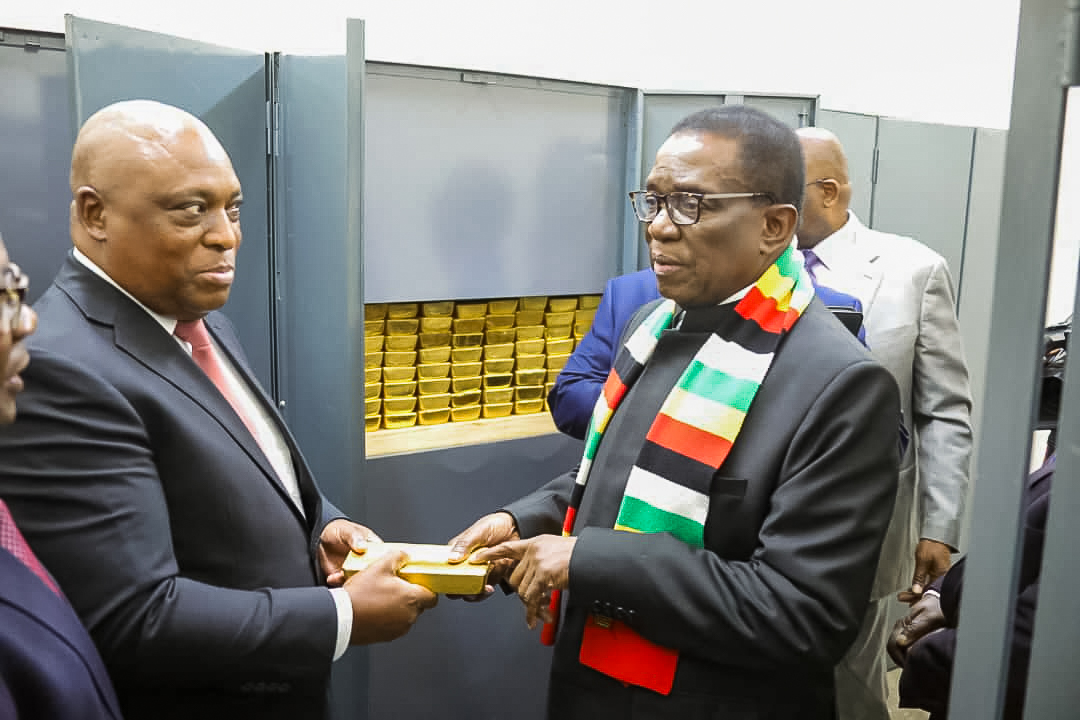
Zimbabwe has increased its national gold reserves to 3.4 metric tonnes, in an ongoing effort to underpin the value of its newly introduced currency, the Zimbabwe Gold (ZiG). The announcement was made on Thursday by the Presidential Communications Department following a visit by President Emmerson Mnangagwa to the Reserve Bank of Zimbabwe’s (RBZ) secure gold vaults.

Introduced in April 2024, the ZiG is a structured attempt to restore monetary stability in Zimbabwe by anchoring the currency in tangible assets such as gold and foreign exchange reserves. The RBZ has since committed to expanding its gold holdings to 5 metric tonnes by the end of 2025, aligning with broader fiscal and monetary reforms intended to restore macroeconomic confidence.

President Mnangagwa emphasised the role of reserves in stabilising national currencies, describing gold as an “essential pillar” in fostering long-term monetary credibility. Speaking after his inspection of the vaults, he highlighted the importance of maintaining strong fundamentals to safeguard the local currency from volatility.


ADVERTISEMENT

RBZ Governor Dr John Mushayavanhu reaffirmed that current reserve levels are adequate to fully back the ZiG currently in circulation. According to his statement, the RBZ’s approach is supported by tight monetary control, disciplined government spending, and a managed supply of liquidity—measures credited for the recent price and exchange rate stability.

The latest figures place Zimbabwe’s gold reserves at 3.4 metric tonnes, still modest by international standards. By comparison, South Africa—Africa’s largest gold producer—holds over 125 metric tonnes, while global leaders such as the United States and Germany retain reserves exceeding 8,000 and 3,300 metric tonnes respectively, as reported by the World Gold Council.

Despite the relatively small scale of Zimbabwe’s holdings, the government views the strategic accumulation of reserves as a foundation for economic discipline. The RBZ has adopted a commodity-backed framework that limits the expansion of the money supply to the country’s reserve levels—aiming to avoid the hyperinflationary pressures that undermined previous local currencies such as the Zimbabwean dollar.

On Wednesday, the International Monetary Fund (IMF) praised Zimbabwe’s recent monetary performance. In a policy assessment, the Fund noted the country’s progress in reducing inflation and stabilising the ZiG through consistent and restrictive fiscal measures. However, the IMF also emphasised the need for structural reforms and sustained transparency to ensure longer-term viability.

Experts have warned that while the reserve-backed model is a positive step, it is not a comprehensive solution. Factors such as export competitiveness, foreign direct investment, governance, and debt sustainability remain critical to long-term economic recovery. Zimbabwe’s external debt remains elevated, and the government continues to seek debt relief under international re-engagement programmes.

As Zimbabwe moves toward its 5-metric-tonne reserve target, observers note that progress will depend not only on domestic gold production but also on the RBZ’s ability to acquire and retain reserves in a transparent and economically viable manner. The country’s gold sector remains one of its most vital, accounting for over 20% of total export receipts in 2024, according to the Zimbabwe National Statistics Agency (ZIMSTAT).

The RBZ has committed to publishing regular reserve data, a step welcomed by economists and international partners advocating for improved financial transparency. The next update on reserve levels is expected in Q3 2025.

Tags: commodity-backed currencyEmmerson Mnangagwafiscal disciplinegold reservesIMFMonetary Policyreserve bank of ZimbabweSouthern AfricaZiG currencyZimbabwe economy
Previous Post

Ethiopia Achieves Historic Export Milestone, Generating USD 7.21 Billion in 11 Months

Next Post

Rwanda Unveils $335.4 Million Plan to Advance Climate-Smart Agriculture

SAT Reporter

Related Posts

Botswana Calls for Africa Led Trade Partnerships During France Africa Talks
Botswana

Botswana Calls for Africa Led Trade Partnerships During France Africa Talks

by SAT Reporter
May 18, 2026
Zambia’s Mining Expansion Extends Beyond Copper as Uranium Projects Gain Momentum
in Southern Africa

Zambia’s Mining Expansion Extends Beyond Copper as Uranium Projects Gain Momentum

by SAT Reporter
May 18, 2026
South Africa Advances Rail and Port Reforms to Strengthen Regional Trade Connectivity
in Southern Africa

South Africa Advances Rail and Port Reforms to Strengthen Regional Trade Connectivity

by SAT Reporter
May 18, 2026
ANC Rallies Behind Ramaphosa as Farmgate Pressure Mounts
South Africa

ANC Rallies Behind Ramaphosa as Farmgate Pressure Mounts

by SAT Reporter
May 14, 2026
Rights Group Details Killings During Uvira Occupation
Democratic Republic of Congo

Rights Group Details Killings During Uvira Occupation

by SAT Reporter
May 14, 2026
Next Post
Rwanda Unveils $335.4 Million Plan to Advance Climate-Smart Agriculture

Rwanda Unveils $335.4 Million Plan to Advance Climate-Smart Agriculture

Browse by Category

  • Africa AI
  • African Continental Free Trade Area
  • African Debt
  • African Start ups
  • Agriculture
  • AI Africa
  • Algeria
  • All News
  • Analysis
  • Angola
  • Arts / Culture
  • Asia
  • Botswana
  • BOTSWANA
  • BREAKING NEWS
  • BRICS
  • Burkina Faso
  • Burundi
  • Business
  • Business
  • Business Wire
  • Cameroon
  • Central Africa
  • Chad
  • China
  • Climate Change
  • Climate Changev
  • Community
  • Congo Republic
  • Conservation
  • Côte d’Ivoire
  • COVID 19
  • CRYPTOCURRENCY
  • Culture
  • Democratic Republic of Congo
  • Diplomacy
  • Eastern Africa
  • Economic Development
  • Economy
  • Education
  • Egypt
  • Elections 2024
  • Energy
  • Entertainment
  • Environment
  • Eritrea
  • Ethiopia
  • Europe
  • Fashion
  • Feature
  • Finance
  • Financial Inclusion
  • Food
  • Food and Drink
  • Foods
  • GABON
  • Ghana
  • Global
  • Global Africa
  • Guinea
  • Health
  • Humanitarian Aid
  • Immigration
  • in Southern Africa
  • International news
  • International Relations
  • Investment
  • Ivory Coast
  • Just In
  • Kenya
  • Lesotho
  • Libya
  • Life Style
  • Lifestyle
  • Literature
  • Malawi
  • Malawi
  • Mali
  • Markets
  • Mauritius
  • Middle East
  • Mining in Africa
  • Morocco
  • Mozambique
  • Namibia
  • Niger
  • niger
  • Nigeria
  • North Africa
  • North-Eastern Africa
  • Obituaries
  • Obituary
  • Opinion
  • PARTNER CONTENT
  • Politics
  • Property
  • Racism
  • Rwanda
  • Rwanda
  • SADC
  • SAT Interviews
  • SAT Investigation
  • SAT Jobs
  • Saudi Arabia
  • Senegal
  • Seychelles
  • Somaliland
  • South Africa
  • South Sudan
  • Sports
  • Startup Africa
  • STOCK EXCHANGE
  • Sudan
  • Sustainability
  • Sustainablity
  • Tanzania
  • Technology
  • Telecommunications
  • The Editorial Board
  • The Power Of She
  • Togo
  • Trade
  • Travel
  • Travel
  • Tunisia
  • Uganda
  • Uncategorized
  • Wealth
  • West Africa
  • World
  • World
  • ZAMBIA
  • Zambia
  • Zimbabwe
  • ZIMBABWE

Browse by Tags

#NewsUpdate #SouthAfrica #SouthernAfricanTimes #TheSouthernAfricanTimes AfCFTA africa African Continental Free Trade Area African development African Development Bank African economies African economy African Union Agriculture Angola Botswana China Climate change Cyril Ramaphosa Economic Development economic growth energy transition governance IMF industrialisation Inflation Infrastructure Infrastructure Development International relations Investment Kenya Mozambique Namibia news Nigeria Regional Integration renewable energy Rwanda SADC South Africa Southern Africa sustainable development Tanzania United States Zambia Zimbabwe
ADVERTISEMENT

WHO WE ARE

The Southern African Times is a regional bloc digital newspaper that covers Southern African and world news. The paper also gives a nuanced analysis on news and covers a wide range of reporting which include sports, entertainment, foreign affairs, arts and culture.

Welcome Back!

Login to your account below

Forgotten Password?

Retrieve your password

Please enter your username or email address to reset your password.

Log In
  • Home
  • Southern Africa
  • Business
    • African Start ups
    • African Continental Free Trade Area
  • Technology
    • Lifestyle
      • Health
      • Culture
      • Food and Drink
      • Entertainment
  • Opinion
  • Sports
  • SAT Jobs
    • Events
  • About Us
    • Advertise with Us
    • Contact Us
Not enough quota to unlock this post
Unlock left : 0
Are you sure want to cancel subscription?