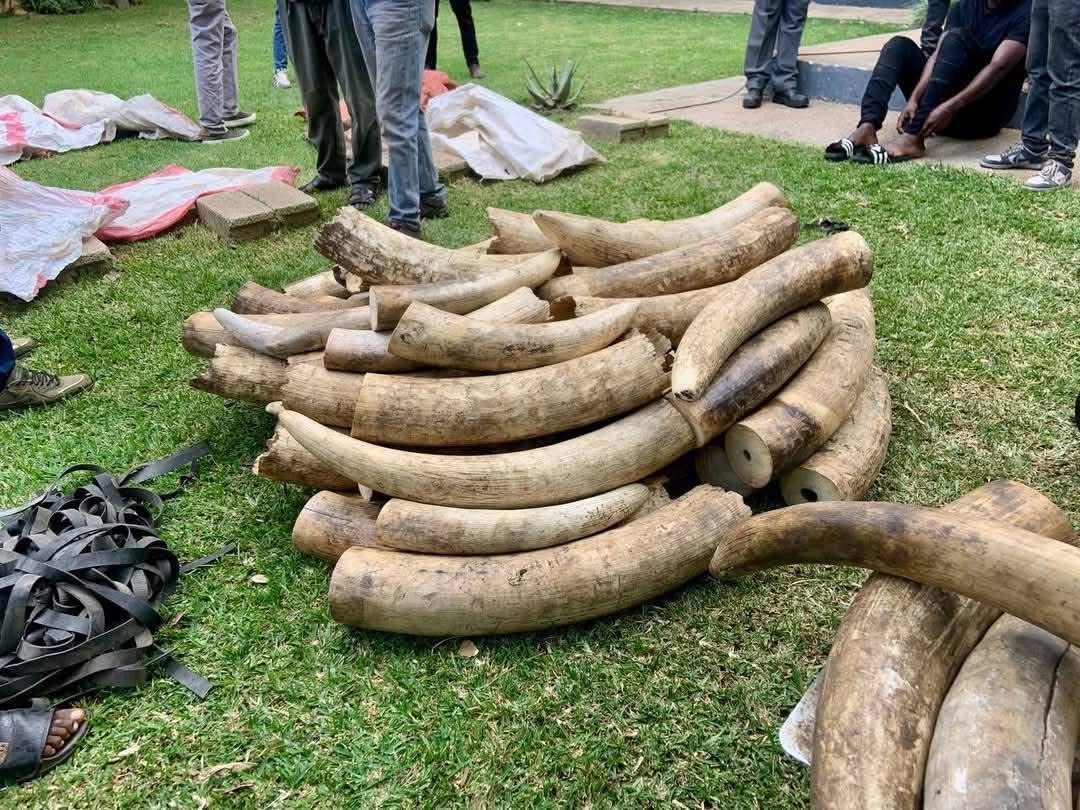
Zambia’s Department of National Parks and Wildlife has confiscated 95 pieces of elephant ivory weighing approximately 471.8 kilogrammes in Lusaka and arrested six individuals in connection with the seizure, according to officials from the Ministry of Tourism.
The arrests followed intelligence provided by members of the public regarding suspected possession of wildlife contraband. Authorities stated that preliminary investigations indicate the ivory originated from multiple locations across the country, suggesting a supply chain that extends beyond a single locality.
According to Nelly Banda, principal public relations officer at the Ministry of Tourism, the operation has revealed indications of a coordinated wildlife trafficking network. Investigators are examining potential links between local actors and international buyers, including the involvement of a foreign national believed to have been connected to the transaction.



The suspects have been formally charged with unlawful possession of a prescribed trophy under Zambia’s wildlife legislation and are expected to appear before the courts. The Department of National Parks and Wildlife continues to lead enforcement efforts in collaboration with other state agencies.

Zambia remains a signatory to the Convention on International Trade in Endangered Species of Wild Fauna and Flora, which regulates cross border trade in endangered species, including elephants. The country has, in recent years, strengthened enforcement frameworks aimed at curbing poaching and dismantling trafficking networks, reflecting broader continental initiatives to address illicit wildlife trade.
Across Africa, elephant populations have faced sustained pressure from poaching linked to global demand for ivory. Regional bodies such as the Southern African Development Community have emphasised the importance of coordinated responses that recognise both conservation priorities and the socio economic realities of communities living alongside wildlife. Conservation practitioners within the region have increasingly underscored the role of local knowledge, community stewardship, and transnational cooperation in countering organised environmental crime.
Zambian authorities have reiterated their commitment to enhancing inter agency coordination and working with regional and international partners to address wildlife trafficking. Officials maintain that enforcement measures will continue to be strengthened while engaging communities as key stakeholders in conservation efforts.