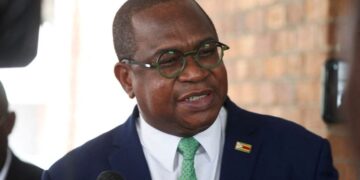
The Government of Malawi has secured a $350 million grant facility from the World Bank, marking a pivotal milestone in the advancement of the Mpatamanga Hydropower Project—a major infrastructure initiative intended to significantly strengthen the country’s energy sector. The funding approval, confirmed on Thursday, was announced by Malawi’s Minister of Finance and Economic Affairs, Simplex Chithyola Banda.
Speaking to The Times of Malawi, Chithyola Banda conveyed strong optimism regarding the development, stating that the approval signifies growing international confidence in Malawi’s energy reform agenda. He emphasised that the funds would be strategically channelled towards expanding electricity access, supporting affordable tariffs, and ensuring a reliable power supply to both urban and rural populations. According to the Minister, reliable energy is a critical input for economic productivity and will catalyse increased output across multiple sectors.
The Mpatamanga Hydropower Project is designed to deliver an installed capacity of 358.5 megawatts and will be situated along the Shire River in southern Malawi. It is anticipated to play a transformative role in the country’s pursuit of clean, renewable energy solutions, contributing significantly to efforts to mitigate climate change while improving grid stability.



Nathan Belete, World Bank Country Director for Malawi, Tanzania, Zambia, and Zimbabwe, described the project as a “game-changer” with far-reaching implications for national development. “The Mpatamanga Hydro Power Project is capable of catalysing transformative change in productive economic sectors such as mining, agri-business, and tourism,” Belete noted. He further underscored that this new source of sustainable and stable electricity would provide a foundational platform for job creation, business expansion, and long-term improvements in living standards.

The project is being developed under a Build-Own-Operate-Transfer (BOOT) model, which facilitates private sector participation while ensuring eventual public ownership. According to the most recent Malawi Economic Monitor, the Mpatamanga initiative is projected to contribute an estimated $1.6 billion to Malawi’s nominal GDP over its operational lifespan, representing a substantial macroeconomic impact for a country striving to meet its Vision 2063 development targets.
With this investment, Malawi advances one step closer to achieving its medium-term goal of energy security and sustainable growth, demonstrating that coordinated international support and sound domestic policy can together create pathways toward inclusive development.