(SATSports) – When Emmanuel Amuneke received an invitation to be a part of the FIFA Technical Study Group to discuss the future of football and its proposal of holding the World Cup every two years, it was not difficult to accept.
The former Tanzania national team coach had always respected Arsene Wenger, the legendary former Arsenal manager and now FIFA’s chief of global football development.
The idea of a biennial World Cup of 48 teams ‘to give every talent a chance‘ as promoted by Wenger impressed him. The former Barcelona and Nigeria winger played at his sole World Cup in 1994 but was injured when the Super Eagles returned to the tournament four years later.



The 1994 African Footballer of the Year believes it is time for the football industry to leave its comfort zone and explore changes that could grow the game beyond its current state.
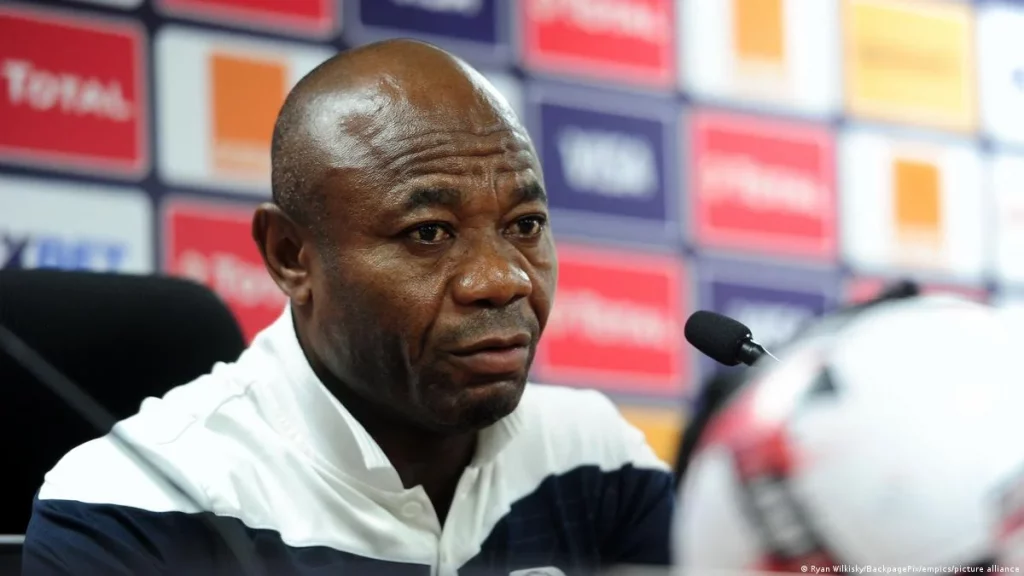
“The VAR (video assistant referee) question has changed the dynamics of the game. But it was criticized at the beginning,” Amuneke told DW, despite there still being a lot of debate around the technology.
“If all the factors can be accommodated, then I don’t see why we cannot have the World Cup every two years.”
An African push for a biennial World Cup
Africa, a continent just as passionate about football as any other, has pitched its support behind FIFA president Gianni Infantino who has already achieved his desire to see a bigger tournament of 48 teams from 2026 when the USA, Canada and Mexico will host.
“Everyone loves to say it’s a global game, but then when you scratch beneath the surface, you realize that at the top level, it is really concentrated to a small number of countries and even then to just a few clubs within those countries,” Infantino said during a recent trip to Israel to sell his vision.
In the almost 100-year history of the World Cup, just 13 of Africa’s 54 countries have ever played at the tournament, compared to 33 of Europe’s 55 teams. Of the 47 Asian nations, only 12 have ever featured, leaving countries with a huge population like India, Indonesia, Pakistan and Bangladesh away from the top table.
“It is not only Africa that’s excited about the idea of a biennial World Cup; Asia and Oceania also want it,” Amaju Pinnick, president of the Nigeria Football Federation, told DW.
“It is a win-win situation for all the Confederations. If the World Cup were to be played biennially, it would bring about rapid development to our football,” he said, referring to the increase in funds that would be accessible from FIFA’s coffers to deepen grassroots projects around the world.
A combative voice, Morocco’s Faouzi Lekjaa has accused opponents of denying equal opportunities to others.
“The ones who are against the World Cup every two years are in fact egotists because they are discriminating against millions of people just to protect their commercial interests,” Lekjaa told Moroccan outlet LeSport360. “They should support the possibility to give hope to hundreds of millions of people of our continent.”
However, Dr Patrice Motsepe, the president of the Confederation of African Football (CAF), the continent’s governing body, has taken a more diplomatic approach urging “discussions and deliberations to continue taking place.”
FIFA has said a vote will be held among its 211 members in December 2021.
A ray of hope from Europe
While there is support for the idea in Africa, there has been substantial pushback from UEFA and CONMEBOL, the powerful European and South American federations. Government delegates from Germany and Portugal have also voiced their opposition.
One of the few European voices in support has come out of France, the reigning world champions. Noel le Graet, president of the French Football Federation (FFF), said he is open to considering the idea.

“I have no opposition to a World Cup every two years, even if I want to take a closer look,” Le Graet told French football newspaper L’Equipe, an indication that there could be more support in Europe than first thought.
However, UEFA president Alexander Ceferin has threatened a potential boycott of the World Cup if FIFA votes to implement its vision in December. It could mean a big break in global football. This is pitching the wealthiest Confederations against the others who have the highest numbers of seats in the global body.
“UEFA and CONMEBOL will never boycott the World Cup,” believes Pinnick. “It is not possible.”
More games for players
Opposition to the idea of a biennial World Cup is centered partly around concerns for players’ wellbeing, with fears that an 80-game tournament every two years could overburden players, with the football calendar already bursting with domestic leagues, continental cups and international tournaments.
The Africa Cup of Nations is already held every two years, forcing African players to leave their clubs in the middle of January for up to four weeks at a time, much to the consternation of their, often European, clubs.
An October report by FIFPRO, the global players’ union, said that the increase in the number of matches played by elite footballers leads to health problems that shorten careers.
But Amuneke believes that the new calendar proposed by FIFA would provide the solution: one or two month-long international windows that would reduce players’ travel and streamlining the Confederation tournaments into odd-numbered years while the World Cup is played in even-numbered years.
“Currently African, Asian and South American players do more of the long-distance travelling than Europeans. A common calendar can help to create a comfortable zone for everyone,” he said.
An excess supply of football
Officials can argue about player wellbeing, youth development or global discrimination as much as they like but, whether the Nations League, the new UEFA Conference League, an expanded Champions League or indeed a biennial World Cup, the elephant in the room is money.
Simply put, more and bigger tournaments mean more opportunities to earn money from broadcast rights, sponsorships and fans.
On the other hand, could an excess supply of football run the risk of over-saturating the market and dilute interest? Wladimir Andreff, a sports economist and former professor at the Université Panthéon-Sorbonne in Paris, thinks so.
“Economically, the governing bodies have got it wrong,” he told DW, adding that a 48-team tournament every two years would create logistical problems that would preclude many African countries from hosting the World Cup due to its prohibitive cost.

Only South Africa has hosted the tournament previously.

The fight ahead
For many on the continent, the belief is that Europe continues to get the biggest economic benefits from the football industry. The best African players are based in European clubs, in what is a one-way street. A World Cup every two years would spread more money to them.

The CAF has called an extraordinary general meeting for November to prepare its case ahead of December’s vote. For Amaju Pinnick, it is a contest that will be won.
“We are going to have our way and make a two-third majority,” the FIFA Council member said.
However, former Nigerian winger Amuneke believes that Africa needs to continue to build a favorable environment to ensure its football industry is competitive, even if it doesn’t get its way on this matter:
“If we have very solid structures, it will help the upcoming generations. We cannot shy away from it.”