As the coronavirus continues to spread beyond mainland China, the medical journal The Lancet has released a study ranking the vulnerability of African countries to the highly contagious respiratory disease.
The study models the risk of Covid-19 exposure based on air travel from areas in China with active transmissions, and the capacity of individual African countries to manage an outbreak.
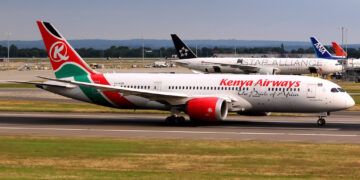
Air travel data alone suggests – in order of decreasing likelihood – that Egypt, Algeria, South Africa, Nigeria, and Ethiopia have the highest “importation risk”, with Cairo International Airport receiving the most travellers from areas with active transmission in China – excluding Hubei province, the epicentre of the disease, from where flights are banned.



That risk was underlined when Egypt became the first African country to register a confirmed case of coronavirus on 14 February.
Sudan, Angola, Tanzania, Ghana, and Kenya were identified as having a moderate importation risk, but with varying levels of health system preparedness to handle an outbreak.
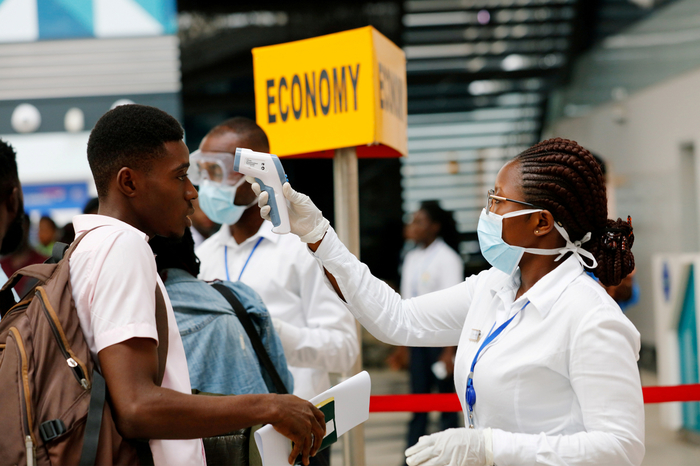
Many of these countries are among the 13 African nations with a high volume of travel to and from China, which the World Health Organisation (WHO) has prioritised to receive support for added measures like improved airport screening.
The vast majority of the more than 79,000 confirmed coronavirus cases to date still remain in China’s Hubei province, but more than 2,000 cases have now been reported in over 30 additional countries. Of growing concern is the “secondary spread”, the number of cases with no clear epidemiological link to China.
Although all flights from Hubei were suspended on 23 January, there have still been direct connections between African countries and other major hubs in China, like Beijing, where a recent cluster of cases has emerged.
Containment fears
Warnings by experts that the disease is outpacing international efforts to contain it have raised the stakes for African countries scrambling to strengthen their emergency public health systems.
The Lancet study concluded that, while the overall risk of importation to Africa is lower than that to Europe (one percent versus 11 percent, respectively), the capacity of many countries on the continent to respond effectively is much more limited.
The study pointed out that there are some marked differences in the vulnerabilities of African countries – including which Chinese provinces tend to be represented among travellers.
It grouped African countries into distinct profiles based on whether travellers were primarily from Guangdong, almost exclusively from Fujian, or a mix of Beijing, Shanghai, and Guangdong.
As the severity of outbreaks in China’s various provinces continues to be in flux, the impact on various African countries will also change.
“We are constantly expecting something to happen.”
Lagos, the Nigerian commercial capital and Africa’s largest city, is a major node of migration for both domestic and international travellers, as well as a dense network of informal settlements, all of which leave it particularly vulnerable to infectious disease outbreaks.
During the West African Ebola outbreak in 2014, which claimed over 11,000 lives in Liberia, Sierra Leone, and Guinea, Nigeria was able to control its outbreak by quickly identifying and containing “patient zero” after he arrived at Lagos airport, and then systematically traced all his contacts.
In the wake of Ebola, the state authorities have developed an aggressive biosecurity plan, currently being put to the test by an outbreak of Lassa fever – a viral haemorrhagic disease.
“We are constantly expecting something to happen,” Lagos State High Commissioner of Health Akin Abayomi told The New Humanitarian.
However, far less is known about the coronavirus, which first appeared at the end of last year, including how exactly it is transmitted.
Preparedness spectrum
Local and national governments in other African countries may be less prepared than Lagos.
The Lancet study noted that although 74 percent of African countries have an influenza pandemic preparedness plan, most of these have not been updated since the 2009 H1N1outbreak, and are insufficient to address a new disease like the coronavirus.
Using indexes to assess the capacity of countries to detect and respond to suspected cases, the study highlighted the variations in preparedness.
For example, Nigeria scored high for “international health regulations coordination capacity” but low in “laboratory capacity”, while South Africa scored high for “laboratory capacity” but low in “risk communication”.
Other factors included legislation, food safety, surveillance, points of entry, and national health emergency frameworks.

“Only together, in solidarity, can we ensure our brothers and sisters are safe from the new #coronavirus.”
Since the WHO declared the coronavirus outbreak a public health emergency of international concern on 30 January, resources have been mobilised to fill the gaps of public health infrastructure in countries around the world – although the WHO complains that far greater investment is needed.

Even just a couple of weeks ago, few African countries were able to run diagnostic tests for the coronavirus, which meant that time lost testing samples abroad could interfere with efforts to trace individuals who had close contact with a suspected Covid-19 carrier.
Closing ‘window of opportunity’
African countries are trying to take advantage of what WHO’s director general, Tedros Adhanom Ghebreyesus, described last week as the rapidly closing “window of opportunity” to ramp up capacity ahead of an outbreak.
Sixteen countries participated in a diagnostics training workshop in Senegal last week led by the Africa Centers for Disease Control and Prevention – known as Africa CDC – and have now confirmed they are ready to test suspected coronavirus samples in-country, Yenew Kebede Tebeje, head of the Laboratory Systems Division at Africa CDC, told TNH.