Iran has elected a new president following the tragic death of Ebrahim Raisi in a helicopter crash earlier this year. Sixty-nine-year-old Masoud Pezeshkian, a seasoned politician and a reformist, emerged victorious in a tightly contested run-off election, signalling potential shifts in Iran’s domestic and international policies.
Pezeshkian’s rise to the presidency is notable not only for his reformist stance but also for his unique professional background. Unlike his predecessor Raisi, who was a cleric, Pezeshkian is a heart surgeon. His political career took off in the late 1990s when he served as deputy health minister, and later as health minister, under the reformist president Mohammad Khatami. This period marked the beginning of his long-standing commitment to political reform and public service.
One of the most significant aspects of Pezeshkian’s platform is his progressive stance on social issues, particularly the enforcement of the compulsory headscarf, or hijab, in Iran. Following the controversial death of Mahsa Amini in 2022, which sparked widespread protests, Pezeshkian has been vocal about the need for change. He has openly criticised the harsh enforcement of hijab laws, suggesting a more liberal approach that respects individual freedoms.



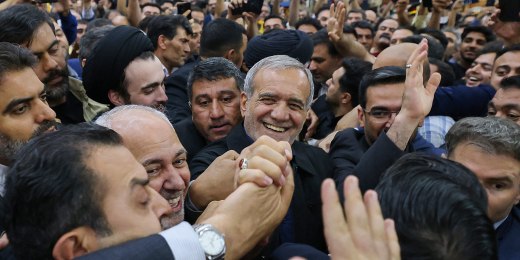

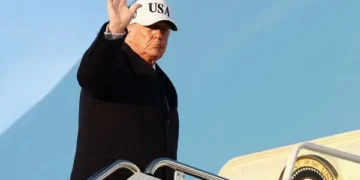
Pezeshkian’s election campaign, which resonated with many Iranians, emphasised the need for improved relations with the West, particularly the United States. His advocacy for reviving the nuclear deal, which was abandoned by the Trump administration and remains in limbo under President Joe Biden, underscores his commitment to diplomacy. The involvement of former Iranian foreign minister Javad Zarif, a key architect of the original nuclear deal, in his campaign further highlights his intention to mend international ties.
Despite his reformist label, Pezeshkian’s rhetoric towards the United States has not always been conciliatory. In 2019, he vehemently criticised the U.S. following the downing of an American drone by Iran, labelling America as “the real terrorist.” This duality in his stance reflects the complex and often adversarial relationship between Iran and the U.S., and raises questions about the feasibility of his diplomatic aspirations.
Pezeshkian’s political career has also been marked by his support for the Islamic Revolutionary Guard Corps (IRGC), an influential military organisation within Iran. Despite its designation as a foreign terrorist organisation by the Trump administration, Pezeshkian has defended the IRGC, even donning its military uniform in a show of solidarity. This stance underscores the intricate balance he must maintain between reformist ideals and the entrenched power structures within Iran.
Pezeshkian’s personal background is as diverse as his political career. Born to an Azeri father and a Kurdish mother, he is fluent in both Azeri and Kurdish, and represents a significant minority within Iran. His election has been seen by some as a victory for Iran’s marginalised ethnic groups, offering hope for greater inclusivity in Iranian politics.
The new president faces formidable challenges in a political system where true power resides with the Supreme Leader, Ayatollah Ali Khamenei. While Pezeshkian’s reformist agenda has inspired many, the extent of his influence remains uncertain. The low voter turnout in the first round of the election, followed by a modest increase in the run-off, reflects widespread political apathy and disillusionment among Iranians.
Masoud Pezeshkian’s presidency marks a significant moment in Iranian politics, with potential implications for both domestic policies and international relations. As he takes office, the world watches to see whether his reformist vision can translate into tangible change within the structures of the Islamic Republic. For Iran’s youthful population and its diverse communities, Pezeshkian’s success or failure will be a measure of the country’s capacity for progress and reform.