

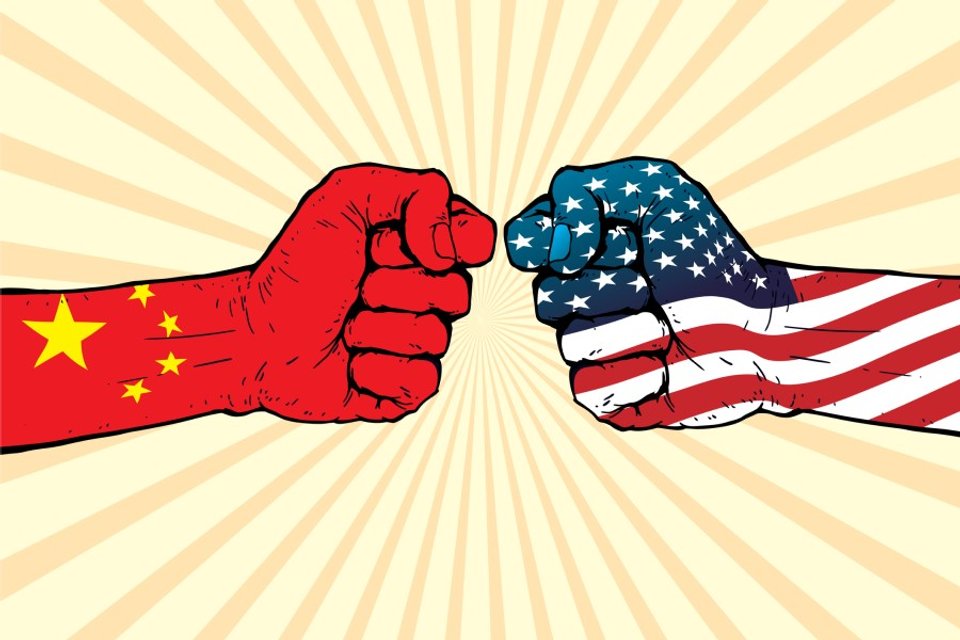
The US dollar has long been the cornerstone of global finance, underpinning international trade, reserve holdings, and economic stability. However, a confluence of geopolitical and economic forces, escalating tensions between the United States and China, the rapid expansion of the BRICS bloc, and China’s strategic retreat from US Treasuries, is accelerating a seismic shift away from dollar dominance. With Donald Trump’s return to the White House in January 2025, the stage is set for a high-stakes battle over global financial supremacy, one that the United States may not be equipped to win.
Trump’s re-election in November 2024 has ushered in a new era of economic confrontation, building on the trade wars of his first term but with far greater intensity. His administration has doubled down on efforts to decouple the US economy from China, targeting not only trade but also technology, finance, and critical supply chains. This aggressive posture is reshaping global alliances and threatening the dollar’s preeminence.
In January 2025, Trump imposed a sweeping 60 percent tariff on Chinese electric vehicles, citing national security and the need to protect American automakers. This followed steep tariff hikes on semiconductors, steel, and critical minerals such as lithium and cobalt, all of which are essential to the renewable energy transition and national defence. These measures aim to hobble China’s export-driven economy while boosting domestic manufacturing, but Beijing has hit back. China responded by restricting rare earth exports, which account for 90 percent of the US supply for defence applications including fighter jets, missiles, and drones. It also banned twenty billion dollars’ worth of US agricultural imports, targeting politically sensitive farming states like Iowa and Nebraska. This tit-for-tat escalation has disrupted global supply chains, driven up commodity prices, and fuelled inflation. American households faced a 3.8 percent increase in grocery costs in the first quarter of 2025 alone.



The US-China technological rivalry has reached a critical point. Building on Biden-era semiconductor sanctions, Trump has pressured allies like the Netherlands and Japan to halt exports of chipmaking equipment to China. In turn, Beijing has ramped up its “Xin Chuang” initiative, pledging three hundred billion dollars over five years to develop a self-reliant semiconductor ecosystem. Chinese firms such as SMIC have achieved production of seven-nanometer chips, narrowing the gap with global leaders. This decoupling has been costly for US firms like NVIDIA and AMD, which have lost billions in Chinese market access. Meanwhile, China’s rapid progress in AI, quantum computing, and 5G is positioning it as a formidable competitor in the ongoing technological revolution.
Financial sanctions have emerged as another battlefield. The US has threatened secondary sanctions on Chinese banks facilitating trade with Russia, North Korea, and Iran. Rather than isolating China, these measures have strengthened ties between Beijing, Moscow, and other nations resistant to US influence. China and Russia now conduct a significant portion of trade in yuan and rubles through systems that bypass SWIFT. In 2024, 35 percent of their bilateral trade was settled in these currencies, up from just 10 percent in 2020. Even US allies such as the European Union are pushing back against Washington’s financial pressure, wary of being dragged into an escalating confrontation that threatens their economic interests.
China’s retreat from US Treasuries is perhaps the most understated yet potent move in this financial chess game. Holdings have dropped to seven hundred sixty billion dollars, the lowest level since 2009. Rather than offloading bonds in a way that might destabilize global markets, Beijing is allowing its holdings to mature without reinvesting. This quiet withdrawal avoids a spike in yields that could crash bond markets, while gradually undermining confidence in the dollar. A sudden dump of one hundred billion dollars could push ten-year Treasury yields above six percent, forcing the Federal Reserve to raise rates and destabilizing the economy. The gradual approach is far more strategic and effective.
Beijing is also diversifying its reserves. China’s gold holdings have surged to 2,300 tons, second only to the United States. Gold acts as a hedge against dollar volatility and could support a future reserve currency. At the same time, China is deploying capital through the Belt and Road Initiative, financing infrastructure across Africa, Asia, and Latin America. These projects are tied to yuan-based settlement agreements. Countries like Nigeria and Pakistan now conduct 15 percent of their trade with China in yuan. The digital yuan has gained traction as well, used in 40 percent of China’s cross-border transactions with Belt and Road partners. By 2030, analysts expect the yuan to account for 10 percent of global trade settlements, up from 4.5 percent in 2025.
The BRICS bloc has grown into a formidable force in the global financial arena. Now including Saudi Arabia, Iran, the UAE, Egypt, and Ethiopia, the group represents 45 percent of the world’s population and 35 percent of global GDP on a purchasing power parity basis. It has begun to challenge the dollar’s dominance through strategic dedollarization.
A major threat comes from the erosion of the petrodollar system. Saudi Arabia now accepts yuan for a quarter of its oil exports to China. Iran conducts the majority of its oil trade in yuan. The UAE has implemented dirham-yuan swaps to streamline transactions. These moves reduce demand for dollar reserves and shift the balance of power in global energy markets.
Trade among BRICS members is increasingly settled in local currencies. Russia and India conduct 60 percent of bilateral trade in rupees and dirhams. Brazil and China now use yuan for the vast majority of their soybean transactions. Swap agreements among BRICS central banks have reached two hundred billion dollars. In parallel, the BRICS Bridge platform—a blockchain-based digital settlement system—is being tested to allow international payments outside the SWIFT network. Nineteen countries have expressed interest in joining, including non-BRICS states like Turkey and Vietnam.
This global pivot is having profound consequences for the United States. Foreign appetite for US debt is diminishing. Non-US holders now account for just 30 percent of Treasuries, down from 50 percent in 2008. Japan and Saudi Arabia have followed China in reducing purchases. Domestic buyers are demanding higher yields, pushing ten-year Treasury rates to 5.4 percent as of June 2025. The result is an unsustainable debt burden. Annual interest payments on the national debt now exceed 1.2 trillion dollars, more than the entire US defence budget. Projections suggest this figure could reach 1.7 trillion dollars by the end of the decade.

The US risks entering a debt spiral, where rising yields necessitate more borrowing, which in turn drives yields even higher. If unchecked, this could force the Federal Reserve into a painful choice between imposing austerity or printing money to cover deficits, either of which would damage confidence in the dollar.
The endgame is a multipolar currency world. While the dollar will likely remain dominant through the end of the decade, its unrivalled supremacy is coming to an end. By 2030, the yuan, euro, and a potential BRICS-backed currency could divide global liquidity. China’s methodical and long-term approach is clearly designed to expand the yuan’s role in global trade, build alternative payment systems, and reduce its vulnerability to US sanctions.
At the same time, Trump’s aggressive policies have triggered a backlash. Traditional allies are hedging their bets, with the EU pursuing greater trade autonomy and resisting US pressure. Sanctioned states are finding ways to sidestep restrictions through new financial alliances and digital tools.
The dollar’s eventual decline now seems less a question of “if” and more a matter of “when.” While it will not vanish overnight, the steady erosion of its influence is already underway. The United States must now decide whether to adapt to this new order through fiscal reform and multilateral engagement or risk a chaotic transition that could permanently damage its economic leadership. The clock is ticking, and the stakes could not be higher.
Article By Kundai Darlington Vambe (LLB, University of London) The views expressed in this article are solely those of the author and do not necessarily reflect the views or editorial stance of The Southern African Times.


