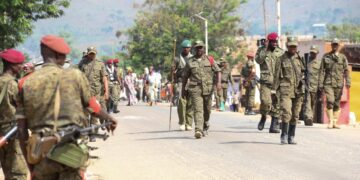
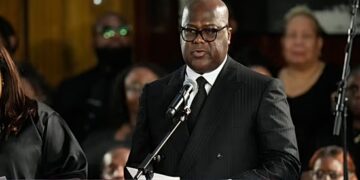
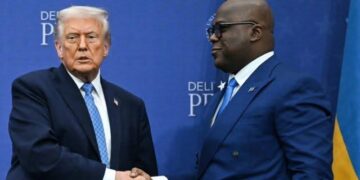
Despite his long-standing refusal to negotiate with the Rwanda-backed M23 rebels, Democratic Republic of Congo President Félix Tshisekedi is now under growing pressure to reconsider, following a series of military setbacks and dwindling regional support.
The announcement by Angola that Kinshasa and M23 representatives would hold direct talks in Luanda on 18 March caught many by surprise, especially as the rebel group continues to seize mineral-rich territory in eastern Congo. Although the Congolese government has yet to publicly confirm its participation, three government sources indicated that Tshisekedi is seriously considering dispatching a delegation.
With the Congolese army and its allies struggling to mount effective resistance, regional actors increasingly see dialogue as the only viable path forward. A senior diplomat noted that no African government has opposed negotiations, questioning how hostilities could end without engagement. However, the precise composition of Kinshasa’s delegation remains undecided, with officials indicating that a final decision is expected next week.



M23 has stated that it requires a firm commitment from Tshisekedi before entering discussions, and both sides are seeking clarity on how the talks in Angola would align with resolutions from regional bodies mediating the conflict. Meanwhile, foreign and defence ministers from Southern and East Africa are set to convene in Harare on Monday to explore ways to de-escalate the situation and push for political dialogue.

According to United Nations experts, M23 is bolstered by thousands of Rwandan troops, whose advanced weaponry has enabled the rebels to capture eastern Congo’s two largest cities since late January, alongside numerous smaller localities. Rwanda, however, denies these allegations, asserting that its forces are solely engaged in self-defence against hostile Congolese army units and militias.
For Tshisekedi, agreeing to negotiations with M23 would mark a significant political shift, likely to face strong opposition in Kinshasa, given his repeated assurances that he would never engage with the rebels. However, Congolese analyst Bob Kabamba of the University of Liège argues that such a move would amount to tacit recognition that the military strategy pursued by the president has failed.