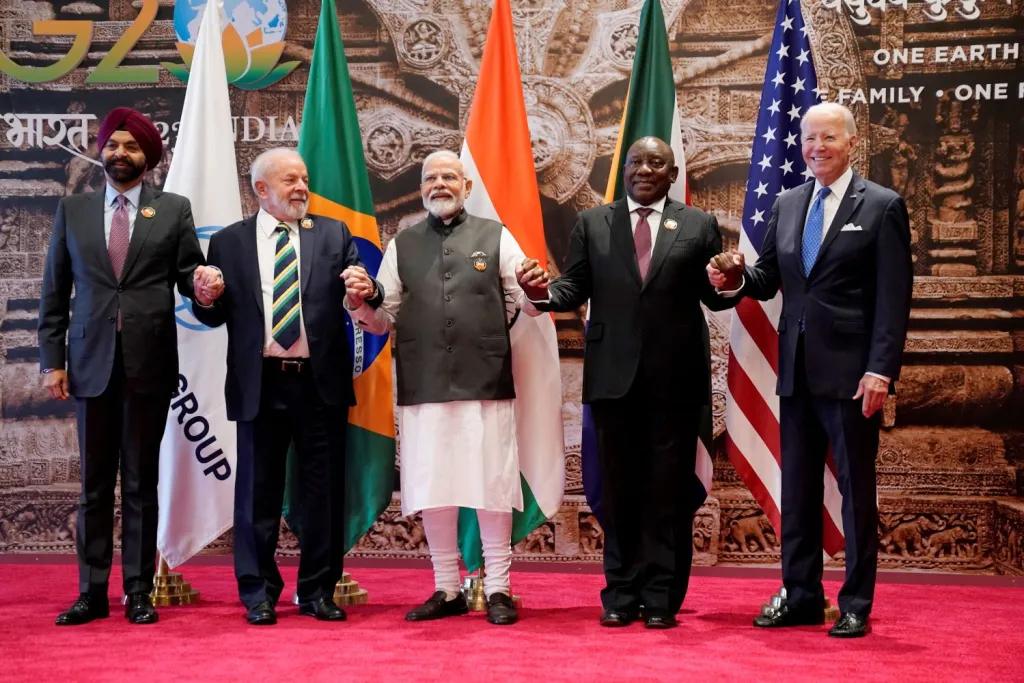
The G20, evolving from a 1999 finance ministers’ meeting to a summit of world leaders in 2008, has become a vital forum for global economic cooperation. Originally focused on macroeconomic policy to stave off a potential global depression, the G20’s agenda has expanded over the years, now encompassing challenges such as development, climate change, and global health.
The 2024 summit, themed “Building a just world and a sustainable planet,” sets three primary priorities: promoting social inclusion and fighting hunger to address humanitarian crises, advancing energy transitions and sustainable development, and reforming global governance institutions to enhance their effectiveness and inclusiveness. These priorities underline the G20’s commitment to fostering equitable growth and tackling urgent global issues.
A landmark shift occurred in September 2023 when the African Union (AU) was granted full membership of the G20, representing over 1.5 billion people across Africa. This marks a significant recognition of Africa’s potential as a unified political and economic force on the global stage.



For years, African leaders have advocated for full G20 membership, stressing the continent’s growing economic and demographic importance. Africa’s inclusion is not only crucial for promoting a more equitable global financial system but also for addressing the continent’s systemic issues, including poverty, political instability, youth unemployment, infrastructure deficits, and governance challenges.
The AU’s entry into the G20 underscores Africa’s importance in global affairs, offering an opportunity to directly address pressing issues such as poverty and underdevelopment. It also provides a platform to advocate for a global financial system that prioritises Africa’s needs, particularly as the continent faces challenges like climate vulnerability and insufficient economic diversification.
China, the first country to explicitly support the AU’s G20 membership, played a pivotal role in this achievement. This backing highlights China’s broader commitment to amplifying African voices on the international stage. China’s support also reflects its longstanding position as a champion of the Global South, advocating for a more equitable global governance system that includes African nations in critical economic discussions. China’s strategic initiatives, such as the Belt and Road Initiative, further demonstrate its commitment to investing in African infrastructure, fostering shared growth, and promoting multilateralism.
The AU’s inclusion in the G20 is not merely symbolic. It represents a substantial achievement for multilateralism, ensuring that Africa’s voice is heard in global economic conversations. It allows the continent to address its development priorities, correct historical marginalisation, and bridge the gap between global policymaking and local realities. The AU’s participation aligns with its Agenda 2063 vision, which seeks to position Africa as a key player in global affairs.

As the AU prepares for its role in the upcoming G20 summit, it will focus on fostering African financial inclusion, advocating for youth and gender equality, promoting peace and security, and pushing for debt relief through the G20’s common framework. These priorities aim to tackle Africa’s estimated $1.3 trillion annual financing gap, which threatens to stymie its economic progress.
Additionally, the AU will champion climate change mitigation efforts, advocating for investments in green projects and pushing for the inclusion of digital transformation in global economic strategies. It is crucial for the AU to highlight Africa’s unique challenges, including conflicts, food insecurity, and underdeveloped infrastructure, while advocating for international cooperation to address these issues comprehensively.
One of the AU’s key goals will be to strengthen regional solidarity among African nations, particularly by advancing initiatives such as the African Continental Free Trade Area (AfCFTA), which aims to increase intra-Africa trade and support industrialisation. The AU will also emphasise the need for a skilled workforce and sustainable development policies that can drive long-term growth across the continent.
In its diplomatic engagements, the AU will be keen to position Africa as a voice for multilateral solutions to global crises. This includes addressing the underlying causes of conflict, fostering democratic governance, and ensuring that African nations have a seat at the table when global financial and economic policies are formulated.
The AU’s entry into the G20 is a testament to the growing influence of the Global South in shaping the global economic order. It signals the start of a new era of multilateral cooperation, where Africa’s voices are no longer sidelined. By actively engaging in the decision-making process, the AU can ensure that African perspectives are integrated into discussions on pressing global challenges such as climate change, health security, and economic inequality.
This inclusion will undoubtedly serve as a catalyst for greater collaboration among Global South nations, promoting inclusive reforms within international institutions and advancing shared interests. The AU’s strengthened position in the G20 provides African nations with unprecedented opportunities for capacity building, knowledge sharing, and leveraging international investments to achieve the UN Sustainable Development Goals by 2030.
In conclusion, the AU’s entry into the G20 represents a monumental step forward for Africa and the Global South as a whole. It offers a platform to influence global governance, advance development agendas, and address critical issues such as poverty, food security, and climate change. The AU’s presence in the G20 will drive essential changes in the global economic system, fostering a more just, sustainable, and inclusive world order.
Editor’s note: Balew Demissie is a communication and publication consultant at the Policy Studies Institute of Ethiopia. The views expressed in this article are those of the author and do not necessarily reflect those of The Southern African Times.