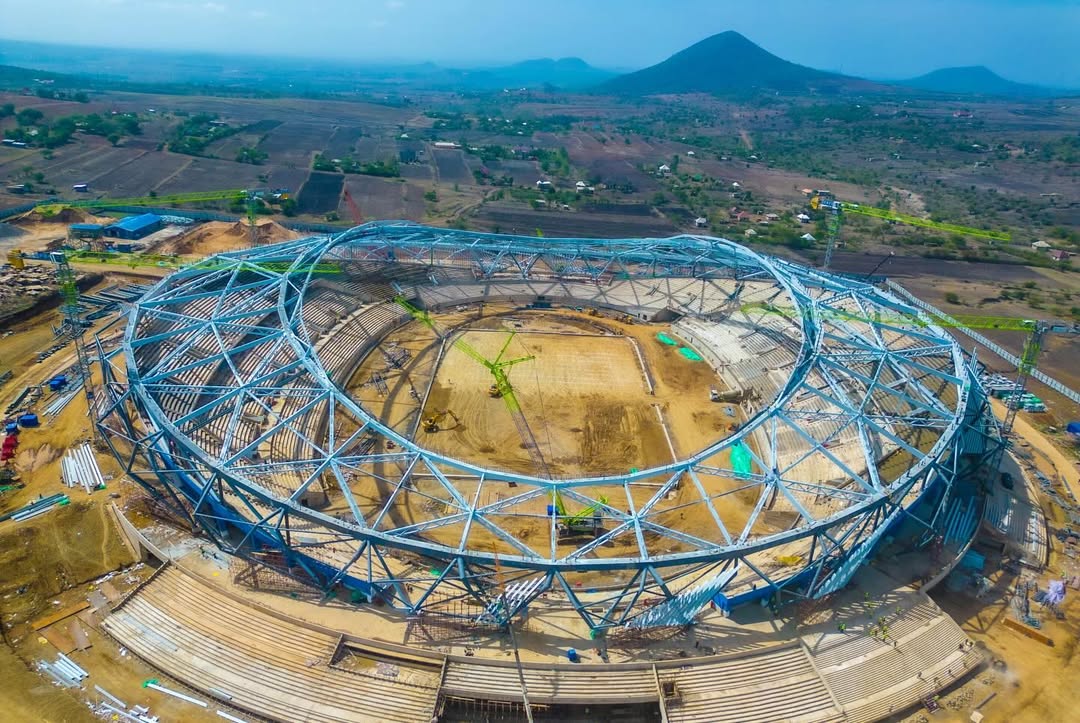
Tanzanian Prime Minister Mwigulu Nchemba convened a meeting with the national committee overseeing the 2027 Africa Cup of Nations preparations, reflecting a focused effort to ensure the continental event is managed with a comprehensive and inclusive approach. The discussions took place at the Prime Minister’s sub-office in Dar es Salaam, where Nchemba acknowledged the committee’s progress and affirmed the strategic importance of the tournament for the East African region.
Tanzania, in partnership with Kenya and Uganda, secured the rights to co-host the Africa Cup of Nations in 2027. This marks a historical milestone as it is the first occasion the Confederation of African Football has entrusted three East African nations with the co-hosting responsibilities of the prestigious tournament. The collaborative hosting arrangement reflects a significant moment in continental football governance, symbolising an evolving pan African partnership that seeks to decentralise both infrastructural investment and sporting prestige beyond traditional host nations.
The Prime Minister called for broader inter-ministerial and intersectoral participation in the planning and implementation processes. He appealed directly to ministers, permanent secretaries and senior civil servants to actively integrate their respective sectors into the preparatory framework, recognising that hosting a successful tournament transcends the remit of sport alone. This approach aligns with a broader African developmental paradigm that frames sport as an instrument not only for cultural diplomacy but also for structural transformation, regional integration and economic stimulation.




In reiterating the need for accountability, Nchemba urged committee members to maintain oversight of their designated areas to ensure both adherence to timelines and alignment with required international standards. The hosting responsibilities demand not only timely delivery of stadia and facilities but also expansive investment in transport networks, hospitality and local infrastructure. These undertakings are anticipated to generate wider socioeconomic dividends, particularly in the tourism and construction sectors, across the three host nations.
The AFCON 2027 tournament represents a critical opportunity for East Africa to affirm its capacity to deliver high-calibre events while advancing narratives of African agency and collective capacity. By steering away from externally imposed developmental models, the tri-nation hosting bid offers a uniquely African template for multilateral collaboration. It foregrounds the idea that African countries can design and execute continental initiatives that resonate with regional aspirations and contextual realities.
In an era where global sports are often intertwined with geopolitical interests and commercial exploitation, the emphasis on inclusive national ownership, as reiterated by Nchemba, offers a different framework. It centres responsibility and benefit within the continent and recognises the role of African leadership in setting the terms of engagement. The success of the 2027 Africa Cup of Nations will depend not only on infrastructure or logistics but on the degree to which it is able to reinforce narratives of African unity, competence and cultural self-definition.
As preparations advance, the East African host nations are being closely watched by regional and global observers. Their performance may shape future co-hosting arrangements on the continent and provide a benchmark for cooperative ventures across other sectors. The significance of the tournament is not limited to the pitch. It extends into how Africa chooses to tell its own story, construct its own arenas of pride and claim space within global discourse on its own terms.