An industrial exhibition held in the city of Atbara in northern Sudan’s River Nile State has drawn attention to ongoing efforts to maintain industrial activity in a country facing prolonged internal conflict. The “Made in River Nile” exhibition featured more than 320 companies and factories, presenting a range of over 2,000 locally produced goods including textiles, processed foods, metal tools, and mineral samples.
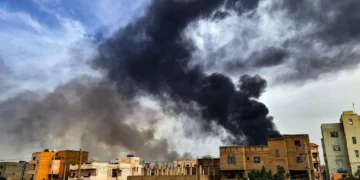
Held over five days, the event attracted a mix of public visitors, business representatives, and officials. While the exhibition showcased various domestically manufactured products, it also took place in the context of widespread economic and infrastructural disruption. Since mid April 2023, Sudan has been affected by a violent conflict between the Sudanese Armed Forces and the paramilitary Rapid Support Forces, resulting in extensive damage to the country’s industrial base.




According to data from the Ministry of Industry, approximately 3,493 large and medium industrial facilities in Khartoum and 125 in Gezira State have sustained damage. The Sudanese Federation of Chambers of Industry estimates that about 550 factories have been destroyed in the capital alone. Informal assessments suggest industrial losses could total over 50 billion US dollars.
In light of this, authorities in River Nile State have implemented measures intended to attract industrial relocation from conflict-affected areas. These include a reported 30 percent reduction in factory operating fees. Mohamed Al Badawi Abdel Majid, governor of the state, stated that such policies aim to support investors and stabilise the industrial environment in regions less directly impacted by the ongoing conflict.
Among the larger participants in the exhibition was GIAD Industrial Group, a major conglomerate in Sudan. Ibrahim Abbakar Ibrahim, director at GIAD Trucks and Buses Company, acknowledged the challenges posed by sanctions, limited access to spare parts and technology, and damage to production infrastructure. He noted that despite these constraints, some local producers have continued operations and maintained market competitiveness.

The exhibition also included a pavilion hosted by the General Geological Research Authority of Sudan, where approximately 45 samples of minerals and rocks were displayed. Mohamed Al Tahir, director of the authority’s River Nile office, suggested that these resources may contribute to longer-term plans for post conflict industrial development, contingent on broader stability and investment.

Some attendees, including local company employees, expressed interest in the quality of Sudanese-made goods. One visitor noted that for many consumers, the combination of rising prices and limited imports has increased reliance on domestic production.
Prior to the current conflict, Sudan’s industrial sector accounted for roughly 12 percent of the country’s gross domestic product and provided employment to approximately 20 percent of the labour force. The sector has experienced a significant contraction due to the conflict, though events such as the Atbara exhibition indicate ongoing attempts to maintain economic continuity in relatively stable areas.

While the exhibition illustrates aspects of industrial adaptation and policy response, it also highlights disparities in regional stability and the challenges of sustaining production under conditions of conflict. The ability of local manufacturers to continue operating varies widely, depending on location, access to inputs, and broader security considerations.
Sudan’s experience reflects broader questions faced by many African states navigating complex post conflict recoveries. The intersection of industrial decentralisation, regional development, and domestic policy continues to shape economic outcomes. In this context, the Atbara exhibition provides a partial yet informative lens on the multiple strategies and realities confronting Sudan’s industrial sector during a time of ongoing uncertainty.