As the impacts of climate change intensify across Southern Africa, regional authorities are urging the rapid integration of science-based strategies into national policies to address increasingly severe environmental disruptions. Speaking at the opening of a two-day regional workshop in Windhoek, Namibia’s Deputy Minister of Agriculture, Fisheries, Water and Land Reform, Ruthy Masake, emphasised the urgent need for coordinated, evidence-led adaptation frameworks to ensure the resilience and sustainable development of the region.
The workshop, convened by the Southern African Science Service Centre for Climate Change and Adaptive Land Management (SASSCAL), brought together policymakers, scientists, and regional development stakeholders from Angola, Botswana, Namibia, South Africa, Zambia, and Germany. It aims to evaluate current adaptation measures and accelerate the mainstreaming of scientific data into public policy to manage mounting climatic threats.
Masake highlighted that Namibia has been experiencing heightened climate variability marked by prolonged droughts, flash floods, and locust infestations—events that pose a direct threat to the nation’s food security, water access, and agricultural livelihoods. In 2023, the Namibian government declared a national State of Emergency due to severe drought conditions that resulted in widespread crop failure and acute water shortages in rural and urban areas alike.



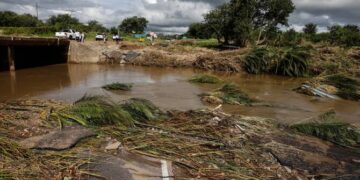
This year, unusually heavy rains have resulted in flooding in several northern regions, underscoring the complexity of Namibia’s climate vulnerability. Simultaneously, locust outbreaks in the Zambezi Region have added a further dimension of risk, devastating over 400 hectares of farmland and undermining food production systems.
To strengthen the nation’s adaptive capacity, Namibia is leveraging scientific research and technological solutions through its partnership with SASSCAL. With €2.9 million (approximately US$3.3 million) allocated to improving climate monitoring infrastructure, the Ministry of Agriculture will oversee the upgrading of 44 automated weather stations nationwide by the end of 2025. This will significantly enhance data accuracy for forecasting, water management, and early warning systems.
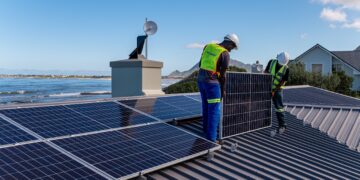
Masake also pointed to Namibia’s growing role in renewable energy innovation, citing the recent establishment of Africa’s first Green Hydrogen Village, located in the Erongo Region. The initiative, backed by SASSCAL and Germany’s Federal Ministry of Education and Research (BMBF), forms part of Namibia’s long-term strategy to achieve a just and inclusive energy transition, while reducing its dependency on imported fossil fuels.
Further strengthening Namibia’s science and innovation ecosystem, 34 students have been awarded academic scholarships to pursue postgraduate studies in climate science and adaptive land management. These scholarships are part of a broader capacity-building initiative facilitated by SASSCAL to develop the next generation of African climate scientists and policy advisors.
At the workshop, speakers called for increased investment in transboundary climate adaptation frameworks, highlighting the importance of collaborative research and regional data sharing. Experts from the five participating African nations underscored that the climate crisis cannot be effectively addressed within national borders, as many ecosystems, watersheds, and weather systems span multiple countries.
In her address, Masake urged attendees to bridge the gap between academic research and real-world application. “Science must not be left to exist in silos,” she said. “It must inform our day-to-day decisions on agriculture, land reform, energy, and disaster preparedness. The evidence is clear: delays in adaptation planning will only amplify the socioeconomic costs of climate change.”
Southern Africa is recognised as one of the world’s most climate-vulnerable regions, with average temperatures rising at approximately twice the global rate, according to the Intergovernmental Panel on Climate Change (IPCC). The region’s dependence on rain-fed agriculture further exacerbates its vulnerability, placing millions at risk of food insecurity due to erratic rainfall and extreme weather events.
The workshop provided a platform for member states to reflect on progress made under the SASSCAL 2.0 programme, which prioritises applied research in water security, biodiversity management, agriculture, forestry, and climate services. Participants shared lessons from past projects and explored opportunities for scaling up successful models, particularly in community-based resource management and integrated land use planning.
Germany, a strategic funding partner of SASSCAL, reiterated its long-standing commitment to climate resilience in the region. Through the BMBF, Germany has invested extensively in research infrastructure, data systems, and capacity development to support African-led adaptation efforts. German delegates at the event emphasised the necessity of embedding local knowledge systems within scientific frameworks to ensure relevance and sustainability.
While the workshop concluded with a shared vision for evidence-informed development, delegates acknowledged that significant challenges remain, particularly in ensuring sustained financing, harmonising policy frameworks, and maintaining political commitment across electoral cycles. However, there was a unanimous consensus that continued regional cooperation, underpinned by robust science, remains the most effective pathway to climate resilience.

The outcomes of the workshop are expected to feed into broader continental policy platforms, including the African Union’s Climate Change and Resilient Development Strategy and Action Plan (2022–2032), which calls for integrated climate governance rooted in knowledge-based systems.
As Southern Africa stands at the frontlines of climate disruption, its leaders and scientists are demonstrating that innovation, collaboration, and evidence-based planning must guide the way forward. The urgency is clear, and the science is unequivocal: adaptation cannot wait.