For the first time in its nearly four-decade history, the internationally renowned creative conference South by Southwest (SXSW) made its European debut in London this year. Known for its unique capacity to unite global innovators across music, film, technology, and culture, SXSW originated in Austin, Texas, and has evolved into one of the world’s most influential gatherings. The London edition took place in Shoreditch, Hackney—a dynamic neighbourhood with longstanding creative and civic ties to Austin.
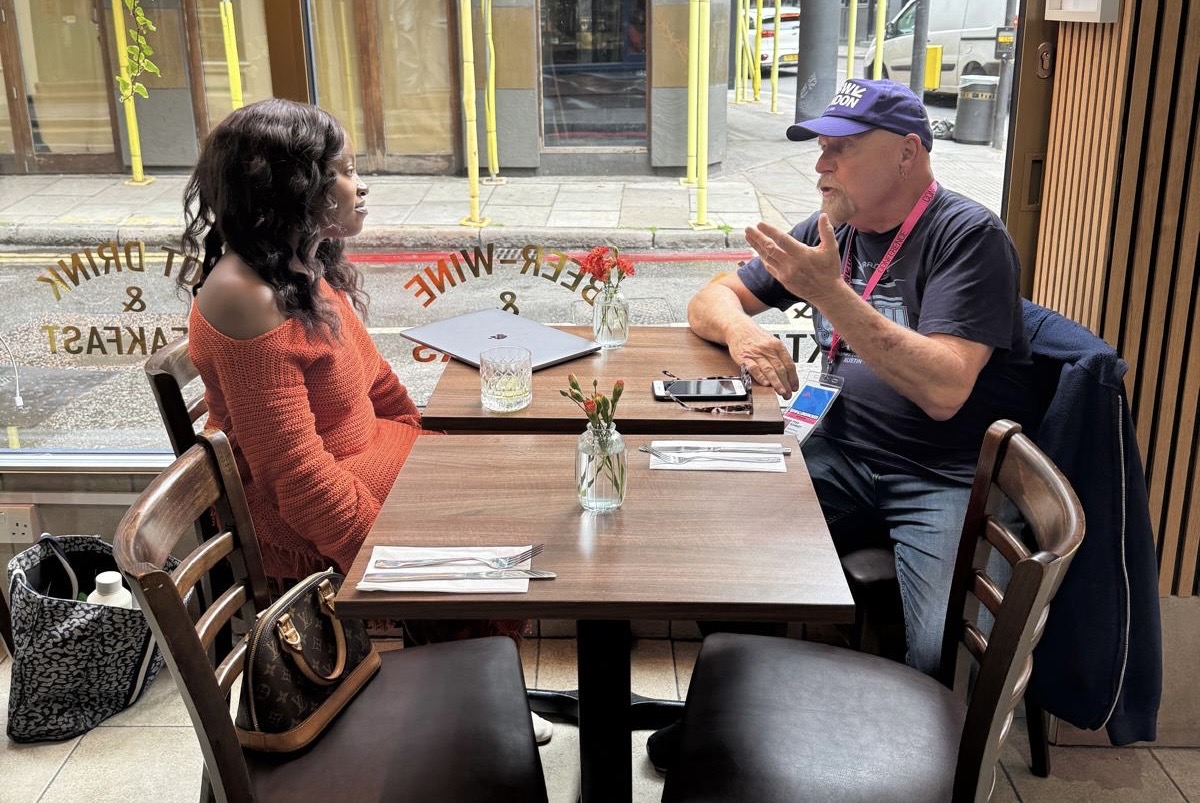
Following a day of interviews and panels, I retreated to a local café, seeking a quiet moment to reflect and upload some content. As is often the case at SXSW, the most meaningful experiences unfold off-script. Nearby, a man’s discussion caught my attention: Austin, the creative economy, Hackney. I leaned over and inquired whether he was involved with SXSW. That moment introduced me to Fred Schmidt MBE—a key figure behind SXSW’s European expansion and a principal architect of the Austin-Hackney relationship. He paused his meeting and welcomed me into a conversation that would come to define the spirit of the day.
What began as a simple query soon unfolded into a wide-ranging dialogue on cultural diplomacy, creative ecosystems, and long-term vision.



SXSW emerged from grassroots ambition—initiated by journalists, musicians, and cultural workers determined to foster genuine connection. In its early iterations, local venue owners hosted independent bands while record label scouts searched for new talent. It was a modest but powerful convergence that would grow into a movement.

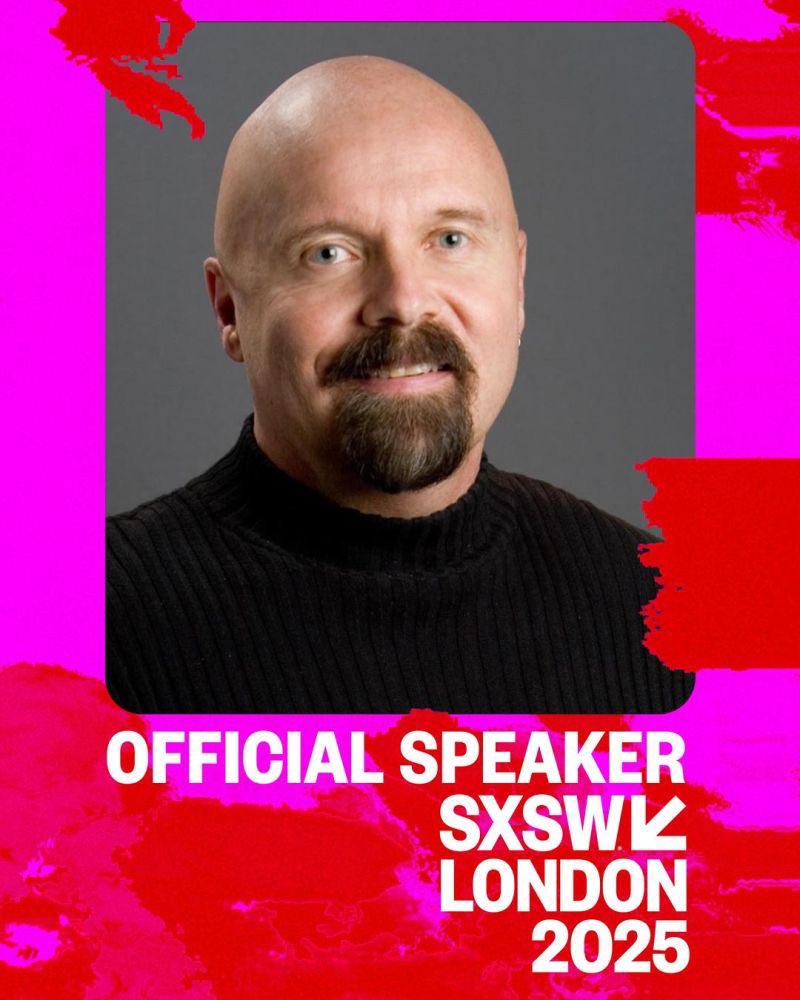
Over time, SXSW expanded to include film and interactive media, yet it has managed to preserve a sense of community. The festival’s enduring relevance, according to Schmidt, lies in its fundamentally human design: “Music is inherently collaborative. So is filmmaking. And now, technology connects everyone to everything. That’s why SXSW works. It starts with people, not products.”
That ethos—of culture emerging from grassroots collaboration rather than corporate architecture—continues to animate SXSW’s international editions.
For over a decade, Schmidt has played a central role in forging connections between Austin and Hackney. The official Sister Cities agreement, signed in 2011, has catalysed student exchanges, artistic partnerships, and even a transatlantic brewing collaboration that produced “Cockney Cowboy,” a joint effort between Hackney Brewery and Oasis Texas Brewing.
The recent hosting of SXSW London in Shoreditch marks a significant evolution in that relationship—a project years in the making. “This was always the vision,” Schmidt explained. “Not to replicate Austin, but to co-create something alongside local culture.”
At the heart of SXSW lies what Schmidt fondly calls “South by Dippity”—a playful reference to the serendipitous, unscripted encounters that often yield the most profound experiences. With over 800 speakers, 150 films, and 500 musical acts, attendees must surrender to the unpredictability of the festival. It is in these unexpected moments, like our own café conversation, that the festival’s soul reveals itself.
Earlier in the day, I had attended a panel on climate storytelling where one speaker noted: “Creativity comes before policy.” The idea resonated deeply with Schmidt, who emphasised that transformative change is rarely driven by institutions alone. “It’s not about the men in suits. It’s about the creatives—musicians, filmmakers, technologists—who show us how to imagine differently.”
This philosophy positions SXSW not merely as an event but as a framework for how creativity can lead social and systemic transformation.
Naturally, our discussion turned toward the future. Could there be an SXSW Africa?
Schmidt’s face lit up at the suggestion. “It’s overdue,” he said. “But it has to be done right—not imposed, but inspired. Led by those who understand the rhythms on the ground.” For Schmidt, genuine expansion must be ecosystem-driven, rooted in authenticity, mutual respect, and local leadership. He believes Africa—with its cultural dynamism and robust diasporic networks—is well-positioned to host such a vision.
Our dialogue deepened into reflections on migration, identity, and exclusion within the global creative industries. As a Zimbabwean woman who fled Ukraine, and Schmidt—a Polish-born American raised in Michigan—we shared experiences of straddling multiple worlds. “I’ve always felt like I was moving between worlds,” he said. “But that’s what gave me the perspective to build bridges others couldn’t see.”
For those on the margins, this in-between space becomes not a limitation but a strength—a lens through which new pathways can be forged. Schmidt’s career exemplifies this belief: lived experience is not an obstacle to leadership; it is its foundation.
This year’s SXSW London also marked Schmidt’s official retirement from his public-facing role. “I’ve got my wife on one arm, my business partners on the other, and they’re all saying: Fred, it’s time.” Yet it did not feel like an exit, but rather a baton passed. His future focus lies in Michigan and Poland—places rich in potential and personal resonance.
“London and Austin don’t need me anymore,” he smiled. “They’re flying.”
Even as he steps back, Schmidt’s legacy stands as a model for what becomes possible when creativity, commerce, and care are held in equal measure.

Innovation is often discussed in terms of systems and strategy. But the truth is more intimate. It emerges through shared rhythm, mutual recognition, and the quiet courage to co-create something meaningful. SXSW is not merely a festival; it is a mindset. One built not around spectacle, but around connection. And often, it is in the unscripted moments—like a chance encounter in a Shoreditch café—where the most enduring stories begin.
By Korrine Sky | Editor-at-Large, Southern African Times