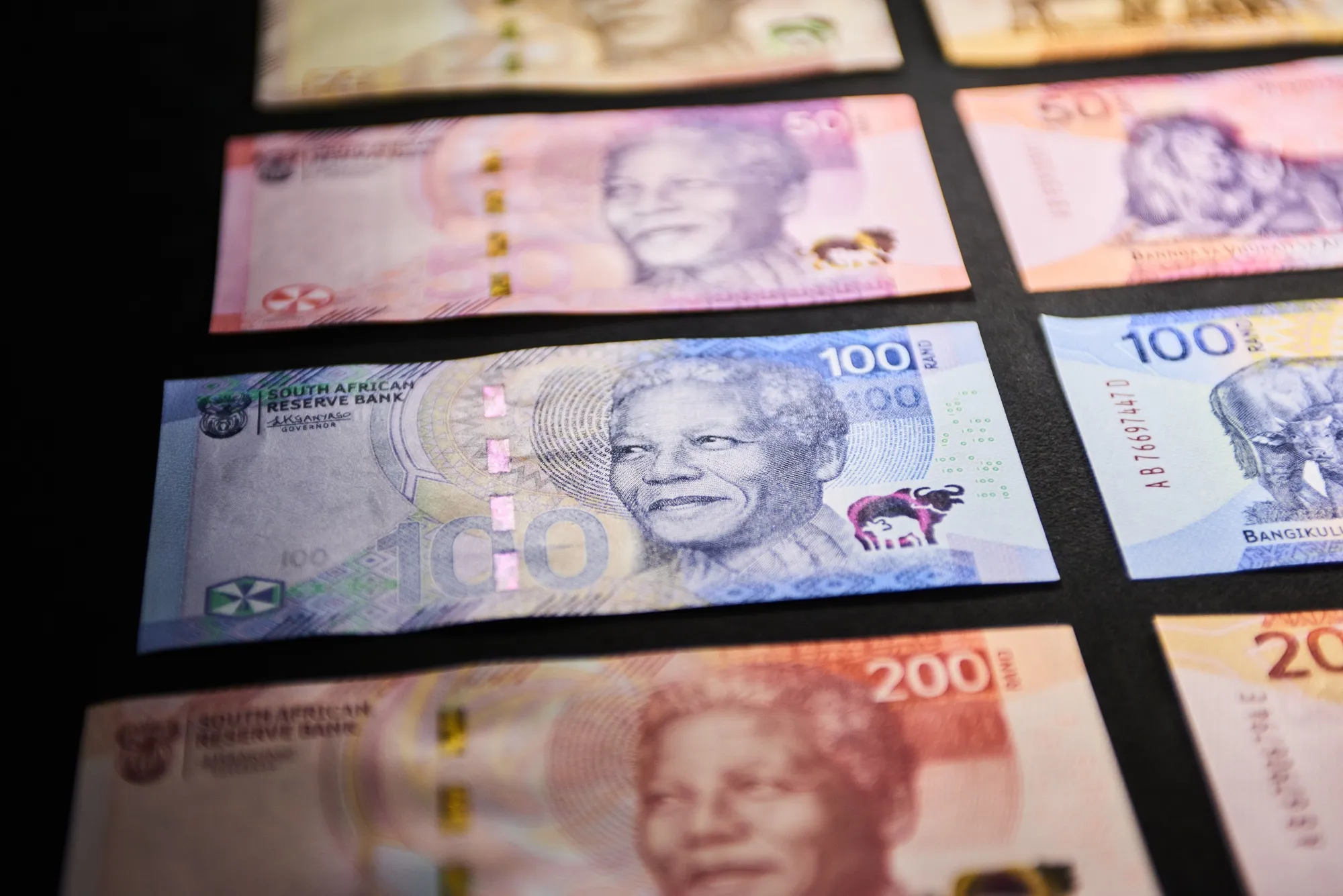
The South African rand began 2026 on a steady footing during subdued holiday trading as global markets entered the new year with measured optimism and restrained volumes. The currency, which closed 2025 with an impressive 13 percent gain against the United States dollar—its strongest annual performance in sixteen years—remained broadly unchanged in early Friday trading.
At 07:39 GMT, the rand was recorded at 16.5425 against the dollar, reflecting a calm start to the year. Analysts at ETM Analytics observed that the quiet session offered investors an opportunity to assess themes expected to define 2026, including monetary policy trajectories, capital flows, and the performance of emerging market currencies.
South Africa’s benchmark 2035 government bond yield edged marginally higher by half a basis point to 8.215 percent, suggesting investors maintained a cautious stance while awaiting more clarity on domestic reforms and global market direction.



Economic observers note that sustained improvements in South Africa’s logistics and energy infrastructure will be pivotal in attracting longer term investment and stabilising the rand. The country’s growth trajectory has been constrained in recent years by inefficiencies in these sectors, limiting its capacity to fully leverage industrial potential.
According to ETM Analytics, steady progress on reforms could position South Africa to attract stronger capital inflows into its bond market, a development seen as critical for currency resilience. The firm remarked that consistent bond inflows would help establish a “virtuous cycle” capable of supporting the rand’s performance beyond 2025 and potentially through 2026.
On the Johannesburg Stock Exchange, the Top 40 Index advanced by 0.7 percent in early trade, supported by modest gains across several blue-chip counters. The S&P Africa 40 Index also recorded a 0.21 percent increase, while the Dow Jones South Africa (ZAR) index rose by 0.36 percent, reflecting broader market steadiness.
Globally, the United States dollar opened the year on a weak note, extending its late 2025 softness as investors continued to price in potential interest rate cuts by the Federal Reserve. Market sentiment remains influenced by concerns over the central bank’s policy independence and its balancing act between inflation management and economic stability.
Wichard Cilliers, Head of Market Risk at TreasuryONE, commented that persistent expectations for rate cuts in 2026 and ongoing debates around Federal Reserve autonomy were maintaining downward pressure on the greenback.
While the rand’s performance remains closely tied to global risk sentiment, many analysts believe that South Africa’s economic outlook in 2026 will depend increasingly on domestic reform momentum. A sustained commitment to structural improvements in transport and energy could enhance investor confidence and support more stable capital inflows across the continent.

From a wider African perspective, the rand’s recent strength has broader implications for regional financial integration. As the continent’s most traded currency, its stability helps anchor investor confidence not only in South Africa but across neighbouring markets that are closely linked through trade, finance, and regional value chains.
The measured start to 2026 thus reflects both the resilience and fragility of African markets operating within a shifting global economic order. The rand’s steadiness underscores the continent’s growing capacity to navigate volatility through reform, innovation, and coordinated economic strategy, even amid uneven global recovery dynamics.