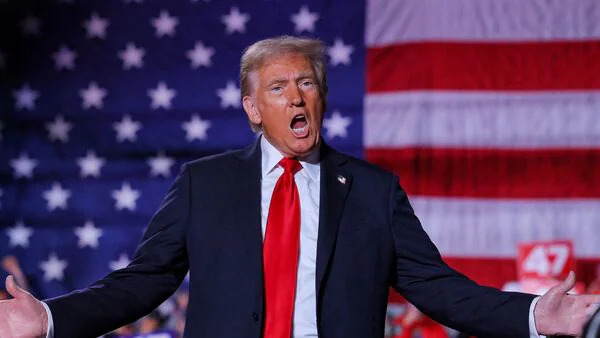
South Africa has expressed growing unease regarding the impact of Donald Trump’s recent election victory in the United States on global climate negotiations set to unfold at COP29. Dion George, South Africa’s Environment Minister, articulated concerns about potential policy shifts under the incoming U.S. administration that may undermine the collective climate commitments made by wealthy nations to address the escalating climate crisis.
The timing of Trump’s electoral success, coupled with the recent collapse of Germany’s coalition government, has added complexity and uncertainty to COP29, where nations are meeting with renewed urgency to confront climate change. The summit follows a year marked by destructive climate events, including unprecedented hurricanes, heatwaves, and severe flooding. Scientists continue to underscore these extreme weather patterns as clear indicators of worsening global warming—amplifying the stakes for meaningful action at COP29.
Minister George highlighted South Africa’s specific apprehension about Trump’s climate agenda, given his previous denunciation of climate change as a “hoax” and his stated intentions to withdraw from international agreements, such as the landmark 2015 Paris Accord. “We are concerned about America because we don’t know what they’re going to do,” George remarked in an interview with Reuters on Friday. “Mr. Trump has spoken of withdrawing from the Paris Agreement, but as of yet, we lack any clarity on his intentions.”



This uncertainty, George noted, has unsettled international partners who fear that the resurgence of Trump’s climate-sceptical policies may de-motivate lower-income countries and emerging economies to hold wealthier nations accountable for their share of climate-related obligations. Despite modest advances in climate finance, developing nations argue that the pledges of $100 billion in annual funding for climate adaptation and transition—already years in the making—fall woefully short of the pressing needs these countries face.
South Africa, one of the largest carbon emitters on the African continent, accounts for roughly 30% of Africa’s greenhouse gas emissions and ranks among the top 15 globally. As part of its energy transition, South Africa secured a climate finance package amounting to $11.6 billion, predominantly in loans, aimed at assisting its gradual shift from coal dependence to renewable energy sources. This financing model has been held up as a potential blueprint for other nations across the Global South, where financial resources remain a significant obstacle to green transition efforts.

“It’s certainly not enough,” George asserted. “We need another target.” He further raised the question of whether shifts in the political climate of developed economies might compromise their willingness to honour climate finance commitments. With Trump’s administration possibly steering the United States away from global climate responsibility, the burden of sustaining climate financing could fall more heavily on the European Union and other developed nations that have, to date, taken a more proactive stance on climate issues.
In light of Germany’s coalition government disbanding just before COP29, the South African minister sought assurance from German officials regarding the continuity of their climate commitments. He indicated that Jennifer Morgan, Germany’s state secretary for international climate action, had personally reached out to assure him that Germany’s political shifts would not alter the EU’s collective stance at the climate summit. “Their position is not changed, and that is how they will approach COP,” George said. “They’re on Team Europe. The European Union and Germany have clearly set out their objectives.”

Morgan’s reassurance comes amid growing calls from African leaders and climate advocates for wealthier nations to step up and lead by example. Africa remains one of the continents most vulnerable to climate change impacts, despite contributing the least to global emissions. It is expected that African nations will push for stronger financial commitments from the Global North at COP29 to mitigate and adapt to the worsening climate scenario.
As COP29 approaches, the influence of Trump’s election and Germany’s political transition remains to be fully seen. With many developing nations relying on the promised support of richer counterparts, the stakes are especially high to ensure that climate negotiations progress without interruption or dilution of commitment.