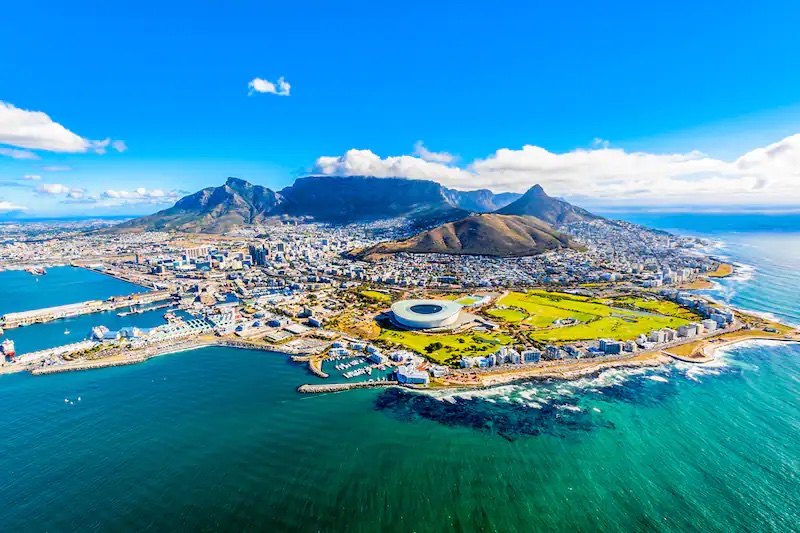
South Africa welcomed 10.48 million international arrivals in 2025, marking a 17.6 percent increase over the previous year and setting a new national record, according to an official statement by Minister of Tourism Patricia de Lille. The figures reflect a broader momentum in South Africa’s positioning of tourism as a cornerstone of inclusive economic development, investment attraction, and employment generation.
In highlighting the country’s performance, Minister de Lille referenced South Africa’s recent accolade as Best Destination: Africa 2025, awarded by the Travel Weekly Readers’ Choice Awards. This recognition underscores the country’s growing stature within the global tourism landscape, particularly in the context of post-pandemic recovery and the recalibration of African economies around sustainable, service-driven sectors.
The announcement also saw the Minister unveil the Cabinet-endorsed Tourism Growth Partnership Plan, spearheaded by the Tourism Business Council of South Africa. Central to the plan is the facilitation of greater ease of access for travellers. This includes the phased implementation of an Electronic Travel Authorisation (ETA) system, prioritising key markets such as India, China, Mexico, and Indonesia. The pilot phase, launched during the G20 Summit, has informed the broader rollout which is projected to generate between 80,000 and 100,000 new jobs, according to the Department of Home Affairs.



Minister de Lille further addressed the critical issue of safety, announcing the deployment of 1,500 tourism monitors across the country during the 2025 festive season. Of these, over 400 were assigned to bolster the operations of the Border Management Authority. These measures reflect a wider governmental acknowledgement of safety as integral to destination confidence and long-term sectoral resilience.
Tourism in South Africa currently supports approximately 1.8 million direct and indirect jobs. Based on current estimates, one job is created for every 13 international arrivals, illustrating the sector’s tangible contribution to employment amid broader socio-economic challenges.
Throughout 2025, South Africa deepened its engagement with innovation, infrastructure, and cross-border collaboration. Notable milestones included the inaugural Tourism Infrastructure Investment Summit and the launch of an artificial intelligence-powered travel assistant aimed at the North American market. Additionally, the country hosted the G20 Tourism Ministers’ Meeting, strengthening South Africa’s role within multilateral tourism diplomacy.
The Meetings, Incentives, Conferences, and Exhibitions (MICE) segment also featured prominently in the sector’s performance. In the 2025 financial year, South Africa secured 51 MICE bids, resulting in an estimated economic impact of 894.5 million rand (approximately 56 million US dollars). Flagship events such as Meetings Africa 2025 and Africa’s Travel Indaba generated 690 million rand and 610 million rand respectively, with combined job support exceeding 2,200 positions.

Looking ahead, the World Economic Forum is set to convene a Special Davos Meeting in South Africa in 2026. This development signals continued confidence in the country’s capacity to host major international gatherings and further affirms its evolving global role in policy and business convening.
Minister de Lille concluded by reaffirming tourism as a vehicle for shared prosperity. Her statement resonated with a broader pan-African imperative to reposition tourism not solely as a commercial enterprise, but as an enabler of cultural exchange, heritage preservation, and people-centred development. In contrast to one-dimensional narratives, South Africa’s approach places agency in African hands, prioritising systemic transformation and cross-regional integration.
As tourism rebounds across the continent, the South African example underscores the potential of coordinated planning, public-private partnership, and strategic foresight. It serves not as an isolated success but as part of a continental resurgence that foregrounds African-led innovation and policy autonomy.