South Africa’s presidency has rejected assertions that recent anti immigrant demonstrations reflect a fundamentally xenophobic society, while acknowledging growing public concern over migration pressures and calling for the protection of all residents within the country’s borders.
Speaking during a media briefing in Cape Town on Wednesday, presidential spokesperson Vincent Magwenya said President Cyril Ramaphosa does not believe South Africans are inherently hostile towards foreign nationals. He described the recent demonstrations as isolated protests taking place within the framework of constitutional rights to assembly and expression.
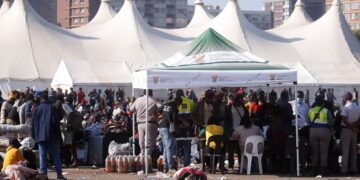
The remarks followed a march in Durban’s central business district where hundreds of demonstrators called for stronger action against undocumented migration. Similar protests have taken place in Johannesburg and Pretoria since late April, with some incidents reportedly escalating into violence and intimidation directed at migrant communities and informal traders.



According to reporting by Xinhua, Magwenya said migration pressures are not unique to South Africa and form part of a wider global and continental challenge linked to economic inequality, conflict, governance crises and labour mobility. He added that law enforcement agencies are expected to act decisively against violence and criminality regardless of who is targeted.

The South African government’s position comes amid growing diplomatic concern from several African states. Nigeria and Ghana have both raised concerns regarding the treatment of their citizens following reports of harassment and attacks linked to anti immigrant mobilisation. Regional observers have cautioned that inflammatory rhetoric risks undermining decades of continental integration efforts under frameworks such as the African Union Agenda 2063 and the African Continental Free Trade Area.
Migration within Africa remains a complex and deeply interconnected issue shaped by economic opportunity, regional instability, climate pressures and uneven development patterns. South Africa, as one of the continent’s largest economies, has long attracted migrants and asylum seekers from neighbouring countries and beyond. At the same time, the country continues to grapple with high unemployment, inequality and pressure on public services, conditions that analysts say can intensify social tensions in economically marginalised communities.
Civil society organisations, faith groups and regional policy experts have urged public discourse to avoid reducing migration to simplistic narratives of blame. Several organisations have argued that distinctions must be maintained between concerns around undocumented migration, organised crime and broader attitudes towards African migrants who contribute significantly to sectors such as healthcare, construction, logistics, agriculture and informal commerce.
Data from the United Nations High Commissioner for Refugees and the International Organization for Migration indicate that migration across the African continent remains predominantly intra African, with many migrants moving in response to regional economic realities rather than long distance relocation patterns often emphasised in global migration debates.
Magwenya stated that the presidency supports an open continental conversation on the structural causes driving migration across Africa, including conflict, governance failures and economic disparities. He emphasised that South Africans should not be collectively characterised through the actions of isolated groups or incidents.
While the protests have reignited debate around immigration policy, border management and social cohesion, political analysts note that South Africa’s constitutional framework continues to guarantee protections for all individuals residing in the country, irrespective of nationality. Rights groups have also stressed the importance of distinguishing between lawful protest and actions that incite violence or discrimination.
The developments have renewed broader discussions across the continent regarding mobility, citizenship, labour migration and regional solidarity. Observers say sustainable responses will require coordinated African solutions that address both economic insecurity and the human realities that shape migration patterns across borders.