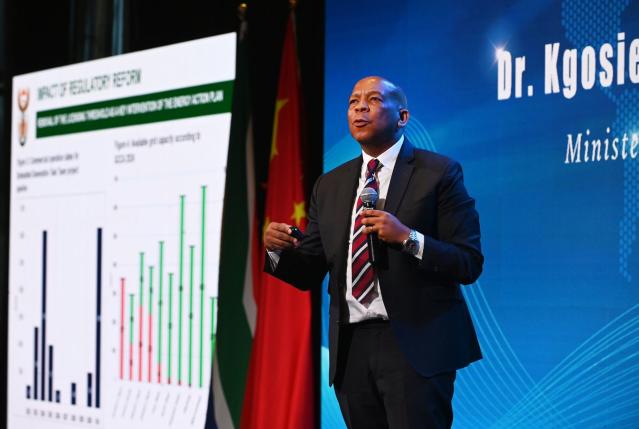
South Africa has informed climate donors that it will not meet its 2030 emissions targets, but remains steadfast in its commitment to achieving net zero by mid-century. The announcement was made by the newly appointed Energy Minister, Kgosientsho Ramokgopa, during an interview in his office in Pretoria.
“We have shared with the partners as late as this morning… that we’ll not be able to meet those targets by 2030, highly unlikely,” Ramokgopa disclosed.
Despite this setback, Ramokgopa emphasized South Africa’s dedication to long-term climate goals. “If you use a long horizon of 2050, we will not move from that,” he stated.



Under the Paris Climate Accords, South Africa committed to reducing its emissions to between 350 and 420 million tonnes by 2030, from a baseline of 442 million tonnes in 2020. This reduction is a key step on the path to net zero emissions by 2050.

However, the country’s heavy reliance on coal for electricity generation has made this target difficult to achieve. South Africa is currently the world’s most carbon-intensive major economy and ranks as the 15th largest emitter of greenhouse gases, surpassing nations such as France, Italy, and Turkey.
Years of power cuts have forced South Africa to prioritise energy security, leading to increased output from coal-fired power stations. “But we are committed over a longer period of time and we are able to say to them, this is how we’ll achieve it,” Ramokgopa assured. This statement was directed at wealthy nations including the United States and several European countries, which have pledged $12 billion in funding, primarily in the form of loans, to support South Africa’s energy transition.
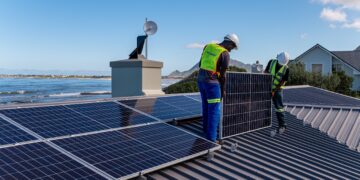
To accelerate the shift to renewable energy, Ramokgopa plans to meet with lenders and private power providers to address project delays and frustrations. New policies aimed at expediting progress include removing bureaucratic obstacles for existing private tenders, expropriating land from farmers hindering the power grid expansion, and re-pricing deals with power providers impacted by the increased costs of components due to the Ukraine conflict.
South Africa is seen as a key test case for international assistance to developing countries transitioning to greener energy, given its abundant solar and wind resources. “We have been moving at a slow pace, we need to be more aggressive and I’m committing to that,” Ramokgopa affirmed.