South Africa’s government has entered into diplomatic discussions with the United States regarding the imminent resettlement of approximately 100 White Afrikaners, a move initiated under President Donald Trump’s administration. The South African authorities are seeking full clarity on the identities and legal standing of those due to travel in order to ensure the initiative is not exploited by individuals attempting to evade justice.
Two South African government officials, speaking anonymously due to a lack of authorisation to engage with the press, confirmed that the individuals are scheduled to depart on a chartered flight next week. However, the South African government has not been officially informed of their identities, prompting concerns over the possibility that individuals facing legal scrutiny could be among them.
In a statement issued from Pretoria, the Department of International Relations and Cooperation confirmed that Deputy Minister Alvin Botes held discussions on Friday with US Deputy Secretary of State Christopher Landau. These talks form part of a broader framework of ongoing diplomatic engagements between the two nations. Presidential spokesperson Vincent Magwenya acknowledged by text that negotiations are continuing over the weekend and involve multiple matters of bilateral and mutual interest.



According to South African officials, the Ramaphosa administration has formally requested assurance from the US that those being resettled have undergone thorough vetting procedures. Both the White House and the Department of Homeland Security have thus far not responded to media queries seeking confirmation of the arrangements or the identity of the individuals concerned.

This initiative by the Trump administration follows previous controversial assertions by the former US president, who accused South Africa’s government of engaging in land seizures targeting White citizens, particularly Afrikaners. These claims, widely discredited and lacking empirical foundation, have been amplified by tech entrepreneur Elon Musk, a vocal supporter of Trump and a South Africa-born billionaire. Musk has circulated unfounded claims of a so-called “genocide” against White South Africans—claims that are not substantiated by available crime data.
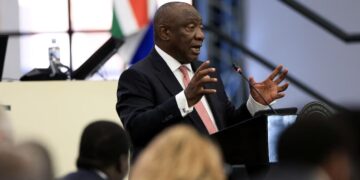
Official statistics from the South African Police Service indicate that the majority of murder victims in the country are young Black males, not members of the White community. No formal land seizures by the state have occurred since the end of apartheid in 1994. President Cyril Ramaphosa has publicly challenged the narrative emerging from the Trump administration, stating in April that during a phone call with Trump, he informed the US president that his understanding of the country’s internal affairs was based on misinformation.
“Our position is that there are no South African citizens that can be classified as refugees to any part of the world, including the US,” said Magwenya, reinforcing South Africa’s established role as a host nation for refugees from across the globe rather than a source of asylum-seekers.
White South Africans constitute approximately 7% of the nation’s 63 million residents, and around 11% of the population speaks Afrikaans, the mother tongue of most Afrikaners. Despite their minority status, the political framing of Afrikaner marginalisation has been the subject of international debate, largely driven by fringe narratives rather than systemic data.
Solidarity, a prominent Afrikaner civil rights group, has clarified that it had no involvement in the current relocation process and had previously rejected Trump’s proposal to facilitate the resettlement of its members. Spokesperson Flip Buys reiterated that the group has not changed its position and disavowed any claims of lobbying the US government regarding alleged ethnic violence. In a letter sent to President Ramaphosa earlier this year, Solidarity denied any responsibility for the deterioration in diplomatic sentiment between the African National Congress and the United States.
These developments arrive at a delicate time in South African foreign policy, as President Ramaphosa’s government seeks to rebuild and stabilise its relationship with Washington, one of its most significant economic partners. The broader implications of the proposed resettlement and the US’s apparent willingness to classify White South Africans as refugees remain deeply contentious and are likely to persist in international policy discourse.