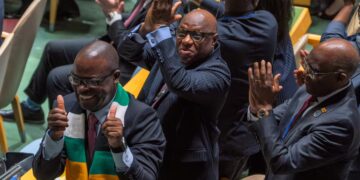
South Africa’s President Cyril Ramaphosa described the conclusion of the G20 Summit in Johannesburg as a reaffirmation of multilateral cooperation and shared purpose, even in the face of notable absences and tensions among major powers. The declaration adopted at the close of the summit emphasised unity and collective problem-solving, underscoring Africa’s emerging voice in global governance.
The event, hosted in Johannesburg, was historic as the first G20 summit held on African soil. Ramaphosa framed the outcome as a diplomatic success that reflected Africa’s growing influence in shaping global discussions on development, climate action, and economic justice. The joint communiqué, endorsed by all participating nations except Argentina, reaffirmed the urgency of addressing the climate crisis, expanding access to climate finance, and easing debt burdens faced by developing countries.
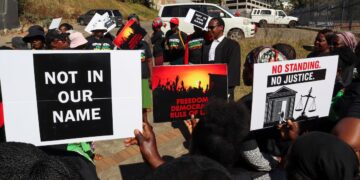
Despite the absence of U.S. President Donald Trump, who declined to attend amid unsubstantiated claims regarding South Africa’s domestic governance, the meeting proceeded with consensus on key priorities. Ramaphosa stated that the document’s adoption demonstrated that “shared goals outweigh our differences,” a sentiment that resonated across delegations seeking renewed cooperation amid global divisions.



The U.S. boycott drew criticism and was widely interpreted as symbolic of a shifting global order in which new partnerships are emerging outside traditional Western alignments. The United States, set to assume the rotating G20 presidency following Johannesburg, had proposed to send an embassy representative for the ceremonial handover. However, Pretoria rejected the offer, citing established diplomatic protocol that such transitions occur between heads of state or designated senior officials. South Africa’s Foreign Minister, Ronald Lamola, clarified that no formal communication had yet been received regarding the presidency transition, emphasising that the country remained open to engagement.
Other leaders welcomed the summit’s outcomes. Brazil’s President Luiz Inácio Lula da Silva observed that both the G20 and the recent COP30 climate talks in Brazil had demonstrated the enduring relevance of multilateralism. Germany’s Chancellor Friedrich Merz remarked that the absence of the United States was noticeable but did not overshadow the cooperative spirit among participating nations, suggesting a broader reconfiguration of international relations.
The Johannesburg declaration placed renewed focus on the Global South, calling for expanded renewable energy investment, equitable access to financing, and collective resilience against the intensifying impacts of climate change. It also reaffirmed the G20’s commitment to addressing the economic consequences of ongoing geopolitical tensions, including the conflict in Ukraine, while encouraging dialogue and diplomacy.
For South Africa, the summit represented not only a diplomatic achievement but also a statement of principle. The country’s insistence on a balanced, inclusive multilateral order reflects a broader African aspiration to move beyond being a peripheral participant in global decision-making. By foregrounding issues such as sustainable energy transitions and fair financial architecture, the Johannesburg summit embodied an approach that prioritises shared human development and dignity.
In an increasingly fragmented international environment, the G20 gathering in Johannesburg demonstrated that Africa is no longer merely a venue for global dialogue but an active architect of its direction. As the world prepares for a U.S.-led presidency in 2026, the challenge will be to sustain this momentum and ensure that multilateralism continues to serve all nations equitably.

Moments of Diplomacy at the Johannesburg G20 Summit