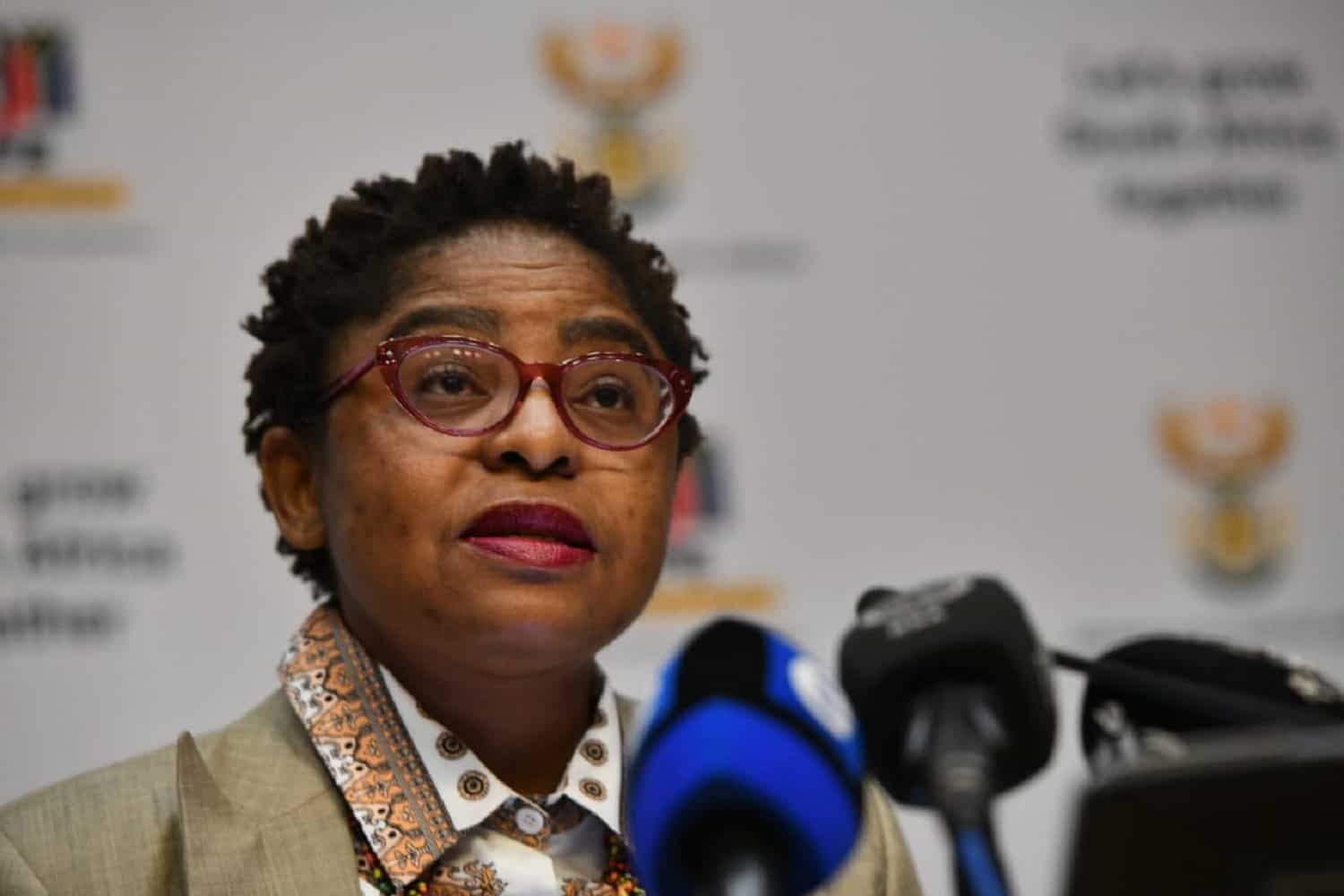
South Africa has affirmed its sovereign right to pursue independent foreign policy decisions following reports that the United States is considering excluding Pretoria from next year’s Group of Twenty (G20) summit. Speaking at a media briefing in Pretoria on Wednesday, Minister in the Presidency Khumbudzo Ntshavheni emphasised that South Africa would not appeal to Washington over the matter, underscoring the nation’s commitment to maintaining diplomatic dignity and principled engagement.
“Why should we plead with the United States? We are not in the business of pleading with the United States. We are a sovereign state. They are a sovereign state,” Ntshavheni stated, reaffirming South Africa’s position as a nation that conducts its international relations on the basis of mutual respect and reciprocity.
Ntshavheni noted that while South Africa continues to value the United States as a key strategic trading partner, its policy direction remains grounded in promoting the country’s own national interest and advancing multilateral cooperation. “That is why we continue to engage with them on trade-related matters and on issues of mutual concern,” she said.



South Africa has been a founding member of the G20 since the group’s inception in 1999, serving as the only African permanent member within the forum. The G20 brings together the world’s major advanced and emerging economies to deliberate on global economic stability, sustainable development, and financial governance. Pretoria’s participation has historically provided Africa with a platform to articulate the continent’s development priorities and to advocate for a more inclusive global economic order.

Ntshavheni confirmed that South Africa has indicated its readiness to participate in the upcoming G20 Sherpa meeting scheduled for later this month. The meeting serves as a preparatory session for the 2026 summit, where participating nations set the agenda for global economic cooperation.
While neither Washington nor the G20 secretariat has officially confirmed any decision to exclude South Africa, reports have circulated suggesting that geopolitical tensions and divergent diplomatic positions may be influencing the debate. Observers note that Pretoria’s non-aligned stance on various international conflicts and its advocacy for multipolarity in global governance have occasionally placed it at odds with Western powers.
Ntshavheni reiterated that South Africa’s foreign policy continues to be anchored in multilateralism, sovereign equality, and collaboration among nations. “Our commitment to cooperation remains unwavering,” she stated, adding that global prosperity is best achieved through constructive engagement rather than exclusionary politics.
Regional analysts suggest that South Africa’s response reflects a broader shift across the Global South towards asserting policy independence in an evolving international system. Rather than interpreting the reported G20 exclusion as a diplomatic rift, many view Pretoria’s stance as part of an ongoing dialogue about how African nations can redefine their place in global governance structures.
The country’s measured response also demonstrates a growing awareness within the continent of the need to advance African agency in international decision-making, beyond the constraints of historical alliances and power asymmetries.
South Africa’s insistence on principle-based engagement rather than political accommodation underscores a broader message: that African nations can engage the global community as equal partners, capable of determining their own developmental and diplomatic trajectories.