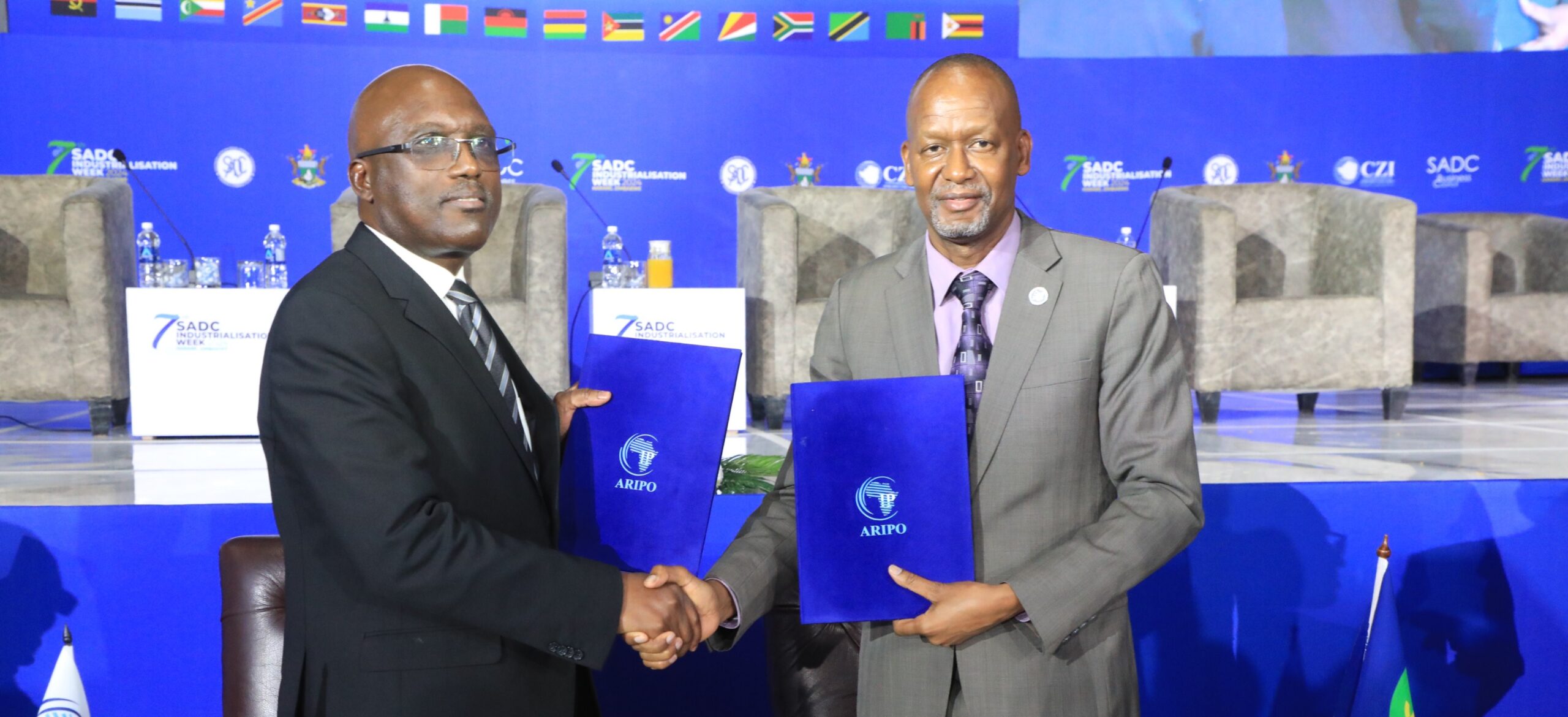
The Southern African Development Community (SADC) and the African Regional Intellectual Property Organization (ARIPO) have formalised their cooperation through the signing of a Memorandum of Understanding (MoU). The agreement, signed by His Excellency Mr. Elias M. Magosi, Executive Secretary of SADC, and Mr. Bemanya Twebaze, Director-General of ARIPO, was concluded on the sidelines of the SADC Industrialisation Week in Harare.
The MoU signifies a concerted effort by the two organisations to bolster the protection and harmonisation of Intellectual Property Rights (IPRs) within the region. ARIPO, established in 1976, has played a pivotal role in fostering cooperation among its Member States in matters of intellectual property. Its mandate includes the pooling of resources to enhance the promotion, development, and harmonisation of intellectual property laws and policies across its Member States.
The collaboration between SADC and ARIPO, which encompasses eleven SADC Member States, namely Botswana, Eswatini, Lesotho, Malawi, Mauritius, Mozambique, Namibia, Seychelles, Tanzania, Zambia, and Zimbabwe, aims to create a cohesive regional approach to IPRs. This partnership is expected to fortify the region’s science, technology, and innovation systems, thus providing a robust framework to support industrialisation and socio-economic development.



H.E. Mr. Magosi underscored the significance of this alliance, describing it as a milestone for the region. He noted that a unified regional intellectual property rights system would not only stimulate innovation, research, and development but also serve as a critical foundation for achieving economic integration within SADC. By aligning IPRs with the region’s development goals, Member States can leverage these rights to enhance creativity, encourage investment in research and development, and ultimately, improve competitiveness on a global scale.
Mr. Twebaze echoed these sentiments, highlighting that the MoU establishes a formal structure for cooperation, facilitating the development of human and institutional capacities in intellectual property. He emphasized that this collaboration is vital for the region’s industrialisation agenda, providing the necessary tools and frameworks for SADC Member States to effectively harness the benefits of IPRs. The agreement reflects a shared recognition of the critical role that intellectual property plays in driving economic growth, innovation, and technological advancement.

As the SADC and ARIPO work together under this new framework, the region stands poised to strengthen its intellectual property systems, thereby fostering a conducive environment for innovation and economic development. This partnership is expected to not only enhance the protection of intellectual property but also to stimulate regional integration, enabling Member States to maximise the value derived from IPRs.
The SADC and ARIPO’s commitment to this partnership reflects a broader aspiration to elevate the region’s status in global trade, science, technology, and innovation. Through the strategic utilisation of IPRs, the region aims to accelerate its industrialisation process and achieve substantial socio-economic progress.