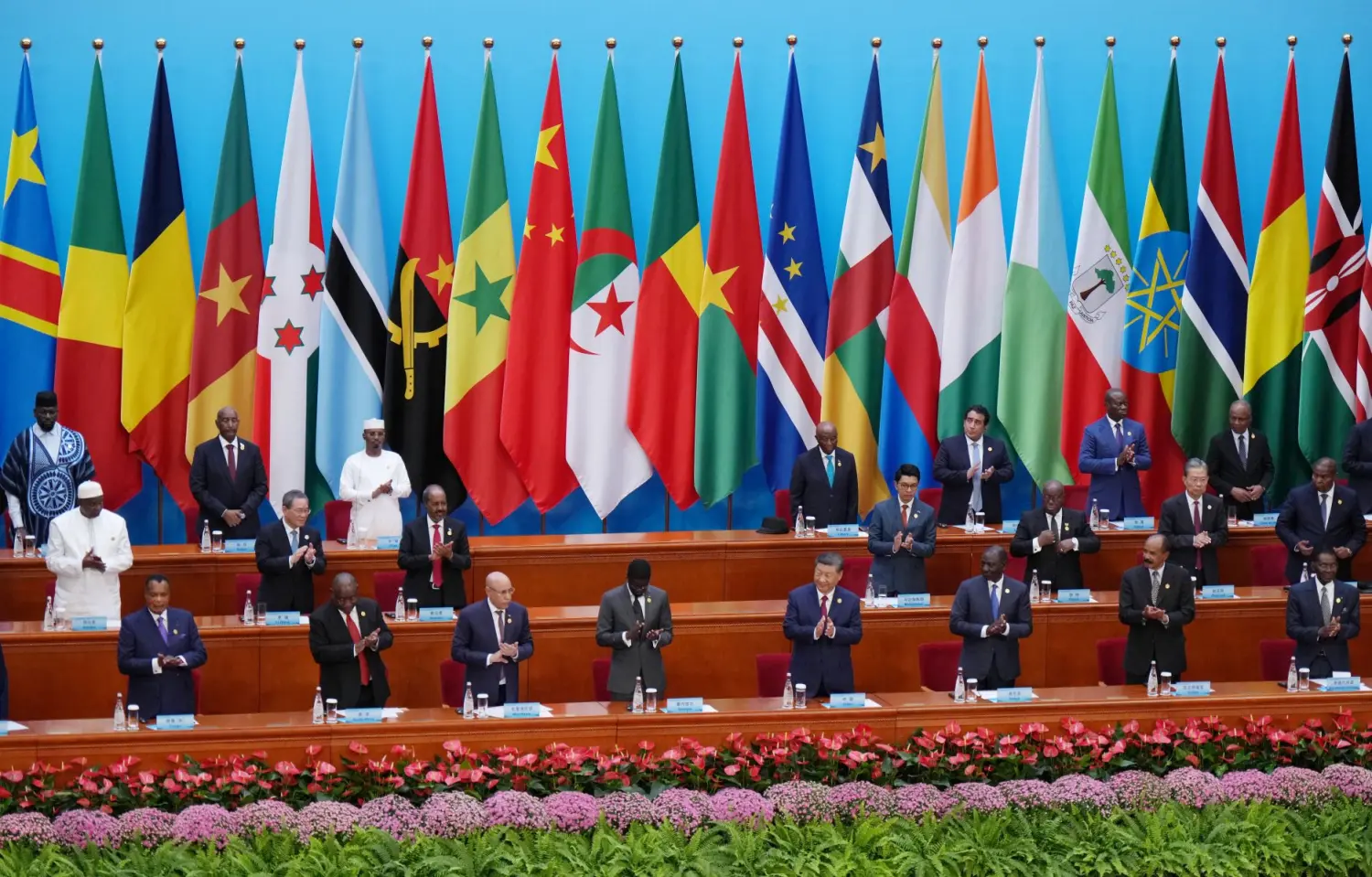
As the world’s economic centre of gravity shifts, Africa faces a stark choice in its trade and investment partnerships: persist with Western alliances defined by unpredictability, or pivot towards the Global South—where emerging economies are increasingly demonstrating a developmental approach that aligns with Africa’s long-term growth needs. The policy inertia of the United States, particularly in its Africa strategy, underscores the imperative for African economies to deepen ties with China, the UAE, Saudi Arabia, India, and Turkey—nations that are not only engaging Africa with long-term investment horizons but are also supporting crucial infrastructure and industrialisation projects.
With the uncertainty surrounding the renewal of the African Growth and Opportunity Act (AGOA) and potential budget cuts to the Development Finance Corporation (DFC), it is clear that Africa can no longer rely on U.S. policy continuity. In contrast, China’s Belt and Road Initiative (BRI), the UAE’s and Saudi Arabia’s sovereign wealth fund-backed investments, and India’s South-South cooperation model provide a more predictable and committed framework for Africa’s development.
When AGOA was introduced in 2000 under President Bill Clinton, it was heralded as a transformative trade pact that would bolster U.S.-Africa economic ties. Yet, despite its 24-year tenure, AGOA has failed to make the U.S. competitive in Africa. In 2023, U.S.-Africa trade totalled $67.5 billion, dwarfed by China’s $282.1 billion in bilateral trade with the continent. While U.S. lawmakers debate AGOA’s renewal—with competing proposals to extend it for 12 or 16 years—China continues to sign long-term strategic partnerships, offering infrastructure financing that fuels Africa’s connectivity and intra-continental trade under the African Continental Free Trade Area (AfCFTA).



A similar policy vacuum is evident in the potential budget cuts to the DFC, which, under President Trump’s first term, had sought to inject $5 billion into Morocco and Ethiopia as part of a pro-business, transactional Africa policy. Although the DFC Modernization and Reauthorization Act of 2024 has passed the House Committee on Foreign Affairs, its fate in the next Congress remains uncertain. The agency’s failure to attach its renewal to the 2024 National Defense Authorization Act underscores how Africa remains an afterthought in U.S. economic policy.
Moreover, Washington’s approach to critical minerals—a sector in which Africa holds a 30% global share—has been reactionary rather than strategic. While the U.S. Senate debates critical minerals legislation, China has already secured control of 70% of global cobalt supply through direct investments in the DRC. Meanwhile, India, the UAE, and Saudi Arabia are making strategic inroads by investing in lithium, rare earths, and battery production to support the green transition.
Unlike the U.S., which is entangled in legislative uncertainty and geopolitical conditionalities, China, the UAE, Saudi Arabia, India, and Turkey have approached African partnerships with a developmental ethos, offering patient capital and long-term financing for infrastructure, industrialisation, and energy efficiency.
China’s Belt and Road Initiative (BRI) has financed $155 billion in African infrastructure, connecting key trade corridors, ports, and railways that are fundamental to intra-African commerce. While critics argue that BRI projects raise concerns about debt sustainability, studies indicate that many African governments have successfully renegotiated the terms of Chinese loans, ensuring that these investments remain viable. The UAE and Saudi Arabia, through their sovereign wealth funds, have committed billions in strategic sectors such as energy, fintech, and logistics, providing African economies with capital that comes with fewer political constraints than Western investments. India’s South-South model has deepened engagement in Africa’s pharmaceutical, technology, and agricultural sectors, emphasising technology transfer and local capacity building.
Turkey, leveraging its expertise in construction and manufacturing, has emerged as a key player in building roads, bridges, and industrial zones that strengthen Africa’s connectivity. The country’s exports to Africa have surged past $40 billion, and it has established a strong presence in aviation, textiles, and renewable energy. Unlike Western nations that tend to focus on development assistance, Turkey has taken a private sector-driven approach, fostering African entrepreneurship through public-private partnerships.

These investments are not only closing Africa’s infrastructure deficit, but they are also catalysing intra-African trade, a key pillar of AfCFTA. Unlike the West’s focus on extractive relationships, the Global South’s investment model is anchored in value addition, ensuring that Africa moves beyond merely exporting raw materials to processing, manufacturing, and developing regional supply chains.
Furthermore, the energy transition presents another key sector where the Global South holds a competitive advantage over Western partners. Africa requires an estimated $2.8 trillion in energy investments by 2050 to meet its growing electricity demand and achieve a clean energy transition. China and India have been instrumental in funding solar, hydro, and wind power projects across the continent, while Saudi Arabia’s ACWA Power and the UAE’s Masdar have expanded their presence in Africa’s renewable energy landscape. This is in stark contrast to U.S. financing, which has been inconsistent and overly bureaucratic, with initiatives such as Power Africa failing to scale at the pace required to meet demand.
The decline in U.S. interest is also reflected in PEPFAR, the landmark HIV/AIDS relief program that has provided life-saving medicines to over 25 million Africans. While historically enjoying bipartisan support, PEPFAR’s future funding is now in jeopardy, with growing opposition within Republican circles. If Congress fails to renew PEPFAR beyond its one-year extension to March 2025, the program’s collapse would severely undermine America’s diplomatic credibility and its broader soft power in Africa.
While AGOA, the DFC, and PEPFAR have played roles in U.S.-Africa relations, the legislative uncertainty, geopolitical constraints, and lack of long-term investment vision make them unreliable mechanisms for Africa’s future. The Global South, by contrast, is offering Africa patient capital, long-term financing, and a commitment to industrialisation and infrastructure—the very pillars required to make AfCFTA a success.
As the world moves towards multipolarity, Africa must align itself with partners that are genuinely invested in its long-term transformation. Looking East is no longer an ideological debate—it is a pragmatic necessity. In the coming decades, the nations that prioritise infrastructure development, industrialisation, and value chain creation will shape the economic trajectory of the continent. Africa must make the bold decision to forge deeper ties with Global South partners who share a vision for sustainable and mutually beneficial growth.
The time for Africa to pivot is now. The West is caught in bureaucratic gridlock, ideological distractions, and short-term policy cycles. The Global South, in contrast, is offering capital, capacity, and commitment—exactly what Africa needs. If Africa fails to act, it risks being left behind in a rapidly evolving global order. The choice is clear: Ditch the West, embrace the East, or get sidelined.
Written by Farai Ian Muvuti, the Chief Executive Officer of The Southern African Times, 2023 winner of the Young Entrepreneur of the Year award by the South African Chamber of Commerce UK, an advisor on the board of the Africa Chamber of Commerce, and a contributor to Arise News, Al Jazeera, and the BBC.