Saturday, May 30, 2026
  • Login
The Southern African Times
  • Home
  • Southern Africa
  • Business
    • African Start ups
    • African Continental Free Trade Area
  • Technology
    • Lifestyle
      • Health
      • Culture
      • Food and Drink
      • Entertainment
  • Opinion
  • Sports
  • SAT Jobs
    • Events
  • About Us
    • Advertise with Us
    • Contact Us
No Result
View All Result
  • Home
  • Southern Africa
  • Business
    • African Start ups
    • African Continental Free Trade Area
  • Technology
    • Lifestyle
      • Health
      • Culture
      • Food and Drink
      • Entertainment
  • Opinion
  • Sports
  • SAT Jobs
    • Events
  • About Us
    • Advertise with Us
    • Contact Us
No Result
View All Result
The Southern African Times
No Result
View All Result
Home Markets

Netflix suffers first subscriber loss in a decade

Wall Street sent Netflix’s stock tumbling 26 percent after market hours, erasing about $40bn of market value.

by SAT Reporter
April 20, 2022
in Business, Just In, Markets
0
Netflix suffers first subscriber loss in a decade

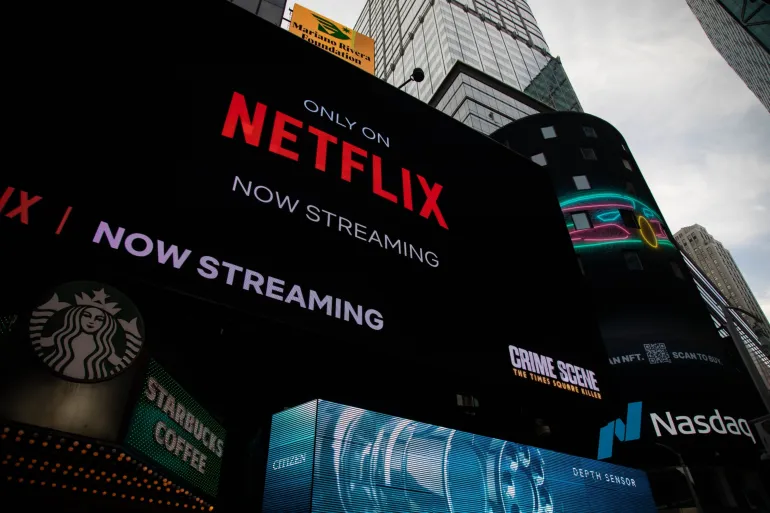
Netflix Inc says inflation, the war in Ukraine and fierce competition contributed to a loss of subscribers for the first time in more than a decade and predicted deeper losses ahead, marking an abrupt shift in fortune for a streaming company that has thrived during the pandemic.

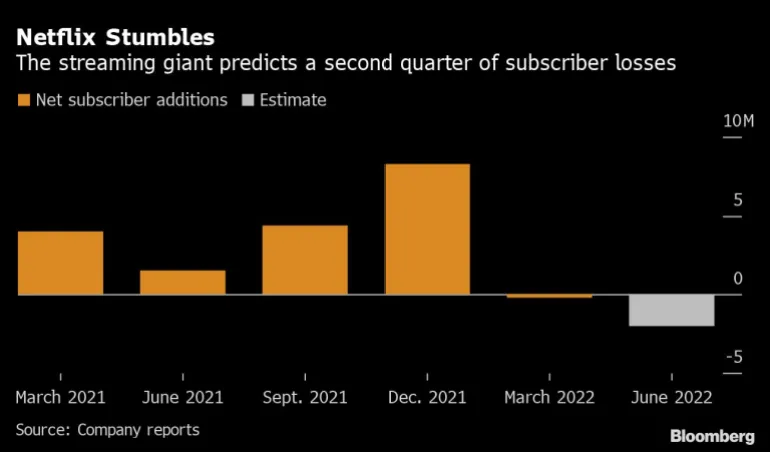
The company said it lost 200,000 subscribers in its first quarter, falling well short of its forecast of adding 2.5 million subscribers. Suspending service in Russia after the Ukraine invasion took a toll, resulting in the loss of 700,000 members.

Wall Street sent Netflix’s stock tumbling 26 percent after the bell on Tuesday and erased about $40bn of its stock market value. Since it warned in January of weak subscriber growth, the company has lost nearly half of its value.


ADVERTISEMENT

The lagging subscriber growth is prompting Netflix to contemplate offering a lower-priced version of the service with advertising, citing the success of similar offerings from rivals HBO Max and Disney+.

“Those who have followed Netflix know that I’ve been against the complexity of advertising, and a big fan of the simplicity of subscription,” said Netflix CEO Reed Hastings. “But, as much as I’m a fan of that, I’m a bigger fan of consumer choice.”

Netflix offered a gloomy prediction for the spring quarter, forecasting it would lose 2 million subscribers, despite the return of such hotly anticipated series as Stranger Things and Ozark and the debut of the film The Grey Man, starring Chris Evans and Ryan Gosling. Wall Street targeted 227 million for the second quarter, according to Refinitiv data.

The downdraft caught other video streaming-related stocks, with Roku dropping more than 6 percent, Walt Disney falling 5 percent and Warner Bros Discovery down 3.5 percent.

Hastings told investors that the pandemic had “created a lot of noise”, making it difficult for the company to interpret the surge and ebb of its subscription business over the last two years. Now, it appears the culprit is a combination of competition and the number of accounts sharing passwords, making it harder to grow.

“When we were growing fast, it wasn’t a high priority to work on,” Hastings said of account-sharing in remarks during Netflix’s investor video. “And now we’re working super hard on it.”

Confluence of events

Netflix’s first-quarter revenue grew 10 percent to $7.87bn, slightly below Wall Street’s forecasts. It reported per-share net earnings of $3.53, beating the Wall Street consensus of $2.89.

While the company remains bullish on the future of streaming, it blamed its slowing growth on a number of factors, such as the rate at which consumers adopt on-demand services, a growing number of competitors and a sluggish economy.

Account-sharing is a longstanding practice, though Netflix is exploring ways to derive revenue from the 100 million households watching Netflix through shared accounts, including 30 million in the United States and Canada.

This confluence of factors resulted in Netflix reporting losing customers for the first time since October 2011, catching Wall Street by surprise.

“They suffered from a combination of approaching saturation, inflation, higher pricing, the war in Ukraine and competition,” said Wedbush analyst Michael Pachter. “I don’t think any of us expected that all to happen at once.”

The world’s dominant streaming service was expected to report slowing growth, amid intense competition from established rivals like Amazon.com, traditional media companies such as Walt Disney and the newly formed Warner Bros Discovery and cash-flush newcomers like Apple Inc.

Streaming services spent $50bn on new content last year, in a bid to attract or retain subscribers, according to researcher Ampere Analysis. That’s a 50 percent increase from 2019, when many of the newer streaming services launched, signalling the quick escalation of the so-called “streaming wars”.

Netflix noted that despite the intensifying competition, its share of TV viewing in the US has held steady according to Nielsen, a mark of subscriber satisfaction and retention.

As growth slows in mature markets like the US, Netflix is increasingly focused on other parts of the world and investing in local-language content.

“While hundreds of millions of homes pay for Netflix, well over half of the world’s broadband homes don’t yet – representing huge future growth potential,” the company said in a statement.

Benchmark analyst Matthew Harrigan warned that the uncertain global economy “is apt to emerge as an albatross” for member growth and Netflix’s ability to continue raising prices as competition intensifies.

New competition

Streaming services are not the only form of entertainment vying for consumers’ time. The latest Digital Media Trends survey from Deloitte, released in late March, revealed that Generation Z, those consumers ages 14 to 25, spend more time playing games than watching movies or television series at home or even listening to music.

The majority of Gen Z and Millennial consumers polled said they spend more time watching user-created videos like those on TikTok and YouTube than watching films or shows on a streaming service.

One market observer said Netflix’s stock has benefitted from expectations of perpetual growth.

“Today’s report shows that there is a limit to that long-term bullish thesis,” said David Keller, chief market strategist at StockCharts.com.
Previous Post

China holds interest rates steady despite COVID, Ukraine woes

Next Post

African startups drew record $5.2 billion in venture capital last year

SAT Reporter

Related Posts

US stocks end week higher as hopes grow for Iran peace deal
Markets

US stocks end week higher as hopes grow for Iran peace deal

by SAT Reporter
May 30, 2026
World stocks hit record highs as oil heads for sharp weekly fall
Markets

World stocks hit record highs as oil heads for sharp weekly fall

by SAT Reporter
May 29, 2026
Gold tumbles to two month low as Iran conflict lifts dollar and oil
Markets

Gold tumbles to two month low as Iran conflict lifts dollar and oil

by SAT Reporter
May 28, 2026
Pepkor targets 1.8 million customers with 2027 bank launch
Business

Pepkor targets 1.8 million customers with 2027 bank launch

by SAT Reporter
May 27, 2026
Oil prices edge higher as strikes cloud US Iran peace hopes
Markets

Oil prices edge higher as strikes cloud US Iran peace hopes

by SAT Reporter
May 26, 2026
Next Post
African startups drew record $5.2 billion in venture capital last year

African startups drew record $5.2 billion in venture capital last year

Browse by Category

  • Africa AI
  • African Continental Free Trade Area
  • African Debt
  • African Start ups
  • Agriculture
  • AI Africa
  • Algeria
  • All News
  • Analysis
  • Angola
  • Arts / Culture
  • Asia
  • Botswana
  • BOTSWANA
  • BREAKING NEWS
  • BRICS
  • Burkina Faso
  • Burundi
  • Business
  • Business
  • Business Wire
  • Cameroon
  • Central Africa
  • Chad
  • China
  • Climate Change
  • Climate Changev
  • Community
  • Congo Republic
  • Conservation
  • CĂ´te d’Ivoire
  • COVID 19
  • CRYPTOCURRENCY
  • Culture
  • Democratic Republic of Congo
  • Diplomacy
  • Eastern Africa
  • Economic Development
  • Economy
  • Education
  • Egypt
  • Elections 2024
  • Energy
  • Entertainment
  • Environment
  • Eritrea
  • Ethiopia
  • Europe
  • Fashion
  • Feature
  • Finance
  • Financial Inclusion
  • Food
  • Food and Drink
  • Foods
  • GABON
  • Ghana
  • Global
  • Global Africa
  • Guinea
  • Health
  • Humanitarian Aid
  • Immigration
  • in Southern Africa
  • International news
  • International Relations
  • Investment
  • Ivory Coast
  • Just In
  • Kenya
  • Lesotho
  • Libya
  • Life Style
  • Lifestyle
  • Literature
  • Malawi
  • Malawi
  • Mali
  • Markets
  • Mauritius
  • Middle East
  • Mining in Africa
  • Morocco
  • Mozambique
  • Namibia
  • Niger
  • niger
  • Nigeria
  • North Africa
  • North-Eastern Africa
  • Obituaries
  • Obituary
  • Opinion
  • PARTNER CONTENT
  • Politics
  • Property
  • Racism
  • Rwanda
  • Rwanda
  • SADC
  • SAT Interviews
  • SAT Investigation
  • SAT Jobs
  • Saudi Arabia
  • Senegal
  • Seychelles
  • Somaliland
  • South Africa
  • South Sudan
  • Sports
  • Startup Africa
  • STOCK EXCHANGE
  • Sudan
  • Sustainability
  • Sustainablity
  • Tanzania
  • Technology
  • Telecommunications
  • The Editorial Board
  • The Power Of She
  • Togo
  • Trade
  • Travel
  • Travel
  • Tunisia
  • Uganda
  • Uncategorized
  • Wealth
  • West Africa
  • World
  • World
  • ZAMBIA
  • Zambia
  • ZIMBABWE
  • Zimbabwe

Browse by Tags

#NewsUpdate #SouthAfrica #SouthernAfricanTimes #TheSouthernAfricanTimes AfCFTA africa African Continental Free Trade Area African development African Development Bank African economies African economy African Union Agriculture Angola Botswana China Climate change Cyril Ramaphosa Economic Development economic growth energy transition Ghana governance industrialisation Inflation Infrastructure Infrastructure Development International relations Investment Kenya Mozambique Namibia news Nigeria Regional Integration renewable energy Rwanda SADC South Africa Southern Africa sustainable development Tanzania United States Zambia Zimbabwe
ADVERTISEMENT

WHO WE ARE

The Southern African Times is a regional bloc digital newspaper that covers Southern African and world news. The paper also gives a nuanced analysis on news and covers a wide range of reporting which include sports, entertainment, foreign affairs, arts and culture.

Welcome Back!

Login to your account below

Forgotten Password?

Retrieve your password

Please enter your username or email address to reset your password.

Log In
  • Home
  • Southern Africa
  • Business
    • African Start ups
    • African Continental Free Trade Area
  • Technology
    • Lifestyle
      • Health
      • Culture
      • Food and Drink
      • Entertainment
  • Opinion
  • Sports
  • SAT Jobs
    • Events
  • About Us
    • Advertise with Us
    • Contact Us
Not enough quota to unlock this post
Unlock left : 0
Are you sure want to cancel subscription?