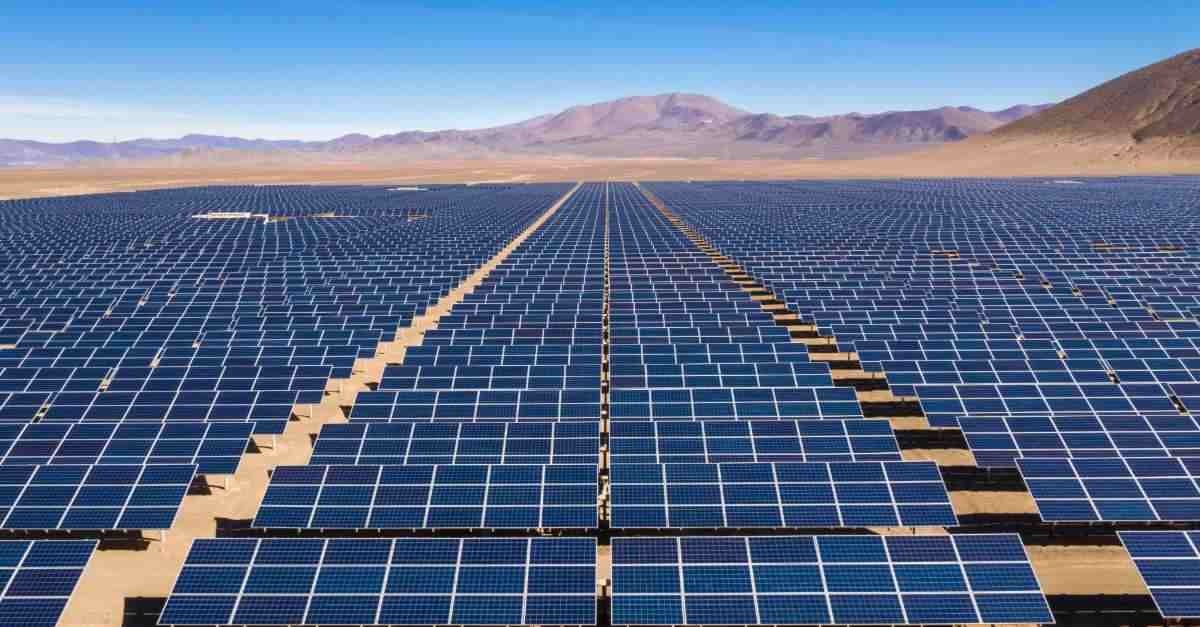
Namibia has officially broken ground on its most ambitious solar power project to date—the 100-megawatt Sores Gaib Photovoltaic Power Station—signifying a landmark moment in the country’s pursuit of energy independence and sustainable growth. The project, located approximately 33 kilometres northwest of Rosh Pinah in the southern Kharas Region, is poised to become the nation’s largest solar energy installation upon completion.
The development is being spearheaded through a strategic joint venture between China Jiangxi International Economic and Technical Cooperation Co., Ltd. and Zhejiang Chint New Energy Development Co., Ltd., two Chinese entities with longstanding experience in large-scale renewable infrastructure projects. The move reflects growing regional and international cooperation in advancing sustainable energy solutions across sub-Saharan Africa.
Kahenge Haulofu, Managing Director of NamPower, Namibia’s state-owned utility, underscored the broader implications of the project during the ceremonial groundbreaking. “Our country has abundant sun, and we as a nation are ready to seize the opportunities that renewable energy offers,” Haulofu remarked. “The 100-MW Sores Gaib Power Station is a critical step in fulfilling that potential.” He noted that the facility, once operational, would significantly contribute to the national grid, reducing the country’s dependence on imported energy and fossil fuels—both longstanding challenges for Namibia’s energy sector.



Namibia currently imports a substantial portion of its electricity from neighbouring countries such as South Africa and Zimbabwe, which has raised concerns regarding long-term energy security and tariff stability. The development of domestic generation capacity through solar projects such as Sores Gaib aligns with Namibia’s Renewable Energy Policy, which aims to diversify the country’s energy mix and reduce emissions in line with national and regional climate goals.

According to NamPower, the Sores Gaib project involves an investment of 1.6 billion Namibian dollars (approximately 88.6 million USD), with the commercial operational date targeted for June 2026. During construction, the project is expected to generate more than 300 direct employment opportunities, with a deliberate focus on employing local workers and facilitating skills transfer in the renewable energy sector.
This initiative forms part of NamPower’s broader infrastructure development strategy, which includes the 400-kilovolt Expansion Programme, a transmission project designed to reinforce and extend the national electricity grid to accommodate rising demand driven by population growth and industrial expansion. The dual emphasis on generation and transmission reflects a holistic approach to addressing Namibia’s long-term energy requirements.

The project’s launch further reinforces Namibia’s role as an emerging leader in Southern Africa’s energy transition. Given its high solar irradiation levels and vast open landscapes, the country is uniquely positioned to harness solar energy at scale, offering both domestic and export potential.
As sub-Saharan Africa grapples with electrification challenges, initiatives such as the Sores Gaib Solar Power Station not only represent progress for Namibia but also serve as a blueprint for clean energy development across the region. With construction now officially underway, Namibia takes a decisive step forward in realising a more sustainable, resilient, and self-reliant energy future.