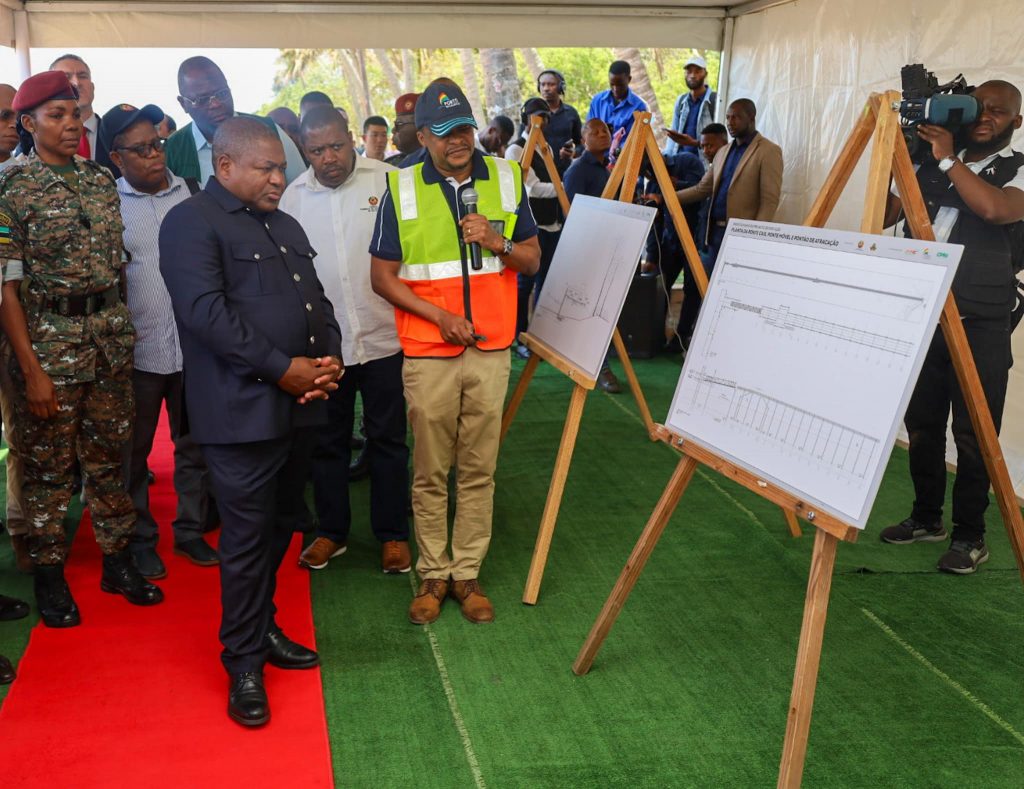
Mozambique has commenced the construction of a nearly kilometre-long jetty on Inhaca Island, Maputo, with President Filipe Nyusi laying the symbolic foundation stone on Friday. The jetty, which is touted to become the longest of its kind globally, will significantly improve access to the island while fostering tourism, trade, and research. The $13.5 million (£10.9 million) infrastructure project is envisioned as a “gift” to mark the 50th anniversary of Mozambique’s independence, which will be commemorated in 2025.
Speaking at the ceremony, President Nyusi expressed hope that the jetty would be a lasting symbol of progress for the island, which has long faced challenges in connecting with the mainland. “I believe that within the next cycle, in just 12 months, the next President will be here to hand over this infrastructure as a gift for our 50 years of independence in 2025. KaNyaka [Inhaca] needed 50 years to have a bridge, and now it will,” he declared, underscoring the importance of this infrastructure for the future of the island and its residents.
Strategically located at the entrance of Maputo Bay, Inhaca Island is known for its rich biodiversity and serves as a research hub for marine and environmental sciences. The new jetty, Nyusi noted, is expected to ease the transportation of researchers, scientists, and tourists alike, providing a safe and expedient route between the island and the Mozambican capital.




The President’s remarks also highlighted the anticipated economic benefits the project would bring. He extended an invitation to investors, encouraging them to explore the island’s tourism potential, which remains largely untapped. Inhaca has historically suffered from inconsistent and inadequate maritime transport, limiting its accessibility despite its proximity to Maputo. The jetty is expected to address these long-standing challenges, enabling regular and reliable transport services that can accommodate passengers and an emergency vehicle up to five tonnes under any tide conditions—a capability currently lacking.
The jetty project is part of a broader infrastructural initiative supported by Sociedade de Desenvolvimento do Porto de Maputo (MPDC), the concessionaire for Maputo’s port, which has earmarked $15 million (£12.2 million) towards six social projects within the extension of its port concession contract until 2058. MPDC’s financial contribution will facilitate the completion of the jetty, aligning with the government’s ambition to elevate Inhaca as a focal point for regional tourism and ecological research.
In recent years, the Mozambican government has sought to expand the country’s infrastructure, enhancing accessibility to its remote areas while promoting tourism and investment. The jetty on Inhaca Island will complement the high-profile Maputo-Katembe suspension bridge, which was also constructed by the Chinese company overseeing the current project. This combination of landmark infrastructure projects is anticipated to enhance Maputo’s standing as a gateway to regional destinations and bolster Mozambique’s growing reputation as a tourist destination in Southern Africa.
Inhaca Island, which is home to over 6,000 residents and boasts several natural and cultural attractions, is administratively integrated with the city of Maputo. The President’s vision for the jetty is to both preserve the island’s unique heritage and boost its accessibility, allowing it to emerge as a prominent point of interest for both domestic and international visitors.

This major infrastructural investment comes at a pivotal moment for Mozambique as the nation positions itself to attract increased foreign investment and tourism. President Nyusi’s administration has placed particular emphasis on projects that promise sustainable development, aiming to preserve Mozambique’s biodiversity while enabling economic growth. The jetty project, once completed, will likely serve as a critical asset in the government’s broader strategy to connect and develop Mozambique’s islands and coastal areas, which are noted for their ecological and cultural significance.
As Mozambique approaches its half-century milestone of independence, this project signals a commitment to modernisation while honouring the natural allure that has long defined the island. The government’s initiatives on Inhaca stand as a testament to its determination to cultivate Mozambique’s natural assets, preserving its heritage while creating pathways for growth and connectivity.