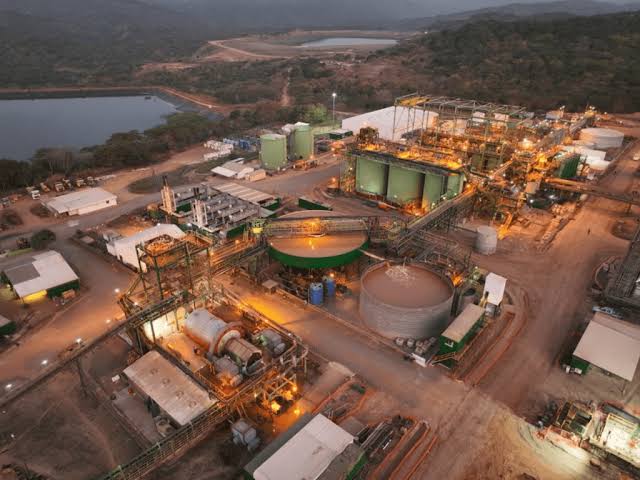
Lotus Resources Limited has announced the commencement of an infill drilling programme at its Letlhakane Uranium Project in Botswana, marking an important step in advancing the development of one of the largest undeveloped uranium deposits on the African continent. The initiative seeks to improve the accuracy of the existing Mineral Resource Estimate (MRE) and provide metallurgical samples to inform a comprehensive Pre-Feasibility Study (PFS) expected in the latter half of 2026.
The current MRE for Letlhakane stands at 142.2 million tonnes at 363 parts per million (ppm) U₃O₈ for 113.7 million pounds of contained uranium oxide, positioning the project as a significant potential contributor to global uranium supply. The latest drilling campaign will involve up to 12,000 metres of reverse circulation drilling and 1,500 metres of diamond drilling, covering approximately 180 holes. This two-phase programme is expected to take four months to complete.
Lotus Resources, which is concurrently ramping up uranium production at its Kayelekera Mine in Malawi, views Letlhakane as an integral component of its growth strategy. Together, these projects place the company among a new generation of African uranium producers responding to shifting global energy demands.



According to Lotus Managing Director Greg Bittar, the company is pursuing dual-track development: consolidating uranium production at Kayelekera while advancing Letlhakane towards feasibility. “Letlhakane has the potential to become a significant uranium operation in a stronger, long-term uranium price environment, and combined with production from Kayelekera, positions Lotus as a globally significant long-term U₃O₈ producer,” Bittar stated.
Beyond drilling, Lotus is conducting trade-off studies to determine optimal approaches for processing and mining. These include examining a two-stage leach process to reduce acid consumption, the redesign of downstream processing to limit solvent extraction and improve impurity control, and evaluations of mining methodologies tailored to the specific conditions of Letlhakane.

In a regional context, the development of Letlhakane underscores the broader strategic importance of Southern Africa within the global nuclear fuel supply chain. Botswana and Malawi are situated within a continent where uranium resources have historically been central to both domestic development considerations and international energy markets. While the commercial opportunities of such projects are evident, stakeholders also note the need for frameworks that balance extractive industries with long-term socio-economic development and environmental stewardship.
As African states continue to position themselves within the global energy transition, uranium projects such as Letlhakane raise questions not only about their role in diversifying national economies, but also about how benefits are distributed across local communities. For Botswana, the project represents both a potential economic boost and an opportunity to reinforce its capacity for managing large-scale mineral development in a way that foregrounds local agency.
The Pre-Feasibility Study, once completed in 2026, will provide further clarity on the viability and design of the project, helping determine the pace at which Letlhakane could join Kayelekera in uranium production. In doing so, Lotus Resources’ dual-track strategy highlights Southern Africa’s growing relevance in shaping future global energy security.