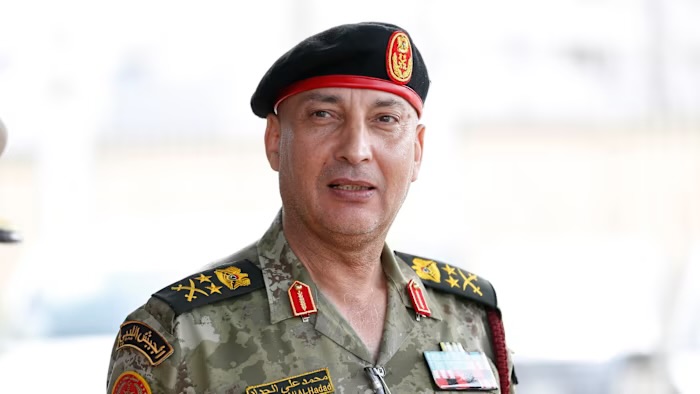
Aprivate jet carrying senior Libyan military officials crashed south of Ankara on Tuesday evening after reporting a technical malfunction, Turkish authorities have confirmed. The incident resulted in the deaths of Libya’s army chief of staff, Mohammed al Haddad, four other military officials, and three crew members.
According to Burhanettin Duran, head of the Turkish Directorate of Communications, the Dassault Falcon 50 aircraft departed from Ankara’s Esenboga Airport en route to Tripoli, before informing air traffic control of an emergency caused by what was described as an electrical failure. Duran stated that the plane began its descent for an emergency landing but disappeared from radar at 20:36 local time, with contact lost shortly thereafter.
Turkish Interior Minister Ali Yerlikaya confirmed that the aircraft’s black box has been recovered, and that the remains of the victims are undergoing forensic examination as part of a judicial investigation. Yerlikaya also reported that a Libyan delegation has arrived in Türkiye to collaborate with Turkish officials in the ongoing investigation.




Al Haddad had been in Ankara for high-level discussions on military cooperation, where he met with Turkish Defence Minister Yasar Guler and other senior Turkish defence officials earlier on Tuesday.
The cause of the crash remains under investigation, with both Turkish and Libyan authorities expressing their commitment to transparency in determining the sequence of events that led to the tragedy.
This incident comes amid ongoing efforts by Libya to stabilise its security institutions and strengthen defence relations with regional partners. Analysts note that the loss of al Haddad, who was seen as a key figure in the country’s efforts to unify its armed forces, could temporarily affect Libya’s military coordination initiatives.
Observers have stressed the importance of contextualising this tragedy within the broader dynamics of African and Mediterranean cooperation, where nations like Libya and Türkiye continue to navigate complex partnerships defined by shared strategic and security interests. The crash also draws attention to the often understated human dimension of diplomacy and defence relations across the African continent, where individual leadership plays a crucial role in shaping long-term stability and regional dialogue.