

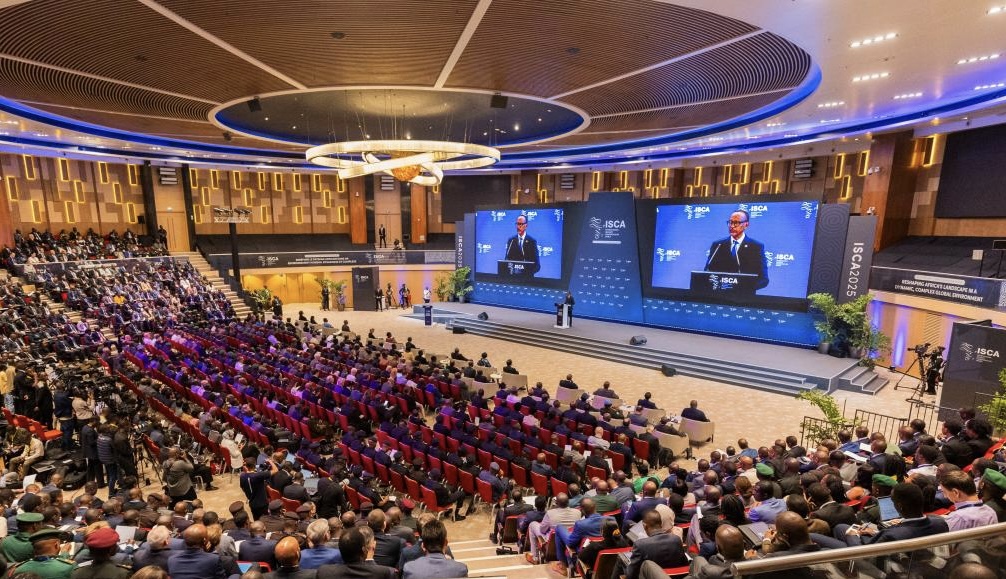
The International Security Conference on Africa (ISCA) concluded on Tuesday, 20 May 2025, in Kigali, Rwanda, marking a pivotal moment in continental security cooperation. Over two days, the forum gathered a broad spectrum of defence, intelligence, and policy actors to engage in high-level discussions under the theme “Reshaping Africa’s Landscape in a Dynamic, Complex Global Environment.”
The conference served as a robust platform for stakeholders to deliberate on both persistent and emerging security threats, with an unequivocal call for African-led solutions at the heart of the dialogue. From transnational terrorism and cross-border conflicts to cyber threats and irregular migration, the sessions underscored the pressing need for indigenous leadership and collaborative defence strategies.
Participants included representatives from national security agencies, regional blocs, multilateral organisations, and the defence technology sector. The presence of delegates from bodies such as the Southern African Development Community (SADC), Economic Community of West African States (ECOWAS), and the East African Standby Force reflected growing momentum towards regional integration in security response mechanisms.




The event featured a display of advanced military hardware, including automatic rifles and armoured terrain vehicles, highlighting the intersection of technological innovation with strategic defence frameworks. However, ISCA went beyond hardware; the focus remained on cooperation, intelligence-sharing, and the role of regional solidarity in countering instability.
A significant highlight of the conference was the reaffirmation of the African Union’s Agenda 2063 principles, particularly its “Silencing the Guns” initiative, which calls for the end of armed conflicts and a shift toward peace-driven development models. Rwanda, as host nation, stood out for its demonstrated commitment to peacekeeping and regional stability, with its post-genocide transformation often cited as a model of security sector reform and institutional resilience.
Discussions also stressed the importance of holistic security frameworks—encompassing not only military preparedness but also civil society engagement, youth inclusion, and technological capacity-building. Delegates proposed enhancing continental early warning systems and institutionalising joint training programmes across regions.


A closing communiqué issued on Tuesday outlined a shared vision for coordinated, African-owned solutions to evolving threats. The communiqué is expected to serve as an advisory document for upcoming African Union Peace and Security Council meetings, and will likely influence security policy formulations at both national and regional levels.
As Africa navigates the overlapping challenges of climate insecurity, contested borders, and external geopolitical competition, ISCA’s inaugural session set a precedent for proactive and inclusive security discourse. The forum is expected to become a recurring fixture on the continent’s strategic calendar.


