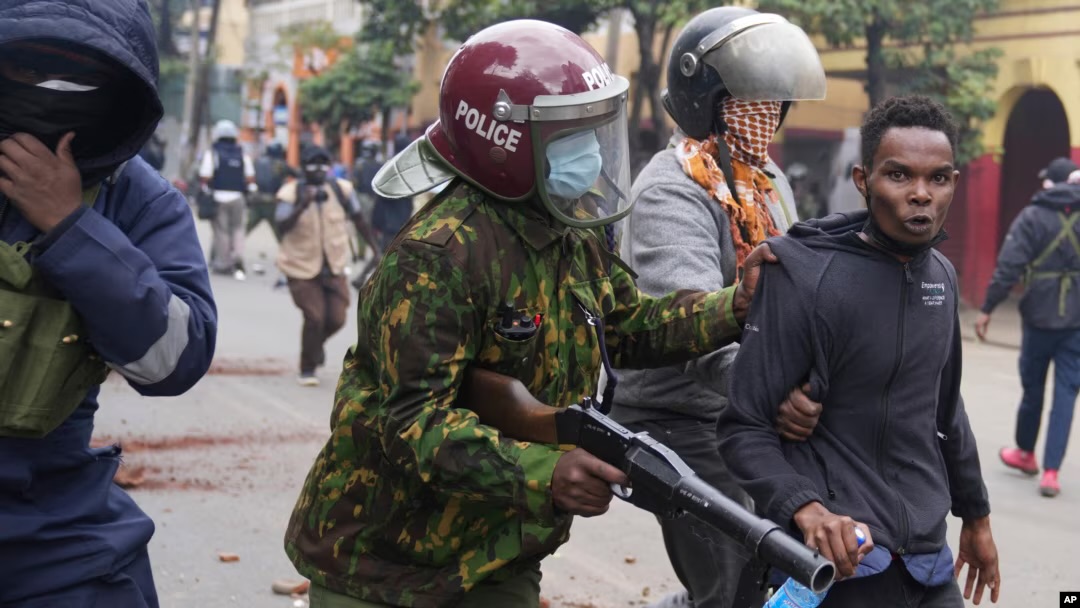
On 30th December 2024, a series of protests erupted across Kenya, leading to several arrests, including that of opposition senator Okiya Omtatah. The demonstrations were sparked by the increasing abduction of social media activists, with protesters demanding government intervention.
In various towns, notably the capital Nairobi, protesters marched while carrying placards and chanting anti-government slogans. The police responded with teargas and engaged in running battles to disperse the crowds. On Kenyatta Avenue in Nairobi, demonstrators recited the names of recently abducted social media activists and offered roses to police officers as a gesture of peace.
Senator Omtatah, prior to his arrest, condemned the abductions, stating, “If they have committed a crime, let them be prosecuted and presented in court to defend themselves.” The police had set up roadblocks on major routes into Nairobi, preventing public transport minibuses, known locally as matatus, from entering the city centre. Passengers were searched as officers looked for potential protesters. In Kitengela, a suburb of Nairobi and a previous protest hotspot, police conducted road checks and air surveillance to prevent gatherings.



Similar protests occurred in Embu and Nyeri, where demonstrators clashed with police while demanding the release of a young social media activist. This wave of unrest comes six months after youth-led protests in June over proposed tax increases, which were eventually shelved following public outcry. Although those demonstrations subsided after the dismissal of President William Ruto’s cabinet, online activism continued. Youths have utilised social media platforms to critique the government, often employing creative tools such as cartoons, short videos, and artificial intelligence-generated images.
However, a concerning pattern of abductions targeting vocal activists has emerged. The Kenya National Commission on Human Rights, a state-funded body, reported that 82 people remain unaccounted for since the June protests, with at least 50 killed and over 300 injured during demonstrations in recent months.

In a national address on 27th December, President Ruto pledged to investigate the abductions and take action against those responsible. He stated, “What has been said about abductions, we will stop them, so Kenyan youth can live in peace, but they should have discipline and be polite so that we can build Kenya together.”
The situation remains tense as citizens await concrete measures from the government to address the abductions and ensure the safety of activists. The international community is closely monitoring the developments, urging the Kenyan government to uphold human rights and the rule of law.
The recent protests highlight the growing frustration among Kenyan youths regarding the suppression of dissent and the lack of accountability for human rights violations. The government’s response in the coming days will be crucial in determining the direction of civil liberties and freedom of expression in the country.
As the new year approaches, there is hope that the Kenyan authorities will take decisive action to address these concerns, fostering an environment where citizens can express their views without fear of abduction or repression.