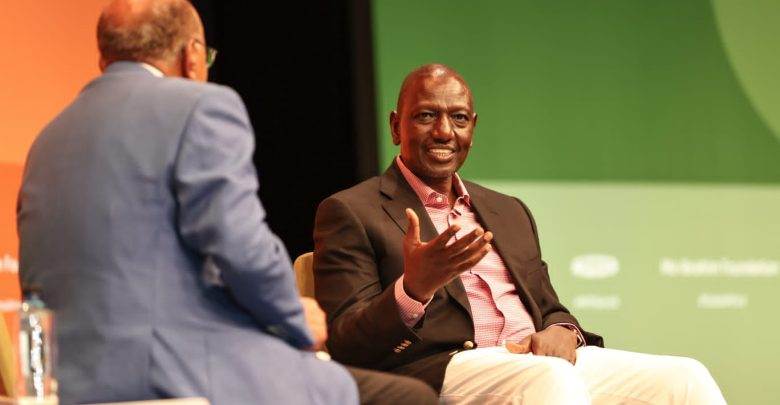
Kenyan President William Ruto has called on industrialised nations to provide capital and technology to help African countries deal with the unfolding climate emergency. Speaking at the 2023 Ibrahim Governance Weekend in Nairobi, Ruto emphasized that developed countries have a moral obligation to deliver climate justice to Africa, where rising temperatures have devastated ecosystems and livelihoods.
Ruto argued that Africa deserves compensation for the losses it has suffered as a result of climate change, and that developed nations should assist the continent in re-engineering green growth. He announced that Kenya would host the Africa Climate Summit on Sept. 4-6 and pledged to use his position as the chairperson of the Committee of African Heads of State and Government on Climate Change to lobby for investments that would accelerate the continent’s transition to a green and resilient future.
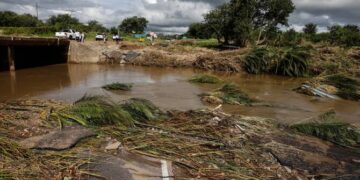
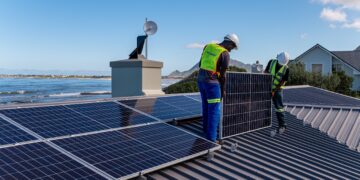
Despite contributing less than 4% of global greenhouse gas emissions, Africa has been disproportionately affected by climate disasters such as droughts, cyclones, and wildfires. Ruto urged multilateral lending agencies to develop climate financing packages tailored to the African continent to help grassroots communities cope with the phenomenon. He observed that Africa’s huge renewable energy potential offers an opportunity to decarbonize the continent’s economies while unlocking green jobs for young people.



Ruto argued that restructuring carbon markets in Africa should be combined with nature-based interventions to achieve net-zero emissions in a continent that is home to climate hotspots, including the Sahel and the Horn of Africa. Joyce Banda, the former president of Malawi, echoed Ruto’s call for developed countries to increase their financial obligation to support climate mitigation and adaptation in Africa. Banda, who is also the goodwill ambassador of Tropical Cyclone Freddy Recovery of Malawi, emphasized that delivering climate justice in Africa would have spin-off effects, including improved livelihoods for local communities, peace, cohesion, and gender parity.
Mo Ibrahim, the founder and chair of Mo Ibrahim Foundation, a pan-African not-for-profit lobby, suggested market-driven interventions to accelerate low-carbon development in the continent. By leveraging private capital and fiscal incentives from governments, African countries could plug the funding shortfall that has hobbled the green transition, said Ibrahim.

The urgent need for action to address the climate emergency in Africa was underlined by a recent report from the Intergovernmental Panel on Climate Change (IPCC), which warned that the continent is already experiencing significant warming and that further increases in temperature will lead to more frequent and severe droughts, floods, and heatwaves. The report also highlighted the fact that Africa is particularly vulnerable to the impacts of climate change due to its dependence on rain-fed agriculture, high levels of poverty, and limited access to technology and infrastructure.

The IPCC report made clear that urgent action is needed to reduce greenhouse gas emissions and strengthen adaptation measures in Africa. However, the report also noted that the continent has significant opportunities to transition to a low-carbon, climate-resilient future, particularly through the development of renewable energy sources such as solar and wind power.
The call by Ruto and other African leaders for industrialised nations to provide support for the continent’s green transition is therefore both urgent and justified. As well as delivering climate justice to those who have been most affected by the climate emergency, such support would help to unlock Africa’s enormous potential for sustainable development and help to create a more just and equitable world for all.