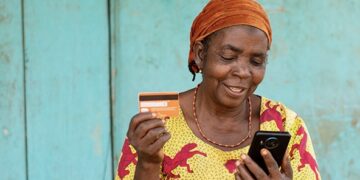
In a continent marked by extraordinary linguistic diversity, the digital age has arrived with a troubling paradox: the overwhelming dominance of a few global languages has rendered many African users invisible in digital ecosystems. For millions of people whose first language is not English or French, routine digital tasks — from registering a business to loading mobile airtime — remain unfeasible.
A South African technology startup, Bolthale AI, is attempting to shift that paradigm. Co-founded by University of Cape Town graduates with a background in electrical engineering and natural language processing (NLP), the company is building AI-powered tools aimed at bridging the continent’s vast linguistic divide. Their mission is not just technical; it is profoundly human — enabling linguistic inclusion and digital equity.
Participating in the Google for Startups Accelerator: South Africa, Bolthale AI has developed models that allow enterprises to engage customers in their native African languages. The aim is to ensure that African users are not digitally marginalised simply because they do not speak one of the dominant global languages.



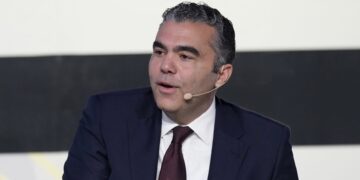
The company’s founder, Thapelo Nthite, explains that their motivation is rooted in lived experience. “My grandmother asked me to help her load prepaid airtime,” he recalls. “She asked me in Setswana — a language we both speak — but the process was in English. It was not that she couldn’t articulate her needs; the interface simply excluded her.”
This anecdote encapsulates a broader systemic issue: access to digital services remains linguistically exclusive across Africa. In countries like South Africa, for example, online public services and financial platforms are predominantly available in English, sidelining the majority who speak indigenous languages. According to a report by the South African Centre for Digital Language Resources (SADiLaR), there are 11 official languages in South Africa, but digital infrastructure primarily supports only a few.

What distinguishes Bolthale AI is its focus on developing domain-specific language models that can be easily integrated via API by other organisations. These models support a range of applications — from customer service chatbots to audiobook generation and language learning tools. Their dual-platform approach — offering both APIs and a software-as-a-service (SaaS) interface — extends their reach across sectors.
The recent mainstreaming of generative AI has also accelerated adoption. “When we began, we had to educate clients on the reliability of AI,” says Nthite. “Now, with tools like ChatGPT and Gemini, there is a broader cultural acceptance.”
Internally, Bolthale AI integrates external AI tools into daily operations. Nthite personally uses a range of generative AI assistants — one of which is affectionately named Mothusi (meaning ‘assistant’ in Setswana). These tools are employed for tasks such as coding, content generation, and even project management. They have introduced an internal knowledge-sharing initiative known as “Speaky Wednesday” to ensure continuous upskilling across their team, focusing on emergent AI technologies.
Looking ahead, Bolthale AI is scaling its efforts to support over 20 African languages spoken by more than 500 million people. This ambition aligns with findings from UNESCO, which has identified linguistic inclusion as critical for equitable digital transformation across the Global South.
By making their language models accessible through open APIs and nurturing a culture of AI fluency within their team, Bolthale AI is not merely creating tools — they are laying the groundwork for a more inclusive digital future in Africa.
For more on Bolthale AI and their work, visit their official site. The original feature was published by Google Africa Blog and is republished under a Creative Commons Attribution-NoDerivatives 4.0 International License.