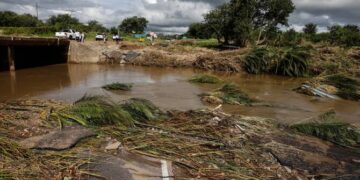
The world stands to lose an estimated 39 trillion US dollars from the unchecked degradation of wetlands, according to a comprehensive report presented on Tuesday at the 20th Ordinary Session of the African Ministerial Conference on the Environment (AMCEN-20), currently underway in Nairobi, Kenya.
The Global Wetland Outlook—compiled by the Secretariat of the Ramsar Convention on Wetlands—highlights the staggering economic and ecological consequences of continued wetland loss. Wetlands, which comprise only six percent of the Earth’s surface, are responsible for critical ecosystem functions, including food production, carbon sequestration, groundwater recharge, and flood mitigation. Collectively, their ecosystem services are estimated to be worth approximately 7.5 percent of global gross domestic product.
According to the report, wetlands are being lost at an annual rate of 0.52 percent, with an estimated 411 million hectares—roughly 22 percent of the planet’s wetland area—lost since 1970. Even more concerning is that 25 percent of the remaining wetlands are considered degraded due to a combination of unsustainable land-use practices, pollution, invasive species, accelerating urbanisation, and the worsening impacts of climate change.



Dr Musonda Mumba, Secretary General of the Ramsar Convention, stated during the conference that restoring wetlands represents one of the most viable and impactful strategies to enhance global climate resilience and rural livelihoods.
“We need to value wetlands and increase investments towards their restoration, since losing them comes at a heavy cost to planetary health and livelihoods,” Mumba asserted.

The report, titled Valuing, Conserving, Restoring and Financing Wetlands, offers not just a warning, but also a roadmap for action. It outlines strategic priorities for reversing degradation trends, including policy reforms, innovative financing mechanisms, and cross-border conservation efforts.
The release of the report comes just days ahead of the 15th Meeting of the Conference of the Contracting Parties (COP15), scheduled to take place in Zimbabwe from 23 to 31 July. This conference is expected to serve as a critical platform for dialogue, particularly on financing mechanisms and legislative strategies for wetland conservation across Africa and globally.
Zimbabwe’s Minister of Environment, Climate and Wildlife, Evelyn Ndlovu, welcomed the report’s findings, noting its potential to shape policy interventions in the Southern African region and beyond.
“The data from this report will be pivotal in guiding legislation and conservation initiatives to halt the continued depletion of wetlands,” Ndlovu said. She also stressed the importance of collaborative action, highlighting the need for knowledge-sharing platforms, innovative funding strategies, and the active involvement of local communities.
In the context of Africa’s growing vulnerability to climate change, wetlands hold particular importance. They support biodiversity, regulate water cycles, and serve as buffers against droughts and floods—functions that are especially crucial for rural and urban communities alike.
Given the potential economic losses estimated in the report—equivalent to nearly 40 percent of the world’s total annual GDP—investment in wetland restoration is not just an ecological imperative, but also a rational economic choice.
The report calls for integrated national and regional strategies that embed wetland conservation within climate mitigation and sustainable development agendas. If acted upon decisively, these measures could accelerate the green transition, enhance food and water security, and preserve biodiversity for future generations.