Friday, April 17, 2026
  • Login
The Southern African Times
  • Home
  • Southern Africa
  • Business
    • African Start ups
    • African Continental Free Trade Area
  • Technology
    • Lifestyle
      • Health
      • Culture
      • Food and Drink
      • Entertainment
  • Opinion
  • Sports
  • SAT Jobs
    • Events
  • About Us
    • Advertise with Us
    • Contact Us
No Result
View All Result
  • Home
  • Southern Africa
  • Business
    • African Start ups
    • African Continental Free Trade Area
  • Technology
    • Lifestyle
      • Health
      • Culture
      • Food and Drink
      • Entertainment
  • Opinion
  • Sports
  • SAT Jobs
    • Events
  • About Us
    • Advertise with Us
    • Contact Us
No Result
View All Result
The Southern African Times
No Result
View All Result
Home Environment

How farms are feeding the extinction of the world’s wildlife

by SAT Reporter
February 12, 2020
in Environment
0
Wildlife Picture from The Southern African Times Library

On April 3, the United Kingdom announced a ban on the sale of ivory that is “one of the toughest in the world.” By restricting the ivory trade, the UK joined other countries—including China and the United States—in using market deterrents to discourage poaching and shield an endangered species from extinction. As British Environment Secretary Michael Gove put it in the announcement, the goal is to “protect elephants for future generations.” These are, to be sure, laudable gestures in the service of a noble goal. But ending ivory sales alone will not reverse declines in elephant populations. In fact, the biggest threat facing these and many other species is a far more ordinary human pursuit: farming.

Hong Kong ivory traders encouraging buyers to smuggle ivory: TRAFFIC  Throughout the developing world, farmers are expanding areas of cultivation in an endless quest for fertile soil. In the process, critical wildlife habitats are being destroyed at an alarming rate. According to the Food and Agriculture Organization of the United Nations (FAO), if current trends hold, by 2050 the world’s arable land will increase by some 70 million hectares, and much of the new farmland will be on areas that are currently forested. The risk is greatest in South America and Sub-Saharan Africa, where population growth and food demand will hit tropical woodlands particularly hard. In fact, the biggest threat facing these and many other species is a far more ordinary human pursuit: farming. Poverty is at the root of this ecological crisis, but poor farming practices perpetuate the cycle of hunger and habitat loss. In Africa, for example, persistently low crop yields—often just 20 per cent of global averages—are tied to low seed quality, the unavailability of fertilisers, and a lack of irrigation. As soil health declines and output drops, many farmers see no option but to look for new land to cultivate.

Fortunately, there is a way to end this vicious cycle. Research shows that better farming practices and technology can increase agricultural productivity while reducing habitat loss and protecting wildlife. This approach, known as “sustainable intensification,” aims to boost the output of existing farmland using techniques such as integrated crop management and advanced pest control. If applied widely, sustainable intensification could even reducethe total amount of land currently under cultivation. > > This is not an impossible goal. Over the last 25 years, farmers in more than 20 countries around the world improved food security while maintaining or increasing forest cover. According to one study, between 1965 and 2004, farmers in developing countries who planted high-quality seeds were able to reduce farmland by almost 30 million hectares – an area roughly the size of Italy. These gains could be extended further if smallholder farmers had access to modern equipment, better data collection and analysis, and more financing.  Critics argue that increasing the productivity of smallholder farms could backfire, especially if it encouraged poor farmers to expand their acreage in the hope of increasing profits.


ADVERTISEMENT

To avoid this outcome, intensification strategies much be accompanied by strong conservation planning. At the same time, however, farmers in developing countries cannot simply be asked to stop using non-farm resources adjacent to their fields. Many people in poor communities rely on woodland products for fuel and construction materials, and government policies that prohibit use of these resources without offering adequate alternatives will likely fail. Rather, the ideal conservation approach in developing countries would link agricultural and economic support to strict limits on farmland expansion.

That is far from being the case today. Around the world, billions of dollars are invested annually to address environmental degradation and poverty; many of the 17 UN Sustainable Development Goalsare linked in some way to these two concerns. And yet, most programmes designed to tackle these issues operate in isolation. This is a mistake: solutions to food insecurity and habitat loss must be better integrated if either challenge is ever to be solved. No one doubts that well-meaning policies like ivory bans can lessen the ecological impact of human activity. But, at the moment, farming—the activity most responsible for damaging the health of many species—is failing to attract the policymaking attention that it deserves. Until that changes, government strategies to protect wildlife “for future generations” will very likely come up short.

Previous Post

Nature vs infrastructure

Next Post

Why western powers are re-engaging Zimbabwe

SAT Reporter

Related Posts

Waste Colonialism and the Burden of Electronic Waste in Africa
Environment

Waste Colonialism and the Burden of Electronic Waste in Africa

by SAT Reporter
April 10, 2026
South Africa Reports 16 Percent Decrease in Rhino Poaching in 2025
Environment

South Africa Reports 16 Percent Decrease in Rhino Poaching in 2025

by SAT Reporter
February 11, 2026
One in Five Mammal Species Face Extinction in Southern Africa, Regional Report Warns
Environment

One in Five Mammal Species Face Extinction in Southern Africa, Regional Report Warns

by SAT Reporter
January 22, 2026
Investing in Nature Could Unlock Trillions for the Global Economy, Says UN Report
Environment

Investing in Nature Could Unlock Trillions for the Global Economy, Says UN Report

by SAT Reporter
December 10, 2025
Mont-aux-Sources Weather Station Boosts Climate and Water Monitoring
Environment

Mont-aux-Sources Weather Station Boosts Climate and Water Monitoring

by SAT Reporter
December 2, 2025
Next Post
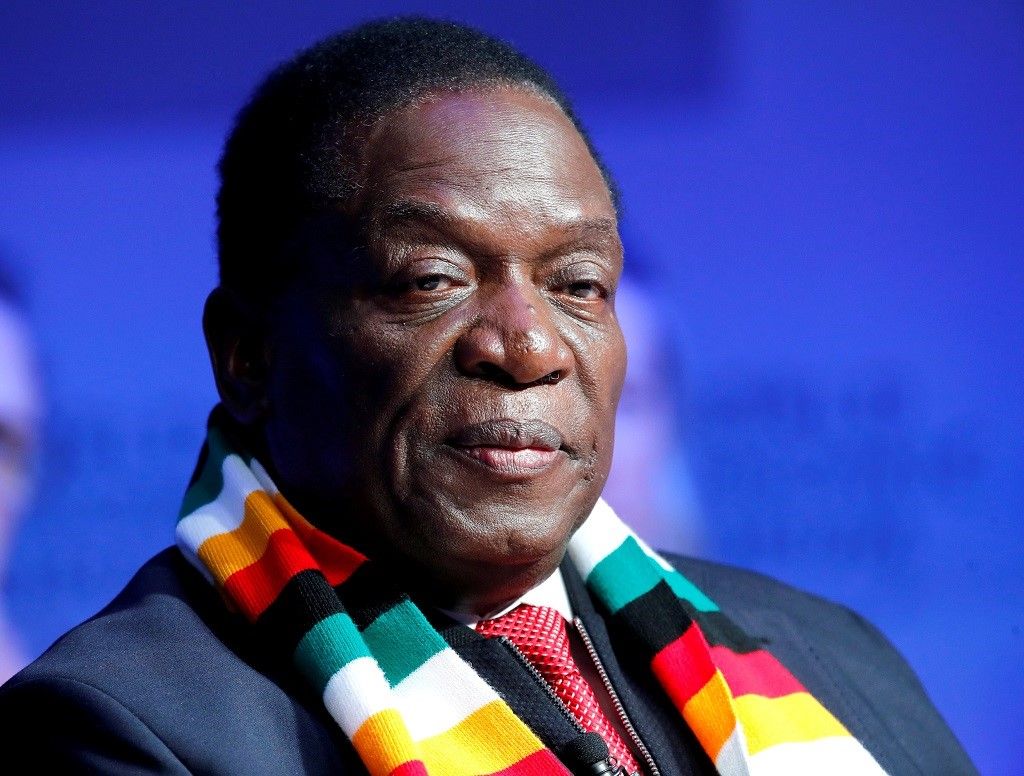
Zimbabwe's President Emmerson Mnangagwa attends the World Economic Forum (WEF) annual meeting in Davos, Switzerland January 24, 2018.

Why western powers are re-engaging Zimbabwe

Browse by Category

  • Africa AI
  • African Continental Free Trade Area
  • African Debt
  • African Start ups
  • Agriculture
  • AI Africa
  • Algeria
  • All News
  • Analysis
  • Angola
  • Arts / Culture
  • Asia
  • Botswana
  • BOTSWANA
  • BREAKING NEWS
  • BRICS
  • Burkina Faso
  • Burundi
  • Business
  • Business
  • Business Wire
  • Cameroon
  • Central Africa
  • Chad
  • China
  • Climate Change
  • Climate Changev
  • Community
  • Congo Republic
  • Conservation
  • Côte d’Ivoire
  • COVID 19
  • CRYPTOCURRENCY
  • Culture
  • Democratic Republic of Congo
  • Diplomacy
  • Eastern Africa
  • Economic Development
  • Economy
  • Education
  • Egypt
  • Elections 2024
  • Energy
  • Entertainment
  • Environment
  • Eritrea
  • Ethiopia
  • Europe
  • Fashion
  • Feature
  • Finance
  • Financial Inclusion
  • Food
  • Food and Drink
  • Foods
  • GABON
  • Ghana
  • Global
  • Global Africa
  • Guinea
  • Health
  • Immigration
  • in Southern Africa
  • International news
  • International Relations
  • Ivory Coast
  • Just In
  • Kenya
  • Lesotho
  • Libya
  • Life Style
  • Lifestyle
  • Literature
  • Malawi
  • Malawi
  • Mali
  • Markets
  • Mauritius
  • Middle East
  • Mining in Africa
  • Morocco
  • Mozambique
  • Namibia
  • Niger
  • niger
  • Nigeria
  • North Africa
  • North-Eastern Africa
  • Obituaries
  • Obituary
  • Opinion
  • PARTNER CONTENT
  • Politics
  • Property
  • Racism
  • Rwanda
  • Rwanda
  • SADC
  • SAT Interviews
  • SAT Investigation
  • SAT Jobs
  • Saudi Arabia
  • Senegal
  • Seychelles
  • South Africa
  • South Sudan
  • Sports
  • Startup Africa
  • STOCK EXCHANGE
  • Sudan
  • Sustainability
  • Sustainablity
  • Tanzania
  • Technology
  • Telecommunications
  • The Editorial Board
  • The Power Of She
  • Togo
  • Trade
  • Travel
  • Travel
  • Tunisia
  • Uganda
  • Uncategorized
  • Wealth
  • West Africa
  • World
  • World
  • ZAMBIA
  • Zambia
  • Zimbabwe
  • ZIMBABWE

Browse by Tags

#NewsUpdate #SouthAfrica #SouthernAfricanTimes #TheSouthernAfricanTimes AfCFTA africa African Continental Free Trade Area African development African Development Bank African economies African economy African Union Agriculture Angola Botswana Business China Climate change Cyril Ramaphosa Economic Development economic growth energy transition fiscal policy food security industrialisation Inflation Infrastructure Development International relations Investment Kenya Mozambique Namibia news Nigeria Regional Integration renewable energy Rwanda SADC South Africa Southern Africa sustainable development Tanzania United States Zambia Zimbabwe
ADVERTISEMENT

WHO WE ARE

The Southern African Times is a regional bloc digital newspaper that covers Southern African and world news. The paper also gives a nuanced analysis on news and covers a wide range of reporting which include sports, entertainment, foreign affairs, arts and culture.

Welcome Back!

Login to your account below

Forgotten Password?

Retrieve your password

Please enter your username or email address to reset your password.

Log In

  • Home
  • Southern Africa
  • Business
    • African Start ups
    • African Continental Free Trade Area
  • Technology
    • Lifestyle
      • Health
      • Culture
      • Food and Drink
      • Entertainment
  • Opinion
  • Sports
  • SAT Jobs
    • Events
  • About Us
    • Advertise with Us
    • Contact Us
Are you sure want to unlock this post?
Unlock left : 0
Are you sure want to cancel subscription?