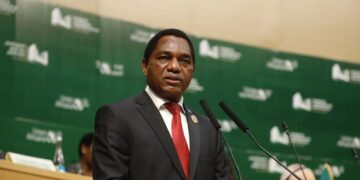
South African Finance Minister Enoch Godongwana has confirmed he will not resign despite mounting political pressure following the government’s unexpected reversal on a proposed increase in value-added tax (VAT).
Speaking on Thursday during the IMF and World Bank Spring Meetings held in Washington D.C., Godongwana emphasised that his constitutional mandate involves introducing fiscal legislation, not ensuring its popularity.
“My job is to introduce money bills — nothing says they must be popular,” the Minister stated in an interview with Reuters, defending his role amidst the intensifying political scrutiny from opposition parties and civil society following the VAT policy reversal.



The planned increase in VAT, which had formed part of earlier fiscal consolidation strategies proposed by the National Treasury, was abandoned in response to both internal Cabinet concerns and public backlash. Critics argued that the hike would disproportionately affect lower-income households at a time when the country is grappling with persistent inflationary pressures and high unemployment rates.

This sudden shift in policy direction now obliges the National Treasury to reconsider its fiscal trajectory. “A different fiscal framework will have to be considered,” Godongwana noted, hinting at the possibility of alternative revenue-generating measures or expenditure realignments to maintain budgetary discipline.
The reversal raises broader questions about the credibility of South Africa’s fiscal planning amid ongoing economic challenges. According to the South African Reserve Bank, economic growth remains subdued, with structural bottlenecks in energy, transport and labour markets continuing to constrain output.
In the 2024 Budget Speech, Godongwana had outlined fiscal tightening measures, including targeted tax increases, to stabilise the country’s public debt trajectory. The decision to retreat from the VAT increase casts a shadow on these commitments, although Treasury officials insist that the overall consolidation path remains intact.
Opposition parties have called for accountability, with some leaders demanding Godongwana’s resignation, alleging that the policy flip-flop undermines both public trust and investor confidence. However, the Finance Minister remains resolute, affirming that political popularity should not dictate sound economic policy-making.
As South Africa approaches national elections in 2026, economic policy debates are expected to intensify, particularly on how to fund public services without exacerbating inequality or deterring investment. The VAT controversy may serve as a critical case study in the ongoing tension between fiscal responsibility and political feasibility in a deeply unequal society.