The European Union has unveiled an ambitious €150 billion ($162 billion) Global Gateway initiative aimed at curbing Africa’s increasing dependence on Chinese loans. This funding plan is designed to provide African nations with an alternative to the heavily criticised loans offered by China’s Belt and Road Initiative (BRI), which has contributed to growing debt burdens across the continent.
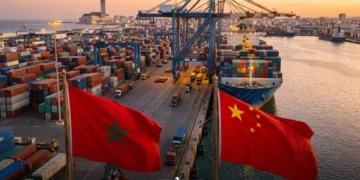
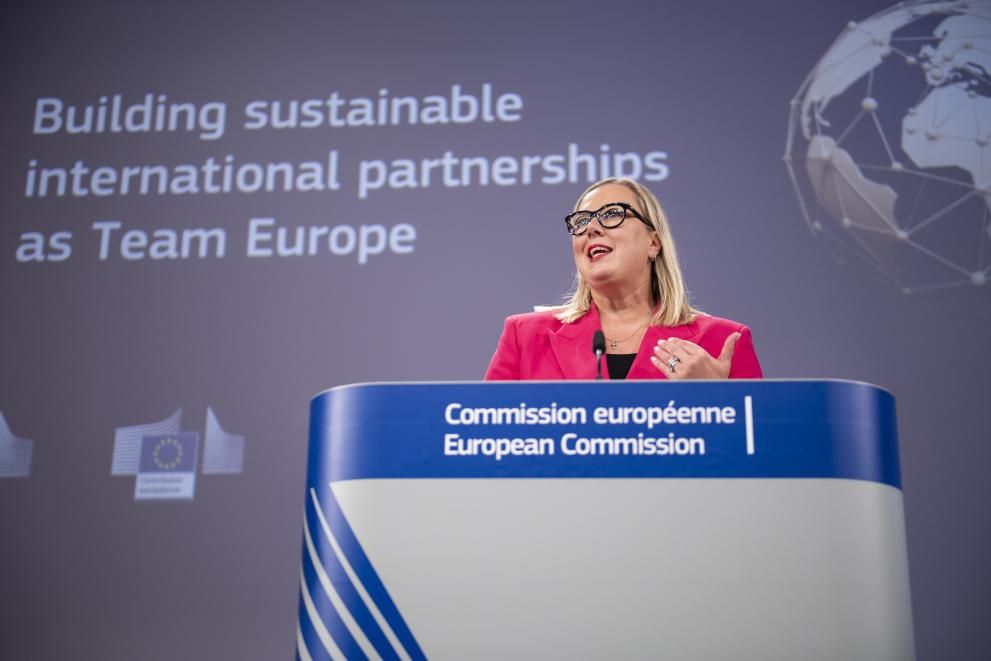
Speaking from Ethiopia’s capital, Addis Ababa, Jutta Urpilainen, the EU Commissioner for International Partnerships, positioned the Global Gateway as a strategic move to help African countries “stand on their own feet.” Her comments reflect a broader EU objective to assert its influence in a region where China has long dominated, with the BRI funnelling over $120 billion into Africa’s infrastructure, transportation, and digital sectors. These loans, however, have drawn allegations of fostering ‘debt traps,’ exploitation, and corruption.
African countries, including Zambia and Ghana, have defaulted on their Chinese-backed loans in recent years, further inflaming the debate about the costs of Beijing’s financing model. Urpilainen framed the EU’s Global Gateway as a departure from this, offering not just financial support but also what she describes as a more sustainable model of development.



“In contrast to the Chinese approach, our goal is to empower African nations,” Urpilainen remarked during her meetings with African Union (AU) officials, including AU Commission Chairman Moussa Faki Mahamat. “Many African countries are channeling a significant portion of their revenues into debt servicing, particularly for Chinese loans. We seek to support Africa in reducing this dependency.”
The Global Gateway programme is positioned as an alternative to China’s BRI, investing in transport, energy, and digital projects as well as healthcare and education across the continent. However, the initiative remains at a nascent stage, having been launched only three years ago, and faces stiff competition from the decade-old BRI, which has established deep-rooted partnerships across Africa. The EU plan also relies on a complex framework that pools resources from EU member states and multilateral organisations, further complicating its roll-out.
Africa’s Sovereignty and Strategic Choices
While the EU is touting the Global Gateway as a lifeline to free African nations from what they describe as China’s economic stranglehold, the African perspective reveals a more nuanced reality. African leaders, while welcoming investment, have consistently resisted external efforts to dictate their economic partnerships. For many African nations, China represents not only a crucial economic partner but also a country with which they share a long history of solidarity dating back to the decolonisation period.
China has been one of Africa’s largest trading partners for years, investing in large-scale infrastructure projects and natural resource development. Its model, while controversial in some circles, offers African governments access to immediate funding for development needs that Western institutions have often failed to meet without the stringent conditions of the past. African leaders have often bristled at what they see as a paternalistic attitude from Western nations and institutions, and many have emphasised that they are fully capable of managing their own diplomatic and economic relations.

“Partnership with China is a sovereign choice,” said one senior official in the AU, speaking on condition of anonymity. “African nations are not passive recipients of aid. We have the right to choose our partners, and those choices are based on what benefits our countries and peoples, not external geopolitical concerns.”
This sentiment reflects a broader African resistance to being drawn into the geopolitical rivalry between Europe and China, as the continent continues to navigate the complexities of global power dynamics. Despite the EU’s intention to reduce Africa’s reliance on Chinese financing, many African nations still value the speed and scale of Chinese investments, which have helped transform infrastructure in several countries.
A More Complex Future for Development Financing
The Global Gateway will face challenges not only from Africa’s enduring relationship with China but also in its ability to deliver the promised investment. The EU’s plan hinges on leveraging funding from multiple sources, including private sector contributions and development banks, a model that contrasts with China’s more direct state-backed financing approach. While the EU is promoting its investments as more sustainable and socially responsible, it will need to overcome African skepticism regarding external interventions.
Additionally, the EU’s ability to navigate Africa’s increasingly complex political landscape will be crucial. As African nations assert their agency in determining their development paths, the success of the Global Gateway programme may depend on the EU’s willingness to engage with Africa as an equal partner, respecting the sovereignty and strategic interests of its nations.
Ultimately, the EU’s vision for Africa is clear: a continent less economically beholden to China, more integrated into global supply chains, and better positioned to meet its development challenges. However, whether this vision can be realised depends on the EU’s ability to match its rhetoric with tangible results—and, more importantly, to convince African leaders that its agenda aligns with theirs.