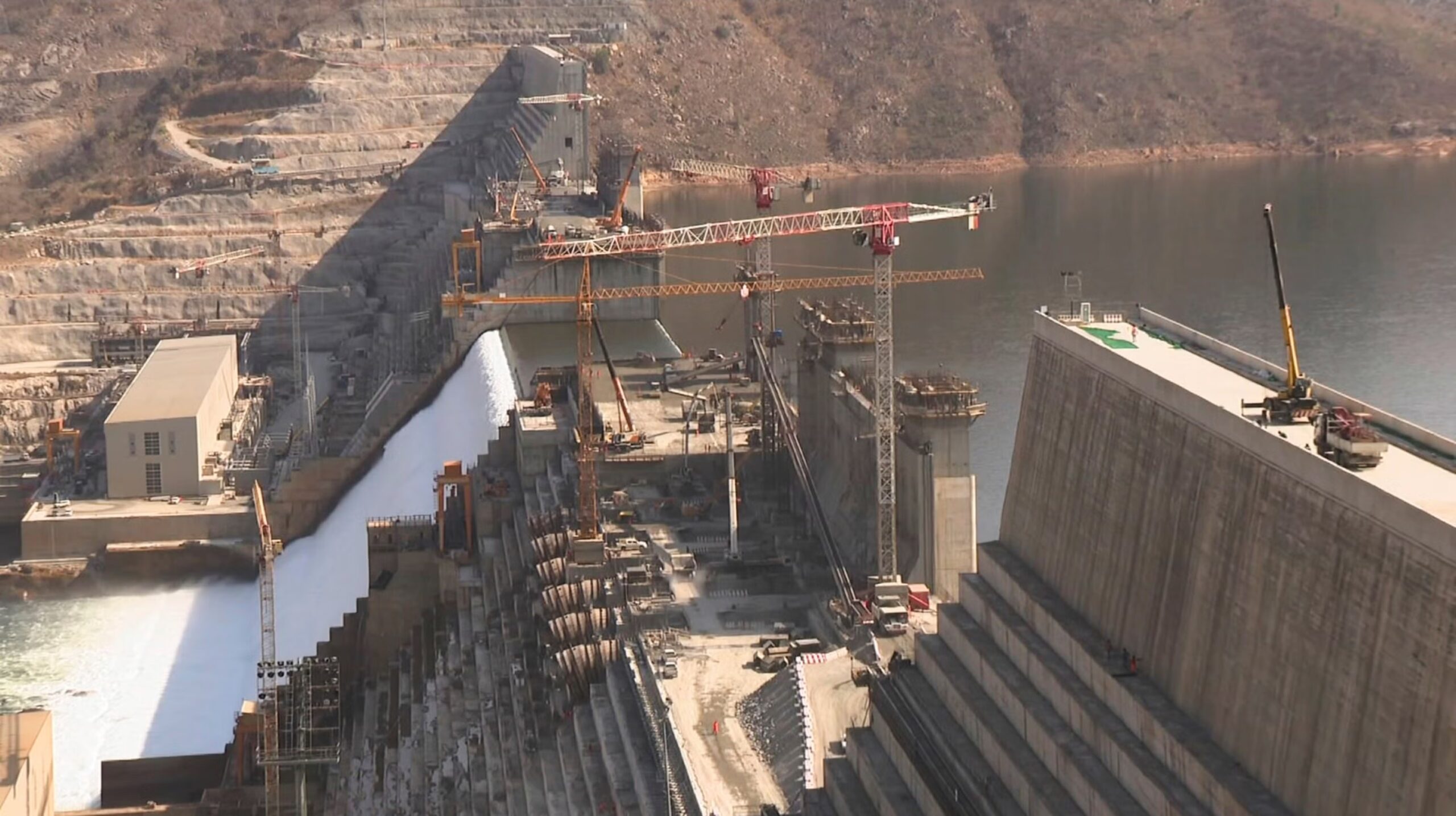
As Ethiopia prepares to inaugurate the Grand Ethiopian Renaissance Dam (GERD), the largest hydroelectric project on the African continent, citizens across the country express cautious optimism about the promise of electrification and economic transformation. The inauguration, scheduled for Tuesday, marks a significant milestone in a project that began in 2011 and has since become a focal point of regional diplomacy, technical debate, and continental ambition.
For Ethiopians such as Fanuse Adete, a 38-year-old widow and mother of seven from Menabichu district near Addis Ababa, the transition from kerosene lamps to stable electricity represents more than convenience. It symbolises a shift from subsistence survival to the possibility of socioeconomic advancement. Speaking from her modest home, she reflected on years of reliance on firewood and charcoal for cooking and lighting. “With the completion of the dam, our entire community is now hopeful,” she said, preparing traditional Ethiopian coffee over firewood.
The GERD is projected to generate more than 5,000 megawatts, effectively doubling Ethiopia’s current electricity output. The government plans not only to electrify domestic households and industries but also to export surplus power to neighbouring states, strengthening economic ties and positioning Ethiopia as a continental energy hub.



However, the dam’s impact has not been confined within Ethiopia’s borders. Egypt and Sudan, both downstream nations on the Blue Nile, have consistently raised concerns regarding reduced water flows. Cairo, in particular, views the project as a national security issue, citing risks of diminished water supply for agriculture and human consumption. Despite a trilateral negotiation framework and the formation of technical committees, disagreements remain unresolved.
Ethiopia has maintained that the GERD was designed with measures to ensure uninterrupted downstream flows. Water Minister Habtamu Itefa stated that Ethiopia has no intention of causing harm and instead envisions collaborative regional investment in water infrastructure across the Nile Basin. “Let’s work together for more investment. This can be scaled up to Nile Basin countries—from Uganda to Tanzania, from Rwanda to the Democratic Republic of Congo, South Sudan, Kenya, Ethiopia, and even Egypt itself,” he said.
While Egypt has relied on reserves from the Aswan High Dam to compensate for perceived shortfalls, experts warn that such reserves are not an indefinite solution. Abbas Sharaky, a professor of water resources at Cairo University, emphasised that while Egypt has managed the transition through short-term adaptation, “we cannot always rely on this reserve for water supply.” Sudanese analysts, meanwhile, acknowledge that the dam has moderated seasonal flooding but caution that poorly coordinated releases could cause sudden floods or prolonged droughts.
Ethiopia counters that careful management has, in fact, increased dry-season flows downstream. Minister Itefa argued that water releases have been “three to four-fold” higher than pre-dam levels, potentially supporting irrigation in neighbouring states. Yacob Arsano, a hydropolitics scholar at Addis Ababa University, reiterated that the design of the GERD ensures downstream continuity: “Egypt continues to receive the water. Ethiopia continues to send water. The question is how the shared use of this resource can be organised among all riparian states.”

The GERD represents not only Ethiopia’s developmental aspirations but also Africa’s broader struggle to redefine its relationship with natural resources. The project illustrates the complexity of balancing national sovereignty with regional interdependence, as well as the urgency of addressing Africa’s infrastructure deficit without reproducing external dependency frameworks.
For ordinary Ethiopians such as Amakelech Debalke Gebre-Giorgis, a mother of two in Addis Ababa, the arrival of consistent electricity embodies this shift. “We want to see more development, and we want to see more electricity become part of our daily life, and we’re all excited,” she said. Her words echo the sentiments of millions of citizens who see in the GERD not just megawatts, but the prospect of a future where Africa shapes its own pathways of growth and cooperation.
The GERD thus stands as both an engineering achievement and a diplomatic test. Its success will depend not only on Ethiopia’s capacity to harness the power of the Blue Nile but also on the willingness of Nile Basin states to forge a shared vision of water security and sustainable development.