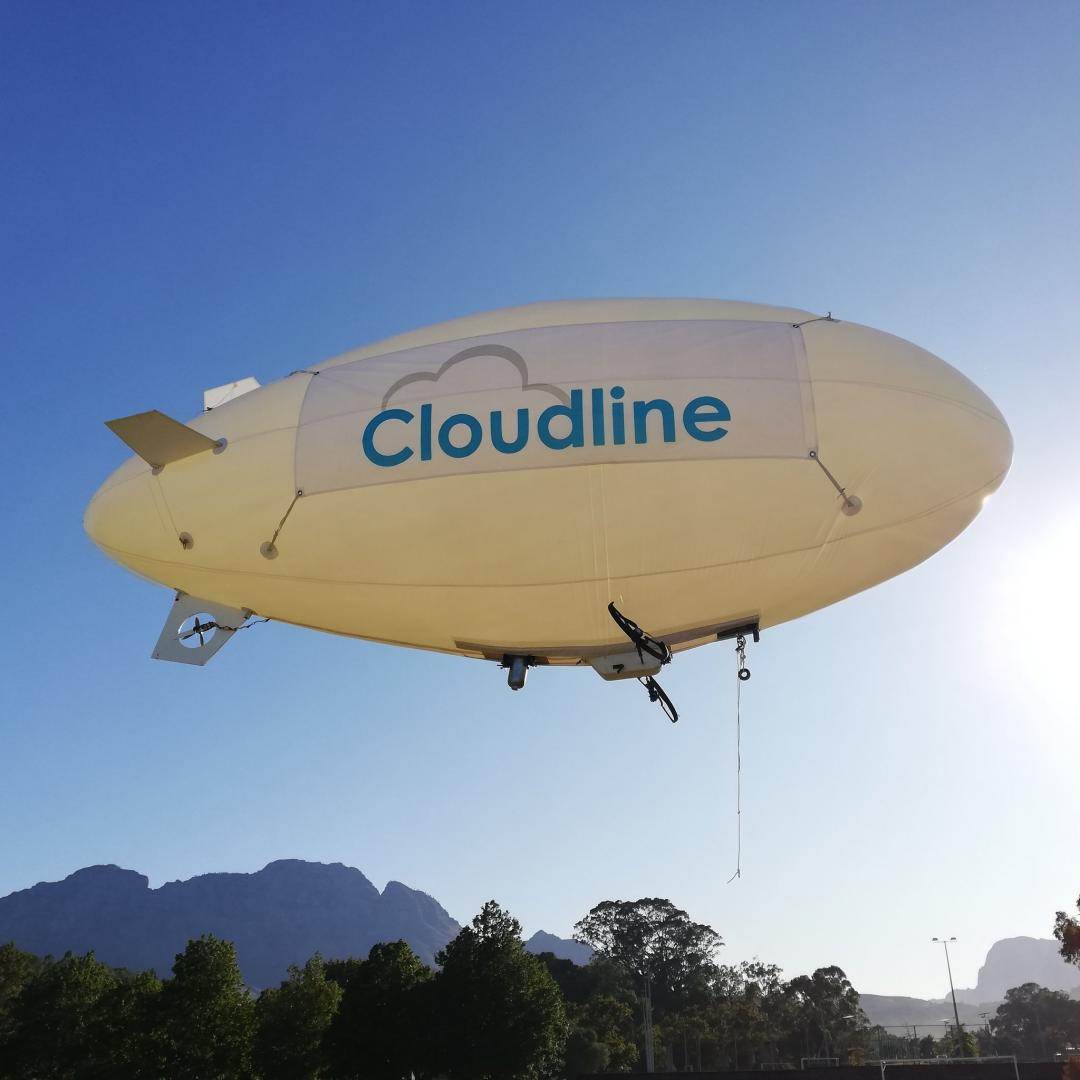
Stellenbosch-based startup Cloudline has taken a groundbreaking step in the realm of aerial operations, unveiling solar-powered autonomous airships that promise to revolutionize the industry’s cost-effectiveness and reach capabilities. The brainchild of visionary entrepreneur Spencer Horne, Cloudline’s innovative approach leverages cutting-edge flight control and powertrain technologies, capitalizing on helium gas’s lifting power to offer unprecedented cost efficiencies compared to conventional multi-rotor and fixed-wing unmanned platforms.
Boasting enhanced safety features and economic viability, these airships have garnered preference among regulators, manned pilots, and industry players alike. The startup’s solar-powered airships have the added advantage of covering distances of up to 400 kilometers in favorable conditions, a feat achieved by harnessing emissions-free solar energy to supplement battery power. This innovation not only contributes to eco-friendly operations but also significantly bolsters payload capacity.
Cloudline’s journey began in 2018 when Spencer Horne, after returning to South Africa from university in the USA, was struck by the lack of infrastructure and trading barriers faced by remote communities in East Africa. His realization that conventional delivery drones fell short in providing higher payload and longer-distance services led to Cloudline’s inception. By scaling down airship technology to drone-size proportions, Cloudline aimed to bridge the gap and meet the aerial monitoring needs of underserved markets.



After years of rigorous development, Cloudline recently unveiled its autonomous unmanned airship at the prestigious Paris Air Show. The startup has achieved type-approval from the Civil Aviation Authority in South Africa and Namibia, with approvals from Kenya anticipated in the near future.
Cloudline’s success story also finds resonance among investors. With a total pre-seed funding of US$4.1 million, the startup has secured support from prominent backers such as the Raba Partnership, 4Di Capital, Enza Capital, Timon Capital, and Schmidt Futures. This financial boost enabled Cloudline to initiate its first three deployments, secure regulatory approval in South Africa, and set the stage for global expansion.
Spencer Horne, Cloudline’s founder, highlighted the company’s commitment to serving diverse sectors and exploring ideal customers for its early deployments. The startup’s partnership model involves collaborating with locally-based operating companies possessing drone licenses and a thorough understanding of local operating environments.

The applications of Cloudline’s technology are equally varied. The startup’s deployments and impending projects range from medical supply delivery in rural Kenya and diagnostics reverse logistics in rural Namibia to emergency connectivity for remote populations in South Africa and Mozambique, facilitated by the World Food Programme (WFP).
As Cloudline embarks on its commercial journey, its monetization strategy centers on providing end-services to customers rather than selling airships directly. This approach leverages partnerships with established local operating companies, streamlining regulatory compliance and operational efficiency.
Despite the challenges of timing complexities, regulatory timelines, and external supply chain shocks, Spencer Horne’s leadership has propelled Cloudline forward. The startup’s ability to navigate these hurdles and commence commercial operations underscores its value proposition to customers.
Cloudline’s solar-powered autonomous airships are poised to redefine the landscape of aerial operations, offering unmatched cost-efficiency and reach. With regulatory approvals and strategic partnerships in place, Cloudline stands on the cusp of transforming how aerial services are delivered to remote and underserved communities across the globe.