PARIS, (The Southern African Times) – Winston Leather, a Nigerian leather brand, celebrated the biggest sales in its 30 years in business last June. The boost was thanks to a tweet in March from fashion historian Shelby Christie highlighting how its tannery, based in Kano, Nigeria, supplies leather to luxury fashion houses such as Louis Vuitton and Ralph Lauren.
The tweet resurfaced in June and prompted a flood of orders as the fashion industry sought new sourcing opportunities that supported Black businesses. And the single tweet put right some misconceptions about the quality of African leather goods.
“It was like a stamp of approval,” says Winston Udeagha of Winston Leather, which is a subsidiary of Udeagha’s wonderfully titled parent company, God’s Little Tannery. “What people don’t know is that much of the leather used around the world actually originates in Africa,” he notes. “For them, if luxury fashion houses were using our leather in their finished goods then they could buy purses and shoes from us and trust our quality.” Udeagha has been in the leather manufacturing business for decades, but his company only decided to produce its own brand leather accessories in 2018 when he realised the potential of a growing market of fashion consumers within and outside Africa who were keen to buy African.



For a long time, African leather has remained unappreciated by the consumer despite a shift in consumer consciousness and pressure for greater transparency in every aspect of the fashion business. EU laws stipulate that the country of origin of finished goods is the country where the final production process occurs. This has enabled luxury fashion houses that source raw leather from Africa, and even begin the production process there, to tag their products as, for example, Made in Italy. This practice has helped European manufacturers to avoid using a Made in Africa tag, a process that has kept Made in Africa leather goods under the radar and struggling to build an image for quality and excellence, in Africa itself as much as abroad.
Underfunded but determined, African designers are leaning on Africa’s vast resources and capacity for sustainable fashion to change the perception of African leather and promote it to a broader market. While leather is losing ground with many sustainability-focused designers around the world, African-based production offers a more palatable solution. Problems like animal cruelty, wastewater and use of harsh chemicals in the tanning process are alleviated by underfarming, reduced consumption practices that encourage reuse, and fairer livestock farming with provision of meat as primary focus, and then by abbattoirs that help reduce shipping emissions. Initiatives like the Green Tanning Initiative and metal-free leather in Ethiopia and other East African countries are also working to educate tanners on less toxic methods of tanning and dyeing leather and push for more environmentally friendly policies in Africa’s leather production.

Sending African leather abroad
The best quality African leather has tended to go to export markets. In response, some of the most interesting African leather goods companies have learned to adapt and use local material resources to the full. “We focused on what we could do better,” says Nardos Tamirat, co-founder of Ethiopia-based Tibeb Leather Works. “We knew we were in a different market and our value proposition was different. For us, that is our leather and traditional Ethiopian designs.”
The company uses leather that would otherwise be discarded as flawed by many premium houses to create leather purses and other accessories. By keeping the leather as natural as possible with its flawed skin, Tamirat believes Tibeb stays true to its Ethiopian origins.
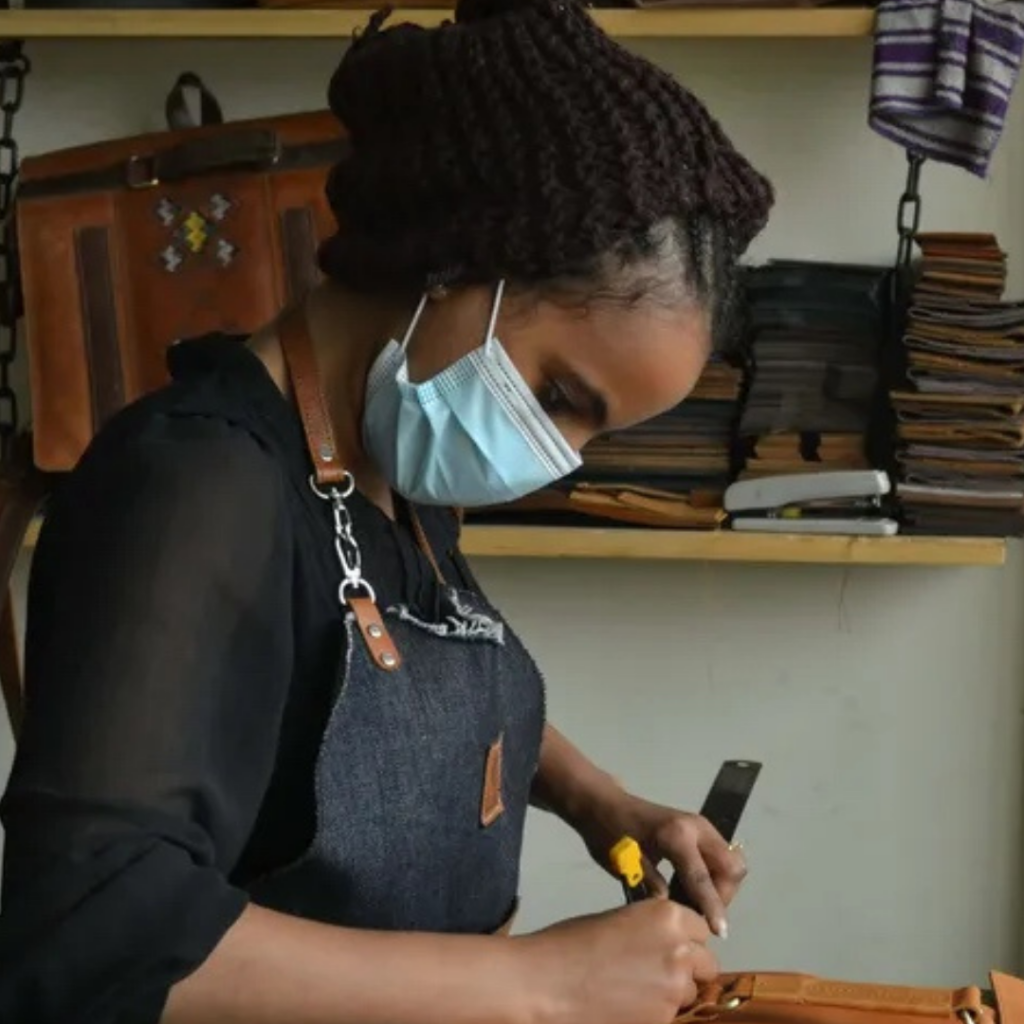
Tamirat’s strategy is shared by Mark Stephenson, managing director of Sandstorm Kenya. “African leather designers and manufacturers don’t have the resources to efficiently mass produce like, say, China can. The technology isn’t there yet in Africa. And so for Sandstorm, the question is how can we use technology to create more jobs for artisans and tanners and optimise value within Africa using slow fashion,” he says.
Basic infrastructure, such as the best machinery for drying, is lacking in parts of Africa. Much of the leather produced in Africa is exported out of the continent to be finished and then imported back as finished goods. The cumulative effect of this is to leave the industry in a state of underdevelopment.
Frustrations abound. “When I started my business, I researched about African leather because I wanted my shoes to celebrate African artisanship as much as possible,” says Nigerian designer, Tina A, founder of Kkerelé. “I found that the leather sold in Mushin market, where most accessory designers in Lagos are based, is imported from Europe. This didn’t make sense to me considering the tanneries we have in Africa and our cattle farming.”
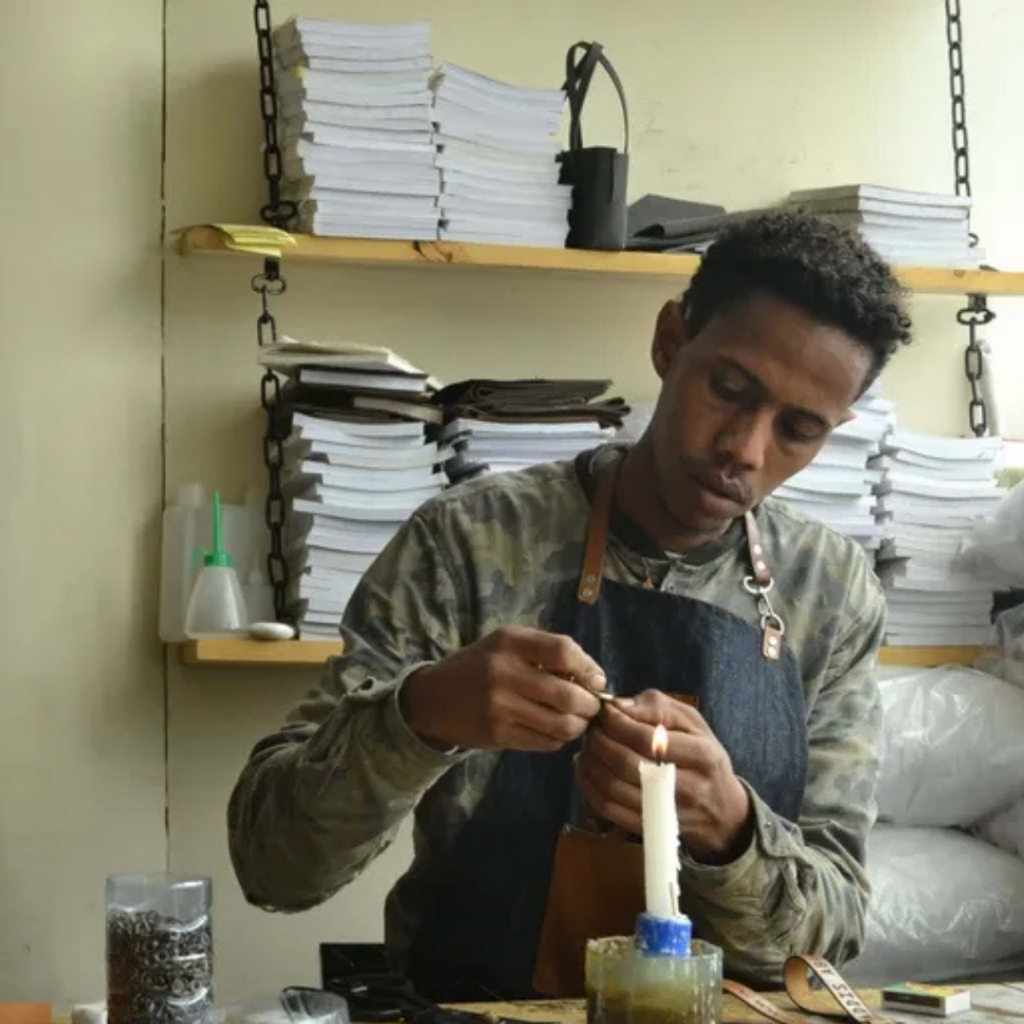
A problem for African designers is that tanneries tailor their business policies to fit the demands of their largest buyers, which are often Western businesses. This leads to high minimum order quantities, shutting out African designers with their much smaller orders. Tamirat explains that in its first few years of business, Tibeb relied on scraps from the tanneries because the company couldn’t afford to buy in bulk in the way that Ethiopian tanners preferred.
Promoting African Leather
African designers have the potential to play a central role in developing a new image of quality for Made in Africa. Tibeb Leather Works is partnering with businesses in Ethiopia to create educational materials that help young designers understand Ethiopia’s design history and lean into designing using materials sourced in Africa and sourced sustainably. Designers like Nigeria’s Femi Olayebi of Femi Handbags are also creating initiatives, such as Lagos Leather Fair, to connect tanners to designers and buying groups where small designers can band together and buy in bulk from tanneries with high minimum order quantities.
Meanwhile, Nigeria’s Winston Leather has already responded to the needs of smaller designers by evolving a business model enabling designers to buy as little as 10 square feet of leather hide rather than the minimum quantity of 20,000 square feet previously required.

The potential is there, but plenty of work remains to be done. “To grow Africa’s leather industry, tanners and manufacturers cannot focus solely on getting Western designers and luxury houses to use their leather,” says Stephenson of Sandstorm Kenya, who has sat on Kenya’s Leather Development Council. “They must also make themselves accessible to African designers and brands who can tell and celebrate an authentic story of African artisanship from cattle, sheep and goat origins to the finished leather goods.”