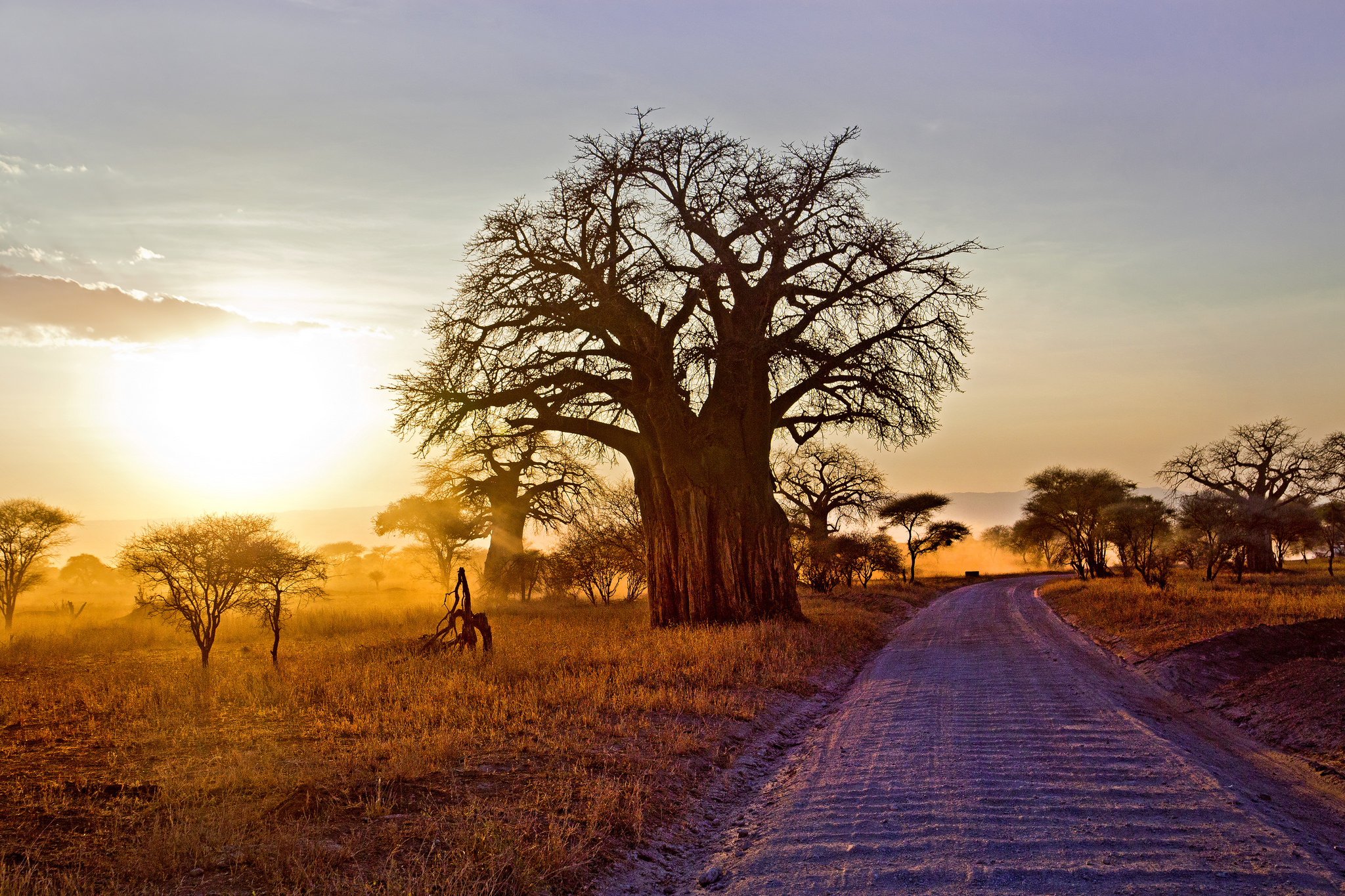
Baobabs, the iconic giants of Africa’s arid landscapes, are not merely survivors; they are symbols of resilience, adaptability, and endurance. With some specimens exceeding 2,500 years in age, these monumental trees have withstood millennia of climatic vicissitudes, from severe droughts to torrential floods. As concerns about climate change increasingly dominate global discourse, a recent study spanning four Southern African nations offers a surprising revelation: baobabs, far from being victims, may well be the “last trees standing” in the face of human-induced environmental change.
Over the course of 2023, I embarked on an exhaustive investigation of baobab health, traversing the rugged terrains of Botswana, South Africa, Namibia, and Zimbabwe. My research focused on adult baobabs, particularly the oldest and largest specimens, including the Sagole baobab—an ancient sentinel named after a nearby hot spring and renowned as the largest baobab in the world.
The resilience of these trees is nothing short of extraordinary. My findings indicate that the populations of baobabs across Africa, particularly in Southern Africa, are not merely surviving but thriving. Contrary to alarmist narratives, the majority of baobab populations exhibit robust health and stability, with negligible adult tree mortality outside areas heavily populated by elephants.



This is not just an ecological curiosity but a matter of profound significance. For centuries, baobabs have served as indispensable resources for food, fibre, and medicine, with over 300 documented uses. In the past decade, the burgeoning trade in baobab fruit products has provided a crucial lifeline for thousands of rural communities, particularly marginalised women who harvest the fruit for income. The potential demise of baobabs would thus have catastrophic implications, not only for biodiversity but for the livelihoods of countless individuals across Africa.

Climate Change: A Challenge as Old as the Trees Themselves
The baobab’s capacity for survival in the face of climate change is not an accident of nature but a testament to its evolutionary design. Originating in Africa, where they now grace 32 countries, baobabs have evolved to endure erratic climate conditions. Radiocarbon dating has consistently revealed their remarkable ages, with some trees living for over two millennia. Through an analysis of carbon isotopes from the piths of baobabs, researchers have reconstructed a thousand years of rainfall patterns, unveiling a history replete with periods of severe drought—one of which led to the abandonment of Mapungubwe, a significant early civilisation in southern Africa, in the 14th century.
Baobabs are adapted to such extremes. My observations align with numerous surveys across Africa, which collectively portray a picture of stability and endurance. Zimbabwe alone is estimated to harbour up to four million baobabs, a mere fraction of the continent’s total population. It is only in regions with dense elephant populations that baobabs face significant threats, as elephants strip the bark from trees during dry seasons, sometimes leading to localised population declines. However, in areas devoid of elephants, baobab mortality is virtually non-existent.
Threats Beyond Climate: Herbivory and Excess Water
Yet, baobabs are not invincible. Their most significant threats stem not from climate change, but from herbivory—particularly by elephants—and from an excess of water. While young baobabs are susceptible to browsing by domestic animals and wildlife, it is the elephants that pose the gravest danger to mature trees. The near-extinction of baobabs in Kenya’s Tsavo East National Park in the 1970s, and a mortality rate of 8% in Mapungubwe National Park between 2009 and 2019, were both driven by elephant herbivory.
Water, paradoxically, is another nemesis. While drought has historically claimed some baobabs, it is the excess water during the dry season—when the trees are leafless—that is more perilous. Lacking leaves to transpire water, baobabs become vulnerable to root and stem rot, conditions that can lead to their collapse. This phenomenon is particularly pronounced in high rainfall areas, where baobabs rarely achieve the same longevity as their counterparts in drier regions.
Baobabs: Pillars of Resilience in a Warming World
As global temperatures continue to rise, the resilience of baobabs offers a glimmer of hope in an increasingly uncertain world. Unlike many life forms that are acutely sensitive to environmental fluctuations, baobabs have demonstrated an extraordinary capacity to adapt to changing conditions. Their widespread distribution and remarkable longevity attest to this adaptability, making them potent symbols of resilience in the Anthropocene.
Yet, while baobabs may well endure, their survival is not guaranteed. The threats posed by elephants, herbivory, and excessive rainfall highlight the delicate balance that must be maintained to ensure their continued existence. Conservation efforts must be tailored to address these specific challenges, safeguarding these ancient sentinels not only as ecological treasures but as vital resources for future generations.
In an era where the impacts of climate change are becoming increasingly evident, the baobab stands as a testament to nature’s resilience. Far from the tragic narratives propagated on social media, the baobab may yet prove to be a beacon of hope, a reminder that some life forms possess an innate ability to endure, adapt, and thrive, even in the most adverse conditions.
As the world grapples with the complexities of climate change, the baobab offers a lesson in fortitude—a lesson that we would do well to heed.